HR7571-119

In Committee

GusNIP Expansion Act of 2026

119th Congress Introduced Feb 13, 2026

Summary

What This Bill Does

This bill amends the Gus Schumacher Nutrition Incentive Program. USDA may waive the usual 50 percent federal cost-share cap for activities in counties or census tracts with at least 20 percent poverty over long measurement periods. USDA must create cooperative agreements to scale existing incentive programs among eligible entities, FNS or NIFA, and state SNAP agencies or nonprofit or local partners; agreements last at least four years, require at least 90 percent of funds to be spent on redeemed incentives before the end, and prioritize varied retail settings such as independent retailers and farmers markets. Produce prescription grants are split between pilot infrastructure grants and expansion grants with clinical-practice evidence: pilot grants range from $100,000 to $400,000, expansion grants from $1 million to $2.5 million, expansion projects need at least 300 patients, a matched group or demonstrated scaling ability, and at least 12 months of intervention. USDA must study how to move produce prescription payment to health insurance programs within 10 years, create a review panel within one year, fund $57.5 million for FY2027-FY2031 and $56 million for FY2032 and later, provide $12 million yearly for produce prescription work, and use 80 percent of remaining funds for cooperative agreements.

Who Benefits and How

SNAP participants, persistent-poverty communities, state SNAP agencies, independent retailers, farmers markets, community health centers, produce prescription patients, and healthcare researchers benefit from larger and more flexible nutrition incentives and produce prescription infrastructure.

Who Bears the Burden and How

USDA, FNS, NIFA, state SNAP agencies, nonprofit grantees, local government grantees, CMS, GAO, HHS, and grant review panels must administer waivers, four-year agreements, 90 percent redemption spending, clinical criteria, grant ranges, studies, reviews, and funding allocations.

Key Provisions

  • Authorizes USDA to waive the 50 percent federal cost-share cap for GusNIP activities in persistent-poverty counties and census tracts.
  • Creates four-year cooperative agreements to scale statewide nutrition incentive programs with state SNAP agency participation.
  • Requires at least 90 percent of cooperative-agreement funds to be spent on redeemed incentives at eligible retailers.
  • Sets produce prescription grant ranges of $100,000 to $400,000 for pilots and $1 million to $2.5 million for expansion grants.
  • Requires a produce prescription insurance-transition study, review panel, and extended mandatory funding through fiscal year 2032.

Evidence Chain:

This summary is generated from the full bill text using AI analysis. Expand "Detailed Analysis" below for identified beneficiaries/burden bearers with clause-level evidence links.

At a Glance

What This Bill Does

Expands GusNIP financing by allowing federal-match waivers in persistent-poverty areas, creating four-year statewide cooperative agreements, setting produce-prescription grant criteria and award ranges, requiring an insurance-transition study, and extending funding through 2032.

Key Policy Areas

Nutrition, Agriculture, Healthcare, Appropriations

Primary Purpose

Expands GusNIP financing by allowing federal-match waivers in persistent-poverty areas, creating four-year statewide cooperative agreements, setting produce-prescription grant criteria and award ranges, requiring an insurance-transition study, and extending funding through 2032.

Policy Domains

Nutrition Agriculture Healthcare Appropriations

Bill-wide scope

Identified Gains
  • SNAP participants
  • Persistent-poverty communities
  • State SNAP agencies
  • Independent retailers
  • Farmers markets
  • Produce prescription patients
Model: codex-gpt-5 | Version: bill_summary_v2 | Source: ih
Farmers markets:
SNAP participants:
State SNAP agencies:
Independent retailers:
Produce prescription patients:
Persistent-poverty communities:
Identified Costs
  • USDA
  • Food and Nutrition Service
  • National Institute of Food and Agriculture
  • State SNAP agencies
  • CMS
  • Government Accountability Office
Model: codex-gpt-5 | Version: bill_summary_v2 | Source: ih
CMS:
USDA:
State SNAP agencies:
Food and Nutrition Service:
Government Accountability Office:
National Institute of Food and Agriculture:

Legislative Progress

In Committee
Introduced Committee Passed
Mar 20, 2026

Referred to the Subcommittee on Nutrition and Foreign Agriculture.

Feb 13, 2026

Referred to the House Committee on Agriculture.

Feb 13, 2026

Introduced in House

Feb 13, 2026

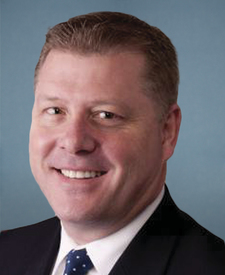
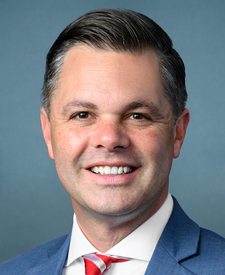
Mr. Crawford (for himself and Mr. Nunn of Iowa) introduced …

Stakeholder Effects

cui bono?

How this legislation distributes effects. Mention counts reflect frequency, not effect magnitude.

Government
3 mentions across 1 clause
+1 positive -2 negative

Food and Nutrition Service, National Institute of Food and Agriculture, State SNAP agencies

Positive-direction: State SNAP agencies

Negative-direction: Food and Nutrition Service, National Institute of Food and Agriculture

General Public
2 mentions across 1 clause
+2 positive

Persistent-poverty communities, SNAP participants

Healthcare
1 mention across 1 clause
+1 positive

Produce prescription patients

1/2
sections analyzed
Full impact breakdown

Bill Structure & Actor Mappings

Who is "The Secretary" in each section?

Domains
Nutrition Agriculture Healthcare Appropriations
Actor Mappings
"GusNIP"
→ Gus Schumacher Nutrition Incentive Program
"primary_beneficiaries"
→ SNAP participants, Persistent-poverty communities, State SNAP agencies, Independent retailers, Farmers markets, Produce prescription patients
"primary_burden_bearers"
→ USDA, Food and Nutrition Service, National Institute of Food and Agriculture, State SNAP agencies, CMS, Government Accountability Office

We use a combination of our own taxonomy and classification in addition to large language models to assess meaning and potential beneficiaries. High confidence means strong textual evidence. Always verify with the original bill text.

Learn more about our methodology