HR7520-119

In Committee

Efficiency Adjustment Delay Act

119th Congress Introduced Feb 12, 2026

Summary

What This Bill Does

This bill amends the Medicare physician fee schedule. It bars HHS from implementing the November 5, 2025 final rule's efficiency adjustment to work relative value units and related intraservice physician time inputs before January 1, 2030. Within 2 years, HHS must report to House Energy and Commerce, House Ways and Means, and Senate Finance on whether a one-time across-the-board work RVU adjustment is necessary for services not revalued or reviewed in the previous 10 years. If the report supports implementation, HHS may apply an adjustment on or after 2030 only after consulting affected specialties, excluding recently revalued or reviewed services, using a methodology not tied to productivity relative to inflation unless the nonqualifying APM conversion factor update at least equals CPI-U growth, and applying the adjustment only once. The bill also raises 2026 conversion-factor updates from 0.75 percent to 1.24 percent for qualifying APM clinicians and from 0.25 percent to 0.74 percent for nonqualifying clinicians, while leaving 2027 and later updates at 0.75 and 0.25 percent.

Who Benefits and How

Physicians, physician specialty societies, Medicare clinicians paid under the physician fee schedule, and services not recently reviewed benefit from a delay in across-the-board RVU reductions and from consultation requirements before any future adjustment. Qualifying and nonqualifying APM clinicians also get higher 2026 statutory conversion-factor updates.

Who Bears the Burden and How

HHS and CMS must delay the efficiency adjustment, produce a 2-year report, consult affected specialties, design any future methodology under statutory constraints, and maintain the one-time-only limit. Medicare spending may be higher than under the delayed rule, and CMS must administer temporary 2026 conversion-factor increases.

Key Provisions

  • Blocks implementation of the November 5, 2025 work-RVU efficiency adjustment before January 1, 2030.
  • Requires HHS to report to Congress within 2 years on whether a one-time across-the-board RVU adjustment is necessary for services not reviewed in the previous 10 years.
  • Requires consultation with affected physician specialties and excludes services revalued or reviewed within the previous 10 years from any future adjustment.
  • Prohibits more than one efficiency adjustment and limits productivity-based methodology unless the nonqualifying APM update keeps pace with CPI-U.
  • Raises 2026 qualifying APM conversion-factor updates to 1.24 percent and nonqualifying updates to 0.74 percent, while restoring 0.75 and 0.25 percent updates for 2027 and later.

Evidence Chain:

This summary is generated from the full bill text using AI analysis. Expand "Detailed Analysis" below for identified beneficiaries/burden bearers with clause-level evidence links.

At a Glance

What This Bill Does

Delays Medicare physician fee schedule work-RVU efficiency adjustments until 2030, requires a congressional report, limits any future adjustment, and temporarily raises 2026 conversion-factor updates.

Key Policy Areas

Healthcare, Medicare, Government

Primary Purpose

Delays Medicare physician fee schedule work-RVU efficiency adjustments until 2030, requires a congressional report, limits any future adjustment, and temporarily raises 2026 conversion-factor updates.

Policy Domains

Healthcare Medicare Government

Substantive provisions

Identified Gains
  • Physicians paid under the Medicare fee schedule
  • Physician specialty societies
  • Qualifying APM clinicians
  • Nonqualifying Medicare clinicians
  • Medicare beneficiaries receiving physician services
Model: codex-gpt-5 | Version: bill_summary_v2 | Source: ih
Qualifying APM clinicians:
Physician specialty societies:
Nonqualifying Medicare clinicians:
Physicians paid under the Medicare fee schedule:
Medicare beneficiaries receiving physician services:
Identified Costs
  • Centers for Medicare and Medicaid Services
  • Department of Health and Human Services
  • Medicare program administrators
  • Federal taxpayers
Model: codex-gpt-5 | Version: bill_summary_v2 | Source: ih
Federal taxpayers:
Medicare program administrators:
Department of Health and Human Services:
Centers for Medicare and Medicaid Services:

Legislative Progress

In Committee
Introduced Committee Passed
Feb 12, 2026

Referred to the Committee on Energy and Commerce, and in …

Feb 12, 2026

Introduced in House

Feb 12, 2026

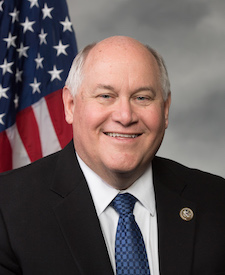
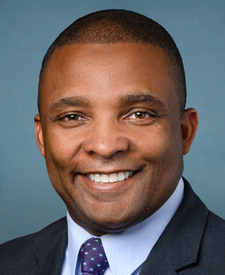
Mr. Estes (for himself and Mr. Suozzi) introduced the following …

Stakeholder Effects

cui bono?

How this legislation distributes effects. Mention counts reflect frequency, not effect magnitude.

Healthcare
2 mentions across 1 clause
+2 positive

Physician specialty societies, Physicians paid under the Medicare fee schedule

Healthcare Beneficiaries
2 mentions across 1 clause
+1 positive -1 negative

CMS, Medicare beneficiaries receiving physician services

Positive-direction: Medicare beneficiaries receiving physician services

Negative-direction: CMS

Taxpayers
1 mention across 1 clause
-1 negative

Taxpayers

1/2
sections analyzed
Full impact breakdown

Bill Structure & Actor Mappings

Who is "The Secretary" in each section?

Domains
Healthcare Medicare Government
Actor Mappings
"cms"
→ Centers for Medicare and Medicaid Services
"secretary"
→ Secretary of Health and Human Services

We use a combination of our own taxonomy and classification in addition to large language models to assess meaning and potential beneficiaries. High confidence means strong textual evidence. Always verify with the original bill text.

Learn more about our methodology