Stop Chinese Fentanyl Act of 2025
Summary
What This Bill Does
H.R.747, the Stop Chinese Fentanyl Act of 2025, combines proposed changes to opioid-trafficker sanctions with new oversight of emergency economic powers. It remains pending after its September 3, 2025 Senate referral. The House-passed sanctions amendments were written against an older statute: Public Law 119-60, enacted December 18, 2025, has since changed both the foreign-opioid-trafficker definition and reporting deadline. Those enacted changes must not be attributed to this still-pending bill.
The bill would include qualifying Chinese entities involved in specified synthetic-opioid or precursor goods that fail to take credible preventive steps, and senior government or other Chinese political officials with significant relevant responsibilities who aid and abet trafficking, expressly including intentional inaction. Existing law now already permits inclusion of qualifying Chinese entities showing a pattern of such failures and senior government officials who aid and abet trafficking. The bill uses includes rather than may include, omits the pattern requirement, and adds the political-official and intentional-inaction language. But its strike-and-insert instructions reference the former definition and would need reconciliation with the intervening amendment; a clean, automatic new sanctions expansion cannot be assumed.
Similarly, the bill attempts to replace a five-year reporting period with ten years, measured from the original December 20, 2019 enactment, not from this bill. Current law already requires annual reports through December 31, 2030 and no longer contains the five-year phrase. The pending text therefore does not establish a fresh ten-year reporting term or clearly shorten the current deadline to 2029. It also specifically requests assessment of the heads of four Chinese agencies, overlapping current broader reporting on relevant senior Chinese officials.
Who Benefits and How
Communities affected by illicit opioids are the intended beneficiaries of more effective trafficking sanctions, but the bill does not guarantee reduced drug supply or overdoses and provides no treatment appropriation. Congressional oversight committees would receive additional evaluations of qualifying international-drug-trafficking emergencies. Public- and private-sector participants would have their views considered in those evaluations, and businesses affected by regulations could benefit from clearer reasoning, cost-benefit analysis and termination criteria. These procedural protections do not guarantee that any particular sanction is lifted.
Importers of goods would have an exception from sanctions authority or requirements under this Act. Goods include articles, substances, materials, supplies, manufactured products and inspection or test equipment, but exclude technical data. This is not permission to import illegal drugs, a repeal of independent sanctions or customs laws, or automatic exemption for every financial transaction connected to imports.
Who Bears the Burden and How
The President and executive-branch staff would prepare written evaluations at least annually when IEEPA authority is exercised for an international-drug-trafficking national emergency declared within the preceding five years and not terminated. Evaluations would address effectiveness, participant views and possible changes. Regulations for those covered emergencies would require consideration of alternatives, cost-benefit evaluation, eventual termination criteria and an explanation of how the rule would resolve the emergency. The five-year lookback limits which emergencies qualify; it does not itself terminate an emergency after five years.
The bill also redirects IEEPA consultation and reporting from Congress generally to six named committees: House Foreign Affairs, Financial Services, and Oversight and Government Reform; and Senate Homeland Security and Governmental Affairs, Foreign Relations, and Banking, Housing, and Urban Affairs. That recipient change applies across IEEPA section 204, not only to drug-related emergencies. Existing immediate and six-month reports are not replaced by the new annual evaluation. Despite the section heading, the operative text does not amend the Trading with the Enemy Act.
Qualifying Chinese entities and officials could face increased sanctions exposure if the proposed expansion were reconciled and enacted. Current law already supplies a sanctions menu and minimum sanction counts; the bill does not newly require every listed sanction or automatically designate all Chinese chemical companies or officials. U.S. financial institutions could face implementation work when additional designations occur, but current-law overlap and drafting conflicts prevent assigning a definite new affected cohort to the definition amendment as written. Section 2 only expresses congressional preferences about Chinese chemical controls; it does not directly compel Chinese agencies to adopt them.
Key Provisions
- Requires annual effectiveness evaluations for exercised IEEPA authorities tied to the defined recent, ongoing drug-trafficking emergencies.
- Requires cost-benefit analysis, consideration of alternatives and termination criteria in covered emergency regulations.
- Redirects IEEPA consultation and reports to six specified congressional committees without deleting existing reporting intervals.
- Proposes stronger Chinese entity and official criteria, but the amendment instructions overlap and conflict with December 2025 enacted changes.
- Protects goods importation from sanctions under this Act while excluding technical data from the defined goods exception.
Evidence Chain:
This summary is generated from the full bill text using AI analysis. Expand "Detailed Analysis" below for identified beneficiaries/burden bearers with clause-level evidence links.
At a Glance
What This Bill Does
Propose broader Chinese opioid-trafficker criteria and new emergency-sanctions oversight, while preserving a goods-import exception and recognizing intervening law that already enacted overlapping sanctions provisions.
Key Policy Areas
Opioid Trafficking Sanctions, Emergency Economic Powers, Congressional Oversight
Primary Purpose
Propose broader Chinese opioid-trafficker criteria and new emergency-sanctions oversight, while preserving a goods-import exception and recognizing intervening law that already enacted overlapping sanctions provisions.
Policy Domains
Stop Chinese Fentanyl Act of 2025
Identified Gains
- Communities affected by illicit opioids
- Congressional oversight committees
- Businesses affected by covered emergency regulations
- Importing companies covered by the goods exception
Identified Costs
- Executive branch staff preparing IEEPA evaluations
- Chinese chemical manufacturers potentially covered by a reconciled sanctions expansion
- Chinese political leaders potentially covered by a reconciled sanctions expansion
- Financial institution compliance officers implementing future designations
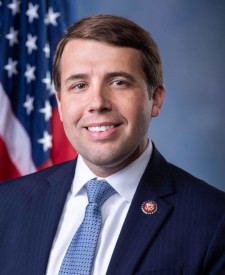
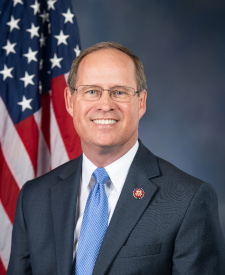
Sponsors



Legislative Progress
Passed HouseReceived; read twice and referred to the Committee on Banking, …
Received in the Senate and Read twice and referred to …
Passed House (inferred from eh version)
Motion to reconsider laid on the table Agreed to without …
On motion to suspend the rules and pass the bill, …
Passed/agreed to in House: On motion to suspend the rules …
Considered as unfinished business. (consideration: CR H3741-3742)
At the conclusion of debate, the Yeas and Nays were …
DEBATE - The House proceeded with forty minutes of debate …
Considered under suspension of the rules. (consideration: CR H3728-3731)
Stakeholder Effects
cui bono?How this legislation distributes effects. Mention counts reflect frequency, not effect magnitude.
Businesses subject to regulations for covered drug-trafficking emergencies
Importers of goods within the proposed sanctions exception
On Motion to Suspend the Rules and Pass, as Amended
Stop Chinese Fentanyl Act
Bill Structure & Actor Mappings
Who is "The Secretary" in each section?
- "treasury"
- → Secretary of the Treasury in existing sanctions implementation
- "president"
- → President of the United States
- "committees"
- → The six House and Senate committees expressly listed for IEEPA oversight
- "chinese_agencies"
- → National Narcotics Control Commission, Ministry of Public Security, General Administration of Customs, and National Medical Products Administration of China
Note: Current 21 USC 2302(5) was amended by PL 119-60 section 8314, and 2311(c) now ends December 31, 2030 under section 8315. The bill definition strike no longer matches and risks duplicate (B) text; its five-year deadline strike also no longer matches. Do not silently overwrite current law or claim definite incremental sanctions targets.
Key Definitions
Terms defined in this bill
Articles, substances, materials, supplies and manufactured products, including inspection/test equipment but excluding technical data.
An international-drug-trafficking national emergency declared within the preceding five years that has not terminated.
We use a combination of our own taxonomy and classification in addition to large language models to assess meaning and potential beneficiaries. High confidence means strong textual evidence. Always verify with the original bill text.
Learn more about our methodology