HR7434-119

In Committee

AI Grand Challenges Act of 2026

119th Congress Introduced Feb 9, 2026

Summary

What This Bill Does

Within 12 months, the NSF Director, coordinated with the National Artificial Intelligence Advisory Committee and in consultation with OSTP and potentially NIST, DARPA, other agencies, and the public, must establish prize competitions under the Stevenson-Wydler prize authority. The AI Grand Challenges Program must select specific, measurable challenges across national security, cybersecurity, health, energy, environment, transportation, agriculture, education and workforce, manufacturing, space and aerospace, quantum computing, materials science, supply-chain resilience, disaster preparedness, natural resources, and cross-cutting AI safety, privacy, transparency, explainability, robustness, content provenance, and bias-mitigation topics. NSF must publish problem statements, targets, processes, success metrics, and validation protocols on NSF and Challenge.gov. At least one challenge within one year must address lethal cancers and comorbidities through AI detection, diagnostics, treatments, therapeutics, or other innovations, with at least $10 million in cash prizes to each winner. Other winners get at least $1 million, prizes may exceed $50 million under existing authority, eligible private entities must be incorporated and primarily based in the United States, eligible individual participants must be U.S. citizens or permanent residents, and NSF must report after awards and biennially. OSTP must coordinate science-funding agencies to identify and publish grand-challenge data sets.

Who Benefits and How

AI researchers, U.S. startups, universities, cancer researchers, cancer patients, and technology companies benefit from prize funding, public challenge statements, validation protocols, and access to federal grand-challenge data sets. NSF, OSTP, NIH, NIST, DARPA, and Challenge.gov gain a structured mechanism to channel AI research into concrete national-priority problems.

Who Bears the Burden and How

NSF must design the program, select challenges, solicit public input, set eligibility and judging procedures, publish competitions on Challenge.gov, manage prizes, accept and firewall external support, and report to Congress. OSTP must coordinate agencies that fund science to identify and publish data sets. Non-U.S. companies and nonresident individuals are excluded from prize eligibility.

Key Provisions

  • Requires NSF within 12 months to create AI Grand Challenges prize competitions under existing federal prize authority.
  • Requires clear problem statements, targets, processes, success metrics, and validation protocols on NSF and Challenge.gov for selected challenges.
  • Mandates at least one cancer-focused AI challenge within one year and at least $10 million in cash prizes for each winner of that challenge.
  • Requires at least $1 million in cash prizes for other winners, allows prizes above $50 million under existing authority, and restricts eligibility to U.S.-based entities or U.S. citizens and permanent residents.
  • Directs OSTP to coordinate federal science agencies to identify and publish data sets for AI-enabled grand challenges.

Evidence Chain:

This summary is generated from the full bill text using AI analysis. Expand "Detailed Analysis" below for identified beneficiaries/burden bearers with clause-level evidence links.

At a Glance

What This Bill Does

Directs NSF to establish an AI Grand Challenges prize program, including at least one cancer-focused AI challenge with $10 million minimum cash prizes, and directs OSTP to coordinate publication of federal science data sets for AI-enabled grand challenges.

Key Policy Areas

Technology, Research & Science, Healthcare

Primary Purpose

Directs NSF to establish an AI Grand Challenges prize program, including at least one cancer-focused AI challenge with $10 million minimum cash prizes, and directs OSTP to coordinate publication of federal science data sets for AI-enabled grand challenges.

Policy Domains

Technology Research & Science Healthcare

Substantive provisions

Identified Gains
  • AI researchers
  • U.S. startups
  • Universities
  • Cancer researchers
  • Cancer patients
  • National Science Foundation
Model: codex-gpt-5 | Version: bill_summary_v2 | Source: ih
Universities: ,
U.S. startups: ,
AI researchers: ,
Cancer patients: ,
Cancer researchers: ,
National Science Foundation: ,
Identified Costs
  • National Science Foundation
  • Office of Science Technology Policy
  • Federal science agencies
  • Non-U.S. prize applicants
Model: codex-gpt-5 | Version: bill_summary_v2 | Source: ih
Federal science agencies: ,
Non-U.S. prize applicants: ,
National Science Foundation: ,
Office of Science Technology Policy: ,

Legislative Progress

In Committee
Introduced Committee Passed
Feb 9, 2026

Referred to the House Committee on Science, Space, and Technology.

Feb 9, 2026

Introduced in House

Feb 9, 2026

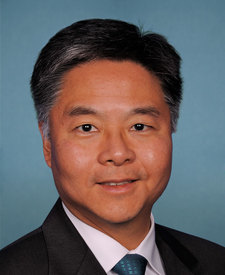
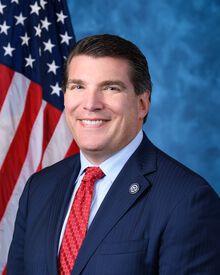
Mr. Lieu (for himself and Mr. Obernolte) introduced the following …

Stakeholder Effects

cui bono?

How this legislation distributes effects. Mention counts reflect frequency, not effect magnitude.

Government
3 mentions across 2 clauses
-3 negative

Federal science agencies, National Science Foundation, Office of Science Technology Policy

Technology
3 mentions across 2 clauses
+3 positive

AI researchers, U.S. startups

Healthcare
1 mention across 1 clause
+1 positive

Cancer researchers

Foreign Entities
1 mention across 1 clause
-1 negative

Non-U.S. prize applicants

2/3
sections analyzed
Full impact breakdown

Bill Structure & Actor Mappings

Who is "The Secretary" in each section?

Domains
Technology Research & Science Healthcare
Actor Mappings
"director"
→ Director of the National Science Foundation
"nih_director"
→ Director of the National Institutes of Health
"ostp_director"
→ Director of the Office of Science and Technology Policy

Key Definitions

Terms defined in this bill

1 term
"AI Grand Challenges Program" §AI Grand Challenges Program

NSF prize competitions for specific, measurable artificial-intelligence research, development, commercialization, and demonstration problems.

We use a combination of our own taxonomy and classification in addition to large language models to assess meaning and potential beneficiaries. High confidence means strong textual evidence. Always verify with the original bill text.

Learn more about our methodology