Motor Vehicle Modernization Act of 2026
Summary
What This Bill Does
The Motor Vehicle Modernization Act of 2026 is a broad NHTSA process and vehicle-safety modernization bill. It defines automated driving system terms, requires NHTSA to publish and update a 36-month motor-vehicle safety rulemaking and research priority plan, and creates an Office of the New Car Assessment Program led by an Associate Administrator. It also creates an NCAP Advisory Committee, changes NCAP roadmap timing, adds voluntary performance-testing reporting, and expands consumer education around vehicle safety technologies.
The bill requires NHTSA to review motor vehicle safety standards within one year and every four years afterward, considering safety evidence, technology advances, manufacturer costs, technical standards, and international policy developments. It updates rulemaking-accountability reports to include substantive activities and milestones, requires recognized project-schedule management practices, and directs GAO to review implementation. It also exempts specified NHTSA and NCAP Advisory Committee research from the Paperwork Reduction Act.
For manufacturers, the bill creates guidance for performance-based or risk-based exemption demonstrations, raises the exemption cap from 2,500 to 90,000 vehicles, limits exemptions to five years, and deems complete exemption applications approved if NHTSA misses a one-year decision deadline without explaining incompleteness. It also modernizes recall notices so defect or noncompliance notifications may use certified mail, email, or other approved electronic means while preserving certified-mail requests, and it clarifies that manufacturer notification duties arise when the manufacturer makes the relevant defect or noncompliance decision.
The bill orders several studies and working groups: recall-rate improvement, consumer education on vehicle automation, passenger vehicle ownership costs through the National Academies, automated wheelchair securement, VIN modernization, and a 15-member Motor Vehicle Fire Rescue Working Group covering manufacturers, consumer safety organizations, first responders, universities, battery manufacturers, and fire-rescue tool manufacturers.
Who Benefits and How
Motor vehicle manufacturers benefit from a larger exemption pathway, a one-year decision deadline, modern electronic recall notices, and clearer defect-notification timing. Automated vehicle developers benefit from ADS definitions, exemption guidance, NCAP planning, and consumer education around Level 1, Level 2, and ADS-equipped vehicles. Consumers benefit from NCAP reform, technology roadmaps, safety-standard reviews, recall-rate improvement work, automation education, and studies on ownership costs. Wheelchair users benefit from a study on automated wheelchair securement systems in vehicles. First responders benefit from the Motor Vehicle Fire Rescue Working Group's work on post-crash occupant extraction. NHTSA benefits from a more structured planning, NCAP, research, and reporting framework.
Who Bears the Burden and How
NHTSA administrators must write priority plans, create an NCAP office, manage the advisory committee, review safety standards every four years, issue exemption guidance, meet one-year exemption deadlines, update rulemaking procedures, run studies, and submit reports. Motor vehicle manufacturers must participate in voluntary performance testing, recall-rate improvement, electronic notice procedures, working groups, and data requests. NCAP Advisory Committee members must evaluate technology, roadmaps, nomenclature, consumer education, and performance-test reporting. GAO must audit project-schedule implementation. State motor vehicle agencies, law enforcement, emergency responders, insurers, dealers, and safety organizations may need to provide data and consultation for VIN and ownership-cost studies.
Key Provisions
- Requires a recurring 36-month NHTSA motor-vehicle safety rulemaking and research priority plan.
- Establishes an Office of the New Car Assessment Program and NCAP Advisory Committee.
- Requires NHTSA to review motor vehicle safety standards within one year and every four years thereafter.
- Expands rulemaking-accountability reports and requires project-schedule management practices.
- Raises the general exemption cap from 2,500 vehicles to 90,000 vehicles and imposes a one-year decision deadline.
- Modernizes recall notices to allow email or other approved electronic means while honoring certified-mail requests.
- Clarifies defect and noncompliance notification timing for manufacturers.
- Requires studies on recall rates, automation education, vehicle ownership costs, wheelchair securement, VIN modernization, and post-crash fire rescue.
Evidence Chain:
This summary is generated from the full bill text using AI analysis. Expand "Detailed Analysis" below for identified beneficiaries/burden bearers with clause-level evidence links.
At a Glance
What This Bill Does
Modernizes federal motor-vehicle safety administration by requiring NHTSA rulemaking and research priority plans, reforming the New Car Assessment Program, reviewing safety standards every four years, tightening rulemaking-accountability reporting, expanding exemption pathways and deadlines, updating recall notice procedures, clarifying defect-notification timing, and ordering studies on automation education, vehicle ownership costs, wheelchair securement, VIN modernization, and post-crash fire rescue.
Key Policy Areas
Vehicle Safety, Transportation, Consumer Protection, Automated Vehicles, Federal Reporting
Primary Purpose
Modernizes federal motor-vehicle safety administration by requiring NHTSA rulemaking and research priority plans, reforming the New Car Assessment Program, reviewing safety standards every four years, tightening rulemaking-accountability reporting, expanding exemption pathways and deadlines, updating recall notice procedures, clarifying defect-notification timing, and ordering studies on automation education, vehicle ownership costs, wheelchair securement, VIN modernization, and post-crash fire rescue.
Policy Domains
House resolution provisions
Identified Gains
- Motor vehicle manufacturers
- Automated vehicle developers
- Consumers
- Wheelchair users
- First responders
- National Highway Traffic Safety Administration
Identified Costs
- NHTSA administrators
- Motor vehicle manufacturers
- NCAP Advisory Committee members
- GAO audit staff
- State motor vehicle agencies
- Law enforcement agencies
- Emergency responders
- Property-casualty insurers
- Vehicle dealers
Sponsors
Legislative Progress
ReportedOrdered to be Reported (Amended) by the Yeas and Nays: …
Committee Consideration and Mark-up Session Held
Subcommittee Consideration and Mark-up Session Held
Forwarded by Subcommittee to Full Committee (Amended) by Voice Vote.
Referred to the House Committee on Energy and Commerce.
Referred to the Subcommittee on Commerce, Manufacturing, and Trade.
Introduced in House
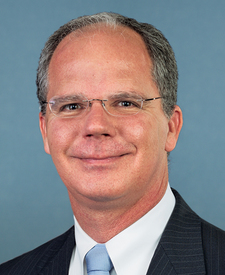
Mr. Guthrie introduced the following bill; which was referred to …
Stakeholder Effects
cui bono?How this legislation distributes effects. Mention counts reflect frequency, not effect magnitude.
NCAP Advisory Committee members, NCAP Office staff, NHTSA VIN study staff
NCAP Advisory Committee members, NHTSA research staff face effects in multiple directions
Positive-direction: University transportation centers
Negative-direction: NCAP Office staff, NHTSA VIN study staff, NHTSA accessibility research staff, NHTSA exemption review staff, NHTSA project management staff, NHTSA recall rulemaking staff, NHTSA recall staff, NHTSA reporting staff, NHTSA rulemaking staff, NHTSA working-group staff
Motor vehicle battery manufacturers, Motor vehicle manufacturers, Motor vehicle manufacturers responding to research requests
Motor vehicle manufacturers faces effects in multiple directions
Positive-direction: Motor vehicle manufacturers responding to research requests, Motor vehicle manufacturers seeking exemptions
Negative-direction: Motor vehicle battery manufacturers, Passenger vehicle manufacturers
Consumers buying passenger vehicles, Consumers comparing vehicle safety, Registered vehicle owners
Congressional transportation committees
National Academies transportation study staff
Bill Structure & Actor Mappings
Who is "The Secretary" in each section?
- "nhtsa"
- → National Highway Traffic Safety Administration
- "administrator"
- → NHTSA Administrator
We use a combination of our own taxonomy and classification in addition to large language models to assess meaning and potential beneficiaries. High confidence means strong textual evidence. Always verify with the original bill text.
Learn more about our methodology