Smart Space Act of 2026
Summary
What This Bill Does
The Smart Space Act of 2026 directs the Administrator of General Services to convene consultation meetings within 90 days of enactment. The meetings must identify alternative financing solutions for construction or renovation of public buildings and for work needed to prepare public buildings for disposal, with the goal of reducing federal costs.
GSA must include experts in private commercial real estate, federal real estate, and, when available, state real estate experts experienced with using private financing for public buildings and facilities. Within 120 days of enactment, GSA must send the President recommendations on public-private partnerships and alternative financing methods best suited to federal public-building needs.
The report must also include recommended public-building projects and specify which financing methods or partnership types should be used for each project. Recommended projects must serve core federal missions where long-term federally owned space is critical, support consolidations or relocations out of costly, inefficient, and underutilized space that GSA intends to sell or dispose of, and, for standard office space, meet at least 60 percent building utilization.
Who Benefits and How
GSA public buildings managers benefit from a formal process to identify alternative financing and public-private partnership options. Federal agencies in underutilized buildings benefit if projects help consolidate or relocate them into more efficient space. Taxpayers benefit if alternative financing reduces federal building costs or speeds disposal of inefficient property. Private real-estate finance experts benefit from a direct consultation role. Commercial real estate partners may benefit from future public-private partnership opportunities. The President benefits from a project list and financing recommendations within 120 days.
Who Bears the Burden and How
GSA public buildings staff must organize consultations, evaluate financing options, identify recommended projects, and prepare the 120-day submission. Federal agencies occupying underused space may need to participate in consolidation or relocation planning. Private and state real-estate experts must provide technical input on financing options. GSA disposal staff must assess buildings that need preparation for sale or disposal. Agencies seeking to remain in low-utilization office space may face pressure to consolidate.
Key Provisions
- Requires GSA consultation meetings within 90 days on alternative financing for public buildings.
- Requires participation from private commercial, federal, and available state real-estate experts.
- Requires recommendations to the President within 120 days.
- Requires recommendations on public-private partnership types and alternative financing methods.
- Requires a project list identifying which financing method fits each public-building project.
- Requires recommended projects to support core federal missions and long-term federally owned space where needed.
- Requires consolidation or relocation out of costly, inefficient, underutilized space and at least 60 percent utilization for standard office projects.
Evidence Chain:
This summary is generated from the full bill text using AI analysis. Expand "Detailed Analysis" below for identified beneficiaries/burden bearers with clause-level evidence links.
At a Glance
What This Bill Does
Requires GSA to consult commercial, federal, and state real-estate experts within 90 days on alternative financing for federal public buildings and submit within 120 days recommendations for public-private partnerships and projects that reduce federal costs, support core missions, consolidate agencies out of costly underused space, and meet at least 60 percent standard-office utilization.
Key Policy Areas
Federal Real Estate, Public Buildings, Procurement, Government Efficiency
Primary Purpose
Requires GSA to consult commercial, federal, and state real-estate experts within 90 days on alternative financing for federal public buildings and submit within 120 days recommendations for public-private partnerships and projects that reduce federal costs, support core missions, consolidate agencies out of costly underused space, and meet at least 60 percent standard-office utilization.
Policy Domains
House resolution provisions
Identified Gains
- GSA public buildings managers
- Federal agencies in underutilized buildings
- Taxpayers
- Private real-estate finance experts
- Commercial real estate partners
- President
Identified Costs
- GSA public buildings staff
- Federal agencies occupying underused space
- Private real-estate experts
- State real-estate experts
- GSA disposal staff
- Agencies seeking low-utilization office space
Sponsors
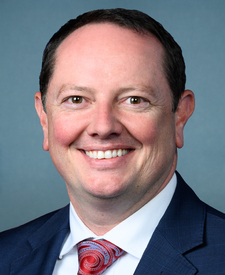
Legislative Progress
ReportedReceived in the Senate and Read twice and referred to …
Received; read twice and referred to the Committee on Environment …
Motion to reconsider laid on the table Agreed to without …
On motion to suspend the rules and pass the bill, …
Passed/agreed to in House: On motion to suspend the rules …
DEBATE - The House proceeded with forty minutes of debate …
Considered under suspension of the rules. (consideration: CR H2650-2651)
Mr. Taylor moved to suspend the rules and pass the …
Placed on the Union Calendar, Calendar No. 483.
Reported (Amended) by the Committee on Transportation and Infrastructure. H. …
Stakeholder Effects
cui bono?How this legislation distributes effects. Mention counts reflect frequency, not effect magnitude.
Federal agencies in underutilized buildings, GSA disposal staff, GSA public buildings staff
Positive-direction: Federal agencies in underutilized buildings, Private real-estate finance experts
Negative-direction: GSA disposal staff, GSA public buildings staff
Bill Structure & Actor Mappings
Who is "The Secretary" in each section?
- "gsa"
- → Administrator of General Services
We use a combination of our own taxonomy and classification in addition to large language models to assess meaning and potential beneficiaries. High confidence means strong textual evidence. Always verify with the original bill text.
Learn more about our methodology