To authorize the President to take certain actions relating to reciprocal trade, and for other purposes.
Analysis under review: This bill has generated analysis that may be too generic or incomplete. Clause-level evidence remains available below.
Summary
This bill, the United States Reciprocal Trade Act, gives the President authority to impose tariffs on goods from foreign countries that charge significantly higher duties on American exports than the U.S. charges on their imports. The President can either negotiate agreements to lower foreign tariffs or unilaterally impose matching tariffs. Before imposing tariffs, the President must publish notice, allow public comment, and consult with Congressional committees. Congress can block tariff actions through a disapproval resolution, but passage requires a two-thirds supermajority in both chambers. The presidential tariff authority expires after 3 years but can be extended for another 3 years unless Congress disapproves. The bill broadly defines nontariff barriers to include import restrictions, subsidies, intellectual property failures, and digital trade barriers.
Evidence Chain:
This summary is generated from the full bill text using AI analysis. Expand "Detailed Analysis" below for identified beneficiaries/burden bearers.
At a Glance
What This Bill Does
Authorizes the President to impose reciprocal tariffs on foreign countries that maintain significantly higher tariffs or nontariff barriers on U.S. goods than the U.S. imposes on their goods, with Congressional oversight mechanisms.
Who Benefits
- U.S. domestic manufacturers
- U.S. farmers and agricultural exporters
- U.S. workers in industries competing with imports
Who Bears Costs
- Foreign exporters to the U.S.
- U.S. importers and businesses dependent on foreign goods
- U.S. consumers (higher prices from tariffs)
Key Policy Areas
Trade, Tariffs, Foreign Commerce
Primary Purpose
Authorizes the President to impose reciprocal tariffs on foreign countries that maintain significantly higher tariffs or nontariff barriers on U.S. goods than the U.S. imposes on their goods, with Congressional oversight mechanisms.
Policy Domains
Legislative Strategy
"Grant the President broad authority to impose reciprocal tariffs matching foreign duty rates, with a two-track approach: (1) negotiate agreements for tariff reduction, or (2) unilaterally impose matching tariffs subject to Congressional disapproval requiring two-thirds supermajority vote. Authority sunsets after 3 years with one optional 3-year extension."
Sponsors



Legislative Progress
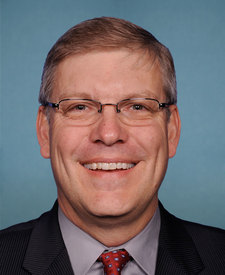
IntroducedMr. Moore of West Virginia (for himself, Ms. Greene of …
Stakeholder Effects
cui bono?How this legislation distributes effects. Mention counts reflect frequency, not effect magnitude.
Congress, Congress (Ways and Means / Finance committees), Executive branch (presidential trade authority)
Positive-direction: Congress, Congress (Ways and Means / Finance committees)
Negative-direction: Executive branch trade authority, U.S. Trade Representative
Foreign exporters to the United States, Foreign governments employing nontariff barriers
U.S. businesses affected by tariff actions, U.S. domestic industries facing foreign nontariff barriers
U.S. domestic manufacturers competing with imports
Bill Structure & Actor Mappings
Who is "The Secretary" in each section?
- "ustr"
- → United States Trade Representative
- "the_president"
- → President of the United States
- "secretary_of_commerce"
- → Secretary of Commerce
- "secretary_of_treasury"
- → Secretary of the Treasury
Key Definitions
Terms defined in this bill
We use a combination of our own taxonomy and classification in addition to large language models to assess meaning and potential beneficiaries. High confidence means strong textual evidence. Always verify with the original bill text.
Learn more about our methodology