HR7330-119

In Committee

DALCI Act

119th Congress Introduced Feb 3, 2026

Summary

What This Bill Does

The DALCI Act amends the Food Security Act of 1985 to establish the Driftless Area Landscape Conservation Initiative. USDA must use $5 million per year from fiscal years 2027 through 2031 to reduce erosion and restore cold-water stream corridors in the Driftless Area of the Midwestern United States, focusing on climate-smart agriculture, carbon sequestration, soil health, and ecological restoration. Assistance to producers can support year-round ground cover, soil rebuilding, carbon sequestration, water quality, soil water-holding capacity, erosion reduction, flood mitigation, woodland biodiversity, prairie restoration, grassland, oak savanna, and barren management, and cold-water stream restoration that reduces streambank erosion and flooding threats while improving trout habitat. USDA must also help grassroots partnerships educate landowners and operators on climate-smart agriculture, soil health, and holistic grazing. Assistance may be financial assistance, technical assistance, or payments for easements conveyed to the Secretary.

Who Benefits and How

Producers in the Driftless Area benefit from USDA financial and technical assistance for ground cover, soil health, grazing, erosion control, woodland management, prairie restoration, and stream restoration. Landowners and operators benefit from grassroots education on climate-smart agriculture and holistic grazing. Trout habitat, cold-water stream corridors, and downstream communities benefit if projects reduce streambank erosion, flooding threats, and water-quality problems. Grassroots partnerships benefit from support to educate farmers and landowners. Conservation contractors and technical service providers may benefit from project work.

Who Bears the Burden and How

USDA must establish and administer the initiative, allocate $5 million annually for fiscal years 2027 through 2031, define assistance terms, oversee easement payments, and coordinate with producers and grassroots partnerships. Producers receiving assistance must implement conservation practices, manage land for year-round cover, restore habitats, or comply with easement terms. Grassroots partnerships must educate landowners and operators. Federal taxpayers fund the initiative. Some landowners may face long-term obligations if they convey easements to the Secretary.

Key Provisions

  • Creates the Driftless Area Landscape Conservation Initiative in the Food Security Act.
  • Funds the initiative with $5 million annually for fiscal years 2027 through 2031.
  • Provides financial assistance, technical assistance, and easement payments to producers.
  • Supports year-round ground cover, soil health, carbon sequestration, water quality, woodland biodiversity, prairie restoration, and cold-water stream restoration.
  • Supports grassroots partnerships educating landowners and operators on climate-smart agriculture, soil health, and holistic grazing.

Evidence Chain:

This summary is generated from the full bill text using AI analysis. Expand "Detailed Analysis" below for identified beneficiaries/burden bearers with clause-level evidence links.

At a Glance

What This Bill Does

Creates a USDA Driftless Area Landscape Conservation Initiative funded at $5 million per year for fiscal years 2027 through 2031 to help producers and grassroots partnerships reduce erosion, restore cold-water stream corridors, improve soil health, sequester carbon, support climate-smart agriculture, restore prairies and woodlands, improve trout habitat, and use financial assistance, technical assistance, and easement payments.

Key Policy Areas

Agriculture, Conservation, Water Quality, Climate

Primary Purpose

Creates a USDA Driftless Area Landscape Conservation Initiative funded at $5 million per year for fiscal years 2027 through 2031 to help producers and grassroots partnerships reduce erosion, restore cold-water stream corridors, improve soil health, sequester carbon, support climate-smart agriculture, restore prairies and woodlands, improve trout habitat, and use financial assistance, technical assistance, and easement payments.

Policy Domains

Agriculture Conservation Water Quality Climate

Substantive provisions

Identified Gains
  • Driftless Area producers
  • Landowners
  • Grassroots partnerships
  • Trout habitat
  • Downstream communities
Model: codex-gpt-5 | Version: bill_summary_v2 | Source: ih
Landowners:
Trout habitat:
Downstream communities:
Grassroots partnerships:
Driftless Area producers:
Identified Costs
  • USDA
  • Producers
  • Grassroots partnerships
  • Federal taxpayers
  • Landowners
Model: codex-gpt-5 | Version: bill_summary_v2 | Source: ih
USDA:
Producers:
Landowners:
Federal taxpayers:
Grassroots partnerships:

Legislative Progress

In Committee
Introduced Committee Passed
Mar 20, 2026

Referred to the Subcommittee on Conservation, Research, and Biotechnology.

Feb 3, 2026

Referred to the House Committee on Agriculture.

Feb 3, 2026

Introduced in House

Feb 3, 2026

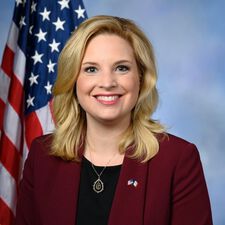
Mrs. Hinson (for herself and Mr. Sorensen) introduced the following …

Stakeholder Effects

cui bono?

How this legislation distributes effects. Mention counts reflect frequency, not effect magnitude.

Agriculture
5 mentions across 2 clauses
+3 positive -2 negative

Driftless Area producers, Landowners, USDA

Positive-direction: Driftless Area producers, Landowners

Negative-direction: USDA

Non-Profit Institutions
2 mentions across 2 clauses
+2 positive

Grassroots partnerships

Environment
2 mentions across 2 clauses
+2 positive

Cold water streams, Trout habitat

Taxpayers
2 mentions across 2 clauses
-2 negative

Taxpayers

2/3
sections analyzed
Full impact breakdown

Bill Structure & Actor Mappings

Who is "The Secretary" in each section?

Domains
Agriculture Conservation Water Quality Climate

We use a combination of our own taxonomy and classification in addition to large language models to assess meaning and potential beneficiaries. High confidence means strong textual evidence. Always verify with the original bill text.

Learn more about our methodology