HR7327-119

In Committee

Empowering Young Readers Act of 2026

119th Congress Introduced Feb 3, 2026

Summary

What This Bill Does

The Empowering Young Readers Act of 2026 directs the Secretary of Education to establish a competitive pilot grant program within 180 days. Eligible organizations are nongovernmental or nonprofit organizations. Applications must describe past book-access work, provide a strategic plan for using funds to meet community needs, and include a community leader support letter. Grant funds may buy or acquire new or used books for children, distribute books through delivery or in-person events, donate books to public libraries, host literacy programming for children and families, including book fairs, reading hours, book drives, and story times, and support other book-access activities approved by the Secretary. Each grant is capped at $200,000 and lasts two years. Applications must be reviewed using viewpoint-neutral criteria. Within six months after the final grant period ends, the Secretary must report to Congress on program activities, the number of books provided, and available information on child literacy rates in served communities. The bill preserves the ability of public libraries and other entities to reject book donations. It authorizes $10 million for fiscal year 2026, available through fiscal year 2027.

Who Benefits and How

Children under 19 benefit from more books, public library donations, delivery events, book fairs, reading hours, book drives, story times, and other literacy programming. Nonprofit organizations and nongovernmental organizations with book-access experience benefit from grants of up to $200,000. Public libraries benefit from donated books while retaining the right to reject donations. Families in served communities benefit from literacy events and access to books at home or through local institutions. Congress benefits from data on books provided and available literacy-rate changes.

Who Bears the Burden and How

The Department of Education must launch the pilot within 180 days, review applications using viewpoint-neutral criteria, administer two-year grants, and report to Congress after the final grant period. Eligible organizations must prepare strategic plans, obtain community support letters, buy or collect books, distribute them, run programming, track qualitative data, and report outcomes. Public libraries and other donation recipients may need to review donations. Federal taxpayers fund the $10 million authorization.

Key Provisions

  • Creates an Education Department pilot grant program for book access within 180 days.
  • Caps grants at $200,000 for two-year periods and authorizes $10 million for fiscal year 2026.
  • Allows funds to buy, distribute, donate, or deliver books and run literacy programming for children and families.
  • Requires viewpoint-neutral application review and a community leader support letter.
  • Requires a post-pilot report on books provided, activities, and available literacy-rate changes.

Evidence Chain:

This summary is generated from the full bill text using AI analysis. Expand "Detailed Analysis" below for identified beneficiaries/burden bearers with clause-level evidence links.

At a Glance

What This Bill Does

Creates a $10 million fiscal year 2026 Education Department pilot grant program for nonprofits and nongovernmental organizations to buy, distribute, and donate books for children, run literacy programming, and report book-access and literacy data after two-year grants of up to $200,000.

Key Policy Areas

Education, Children, Libraries

Primary Purpose

Creates a $10 million fiscal year 2026 Education Department pilot grant program for nonprofits and nongovernmental organizations to buy, distribute, and donate books for children, run literacy programming, and report book-access and literacy data after two-year grants of up to $200,000.

Policy Domains

Education Children Libraries

Substantive provisions

Identified Gains
  • Children
  • Families
  • Nonprofit organizations
  • Public libraries
  • Congress
Model: codex-gpt-5 | Version: bill_summary_v2 | Source: ih
Children:
Congress:
Families:
Public libraries:
Nonprofit organizations:
Identified Costs
  • Department of Education
  • Eligible organizations
  • Public libraries
  • Federal taxpayers
Model: codex-gpt-5 | Version: bill_summary_v2 | Source: ih
Public libraries:
Federal taxpayers:
Eligible organizations:
Department of Education:

Legislative Progress

In Committee
Introduced Committee Passed
Feb 3, 2026

Referred to the House Committee on Education and Workforce.

Feb 3, 2026

Introduced in House

Feb 3, 2026

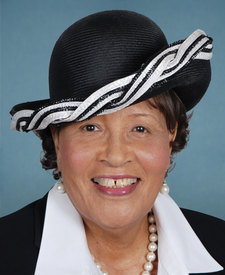
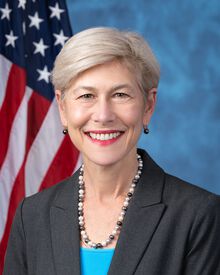
Mrs. Foushee (for herself and Ms. Adams) introduced the following …

Stakeholder Effects

cui bono?

How this legislation distributes effects. Mention counts reflect frequency, not effect magnitude.

Education
2 mentions across 1 clause
+2 positive

Children, Public libraries

General Public
1 mention across 1 clause
+1 positive

Families

Non-Profit Institutions
1 mention across 1 clause
+1 positive

Nonprofit organizations

Government
1 mention across 1 clause
-1 negative

Department of Education

Taxpayers
1 mention across 1 clause
-1 negative

Taxpayers

1/2
sections analyzed
Full impact breakdown

Bill Structure & Actor Mappings

Who is "The Secretary" in each section?

Domains
Education Children Libraries

We use a combination of our own taxonomy and classification in addition to large language models to assess meaning and potential beneficiaries. High confidence means strong textual evidence. Always verify with the original bill text.

Learn more about our methodology