The Disaster Recovery Efficiency Act
Analysis under review: This bill has generated analysis that may be too generic or incomplete. Clause-level evidence remains available below.
Summary
What This Bill Does
The Disaster Recovery Efficiency Act requires the Federal Emergency Management Agency (FEMA) and the Department of Housing and Urban Development (HUD) to implement recommendations made by the Government Accountability Office (GAO) in a November 2022 report. The GAO report identified ways to improve how the federal government coordinates disaster recovery efforts and delivers assistance to communities affected by natural disasters.
Who Benefits and How
Communities recovering from natural disasters benefit from improved coordination between federal agencies, potentially leading to faster and more efficient aid delivery. State and local governments that administer disaster recovery programs would face less confusion and bureaucratic hurdles when working with FEMA and HUD. Disaster victims could see more streamlined assistance processes, reducing delays in receiving housing support and emergency aid.
Who Bears the Burden and How
FEMA and HUD face new compliance requirements to restructure their disaster recovery processes according to GAO recommendations. This includes implementing new coordination protocols, updating internal procedures, and potentially reallocating staff resources. Federal taxpayers may bear modest administrative costs associated with implementing these reforms, though these are expected to be offset by long-term efficiency gains.
Key Provisions
- Mandates FEMA Administrator to implement GAO priority recommendations from report GAO-23-104956
- Requires HUD Secretary to implement the same GAO recommendations for disaster recovery housing programs
- Targets improvements to federal disaster recovery coordination identified in the November 2022 GAO audit
- Aims to reduce duplication and improve efficiency in federal disaster assistance programs
Evidence Chain:
This summary is generated from the full bill text using AI analysis. Expand "Detailed Analysis" below for identified beneficiaries/burden bearers.
At a Glance
What This Bill Does
Requires FEMA and HUD to implement GAO recommendations for improving federal disaster recovery coordination and efficiency.
Who Benefits
- Disaster victims
- State and local governments
- FEMA
Who Bears Costs
- FEMA Administrator (compliance burden)
- HUD Secretary (compliance burden)
- Federal agencies (implementation costs)
Key Policy Areas
Emergency Management, Housing And Urban Development, Government Accountability
Primary Purpose
Requires FEMA and HUD to implement GAO recommendations for improving federal disaster recovery coordination and efficiency.
Policy Domains
Legislative Strategy
"Improve interagency coordination and efficiency in federal disaster recovery by mandating implementation of GAO audit recommendations"
Identified Gains
- Disaster victims
- State and local governments
- FEMA
- HUD
- Disaster recovery programs
Identified Costs
- FEMA Administrator (compliance burden)
- HUD Secretary (compliance burden)
- Federal agencies (implementation costs)
Sponsors
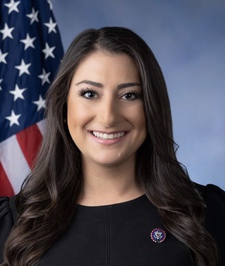


Legislative Progress
In CommitteeReferred to the Subcommittee on Economic Development, Public Buildings, and …
Ms. Jacobs (for herself, Mr. Whitesides, Ms. Friedman, and Ms. …
Referred to the Committee on Transportation and Infrastructure, and in …
Introduced in House
Stakeholder Effects
cui bono?How this legislation distributes effects. Mention counts reflect frequency, not effect magnitude.
Department of Housing and Urban Development, Federal Emergency Management Agency
State and local disaster recovery programs
Bill Structure & Actor Mappings
Who is "The Secretary" in each section?
- "the_secretary"
- → Secretary of Housing and Urban Development
- "the_administrator"
- → Administrator of the Federal Emergency Management Agency (FEMA)
Key Definitions
Terms defined in this bill
Priority recommendations from Comptroller General contained in report GAO-23-104956 (November 15, 2022) titled Disaster Recovery: Actions Needed to Improve the Federal Approach
We use a combination of our own taxonomy and classification in addition to large language models to assess meaning and potential beneficiaries. High confidence means strong textual evidence. Always verify with the original bill text.
Learn more about our methodology