OMAR Act
Analysis under review: This bill has generated analysis that may be too generic or incomplete. Clause-level evidence remains available below.
Summary
What This Bill Does
This bill amends the Federal Election Campaign Act to prohibit political campaign committees from paying the spouses of candidates or officeholders for services. It also requires campaigns to separately disclose all payments made to the spouse or immediate family members of the candidate in their FEC reports.
Who Benefits and How
The general public benefits from increased transparency in campaign spending and reduced potential for self-dealing by candidates. Voters gain insight into whether campaign funds are being used to compensate family members. Good-government advocates benefit from stronger ethics requirements.
Who Bears the Burden and How
Candidates and officeholders lose the ability to employ their spouses through campaign funds. Family members currently employed by campaigns may lose compensation. Candidates who knowingly violate the rules face personal financial penalties that cannot be reimbursed by their campaign committees.
Key Provisions
- Prohibits campaign committees from directly or indirectly compensating the spouse of a candidate or officeholder
- Requires separate disclosure of all payments to spouses and immediate family members (parents, children, siblings, in-laws, grandchildren)
- Imposes penalties personally on candidates who knowingly violate the spouse compensation ban
- Prohibits campaigns from reimbursing candidates for violation penalties
- Applies to compensation and payments made after enactment
Evidence Chain:
This summary is generated from the full bill text using AI analysis. Expand "Detailed Analysis" below for primary purpose and policy domains.
At a Glance
What This Bill Does
Prohibits campaign committees from compensating spouses of candidates and requires disclosure of payments to family members, with personal penalties for knowing violations.
Key Policy Areas
Campaign Finance, Ethics in Government, Political Accountability
Primary Purpose
Prohibits campaign committees from compensating spouses of candidates and requires disclosure of payments to family members, with personal penalties for knowing violations.
Policy Domains
Sponsors
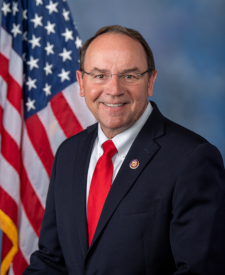

Legislative Progress
In CommitteeMr. Tiffany (for himself and Mr. Wied) introduced the following …
Referred to the House Committee on House Administration.
Introduced in House
Stakeholder Effects
cui bono?How this legislation distributes effects. Mention counts reflect frequency, not effect magnitude.
Bill Structure & Actor Mappings
Who is "The Secretary" in each section?
Key Definitions
Terms defined in this bill
We use a combination of our own taxonomy and classification in addition to large language models to assess meaning and potential beneficiaries. High confidence means strong textual evidence. Always verify with the original bill text.
Learn more about our methodology