Make Elections Great Again Act
Analysis under review: This bill has generated analysis that may be too generic or incomplete. Clause-level evidence remains available below.
Summary
What This Bill Does
The Make Elections Great Again Act rewrites the rules for how Americans register to vote and cast ballots in federal elections. It requires all voters to present photo identification and documentary proof of U.S. citizenship to register, ends automatic and universal mail-in voting in favor of request-only absentee ballots, and mandates paper ballots nationwide.
Who Benefits and How
Election security advocates and federal law enforcement gain new tools: the Attorney General gets mandatory information-sharing agreements with every state on potential voter fraud, DHS and USCIS receive expanded roles in verifying voter citizenship, and states get HAVA funding for post-election audits. Voting machine paper trail advocates benefit from mandatory paper ballot requirements.
Who Bears the Burden and How
State and local election officials face massive new compliance obligations including 30-day voter roll purges, new computerized registration systems, and citizenship verification processes. Voters without photo ID or citizenship documentation face new barriers to casting a ballot. States with universal mail voting systems (like Oregon, Washington, Colorado) must fundamentally restructure their election systems. Federal agencies are prohibited from conducting any voter registration activities.
Key Provisions
- Requires valid photo ID to vote in person and a copy of photo ID (or SSN + affidavit) to vote by mail
- Mandates documentary proof of U.S. citizenship to register to vote
- States must purge ineligible voters from rolls at least every 30 days using DHS/SAVE system
- Ends universal vote-by-mail; ballots only sent upon individual request
- All mail-in ballots must be received by Election Day (no late arrivals accepted)
- Limits ballot possession to 4 ballots per person (anti-ballot-harvesting)
- Requires voter-verifiable paper ballots at all polling places
- Prohibits federal agencies from conducting voter registration
Evidence Chain:
This summary is generated from the full bill text using AI analysis. Expand "Detailed Analysis" below for identified beneficiaries/burden bearers.
At a Glance
What This Bill Does
Overhauls federal election administration by requiring photo identification and documentary proof of citizenship to vote, ending universal vote-by-mail, mandating paper ballots, restricting ballot harvesting, and strengthening noncitizen voter detection and removal processes.
Key Policy Areas
Elections, Voting Rights, Immigration Enforcement, Federal Agency Administration, Postal Service
Primary Purpose
Overhauls federal election administration by requiring photo identification and documentary proof of citizenship to vote, ending universal vote-by-mail, mandating paper ballots, restricting ballot harvesting, and strengthening noncitizen voter detection and removal processes.
Policy Domains
Title II - Voting Methods and Election Administration
Identified Gains
Contextual inference, no direct clause citation- Paper ballot and election audit advocates
- U.S. Postal Service
- Voting machine manufacturers (paper ballot systems)
Contextual inference, no direct clause citation
Identified Costs
Contextual inference, no direct clause citation- States with universal mail voting
- Ballot collection organizations
- Election officials administering mail-in voting
- Electronic voting system manufacturers
Contextual inference, no direct clause citation
Subtitle A - Voter Registration and Identification
Identified Gains
Contextual inference, no direct clause citation- Election security advocates
- Department of Homeland Security
- U.S. Citizenship and Immigration Services
- State election officials seeking clearer standards
Contextual inference, no direct clause citation
Identified Costs
Contextual inference, no direct clause citation- State and local election officials
- Voters without photo ID or citizenship documents
- Naturalized citizens
- Motor vehicle agencies
Contextual inference, no direct clause citation
Subtitle B - Preventing Fraudulent Voting and Election Integrity
Identified Gains
Contextual inference, no direct clause citation- Department of Justice
- Federal law enforcement
- Election integrity organizations
Contextual inference, no direct clause citation
Identified Costs
Contextual inference, no direct clause citation- State election officials
- Federal courts
- Federal agencies
- Voter registration nonprofits
Contextual inference, no direct clause citation
Sponsors

Legislative Progress
In CommitteeReferred to the Subcommittee on Border Security and Enforcement.
Referred to the Subcommittee on Cybersecurity and Infrastructure Protection.
Referred to the Subcommittee on Oversight, Investigations, and Accountability.
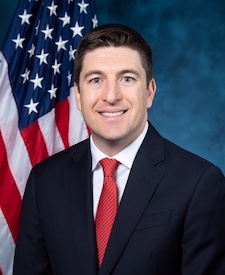
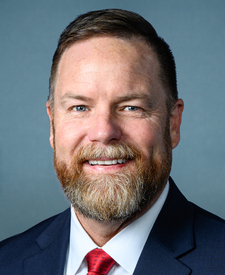
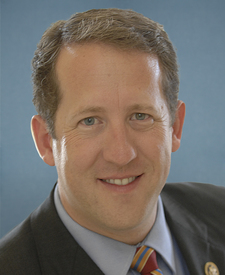
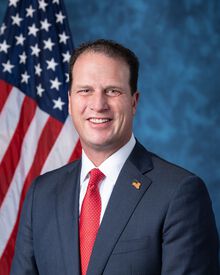
Mr. Steil (for himself, Mrs. Miller of Illinois, Mr. Murphy, …
Referred to the Committee on House Administration, and in addition …
Introduced in House
Stakeholder Effects
cui bono?How this legislation distributes effects. Mention counts reflect frequency, not effect magnitude.
Department of Homeland Security, Department of Homeland Security (SAVE system), Department of Justice
Positive-direction: State election officials conducting post-election audits, States with existing federal law exemptions
Negative-direction: Department of Homeland Security, Department of Homeland Security (SAVE system), Department of Justice, Election Assistance Commission, Federal agencies previously conducting voter registration, Office of the Director of National Intelligence, State agencies issuing identification documents, State and local election officials, State election administration agencies, State election officials, State election officials currently administering voter registration under NVRA/HAVA, State election officials processing mail ballots, State motor vehicle agencies, States that currently accept late-arriving mail ballots, States that refuse to share voter fraud data with DOJ, States with universal vote-by-mail systems (OR, WA, CO, HI, UT, NV, VT), United States district courts
Individuals moving between states, Newly naturalized citizens, Noncitizens on voter rolls
Positive-direction: Newly naturalized citizens, Overseas and military voters, Voters with religious objections to photography
Negative-direction: Individuals moving between states, Noncitizens on voter rolls, Noncitizens registered to vote, Voters in universal mail-voting states, Voters mailing ballots close to Election Day, Voters registering by mail, Voters registering without citizenship documentation, Voters who rely on community ballot collection (elderly, disabled, rural), Voters without government-issued photo identification
Election audit service providers, Election integrity litigants and advocacy organizations
Electronic-only voting system manufacturers, Paper ballot and optical scan system manufacturers
Positive-direction: Paper ballot and optical scan system manufacturers
Negative-direction: Electronic-only voting system manufacturers
Ballot envelope manufacturers and printers, State and local government ballot envelope suppliers
Positive-direction: Ballot envelope manufacturers and printers
Negative-direction: State and local government ballot envelope suppliers
Voter registration and mobilization nonprofits
Election technology vendors and database contractors
Bill Structure & Actor Mappings
Who is "The Secretary" in each section?
- "director_of_uscis"
- → Director of United States Citizenship and Immigration Services
- "chief_state_election_official"
- → State official designated under NVRA Section 10 to coordinate voter registration
- "election_assistance_commission"
- → Election Assistance Commission (EAC)
- "secretary_of_homeland_security"
- → Secretary of Homeland Security
- "the_attorney_general"
- → United States Attorney General
- "chief_state_election_official"
- → State official designated under NVRA Section 10
- "secretary_of_homeland_security"
- → Secretary of Homeland Security
- "director_of_national_intelligence"
- → Director of National Intelligence
- "postmaster_general"
- → Postmaster General of the United States Postal Service
- "the_attorney_general"
- → United States Attorney General
- "chief_state_election_official"
- → State chief election official
- "election_assistance_commission"
- → Election Assistance Commission (EAC)
Note: The Attorney General appears in both Subtitle B (fraud information sharing, Sec 131) and Title II (enforcement of mail-in ballot rules, Sec 216/306) with different roles
Key Definitions
Terms defined in this bill
REAL ID-compliant identification showing citizenship, valid U.S. passport, military ID with U.S. birth record, government photo ID showing U.S. birthplace, or government photo ID plus certified birth certificate, consular report of birth abroad, certificate of naturalization, or certificate of citizenship
The individual designated by the State under section 10 of the National Voter Registration Act of 1993 (52 U.S.C. 20509) to be responsible for coordination of the State's responsibilities under such Act
We use a combination of our own taxonomy and classification in addition to large language models to assess meaning and potential beneficiaries. High confidence means strong textual evidence. Always verify with the original bill text.
Learn more about our methodology