Mathematical and Statistical Modeling Education Act
Summary
What This Bill Does
The Mathematical and Statistical Modeling Education Act responds to congressional findings that school mathematics, statistical problem solving, and data science are not keeping pace with workforce needs, that the United States is projected to need 1,000,000 more STEM professionals than it is on track to produce, and that fields such as artificial intelligence, machine learning, quantum computing, finance, weather prediction, disease modeling, engineering, medicine, marketing, and operations research rely on mathematical and statistical modeling. The bill defines mathematical modeling, statistical modeling, operations research, STEM, federal laboratory, institution of higher education, Director, and Foundation.
The National Science Foundation Director must make merit-reviewed competitive awards to institutions of higher education, nonprofit organizations, or consortia for research and development that advances innovative approaches to high-quality mathematical modeling education in schools operated by local educational agencies. Covered education includes statistical modeling, data science, operations research, and computational thinking. NSF must encourage applicants to form partnerships addressing transitions from middle school to high school, high school to college, and school to internships and jobs.
The NSF Director also must seek, within 180 days, an agreement with the National Academies of Sciences, Engineering, and Medicine, or another appropriate entity if NASEM declines, for a study on mathematical and statistical modeling in prekindergarten through grade 12. The study must examine implementation barriers, K-to-workplace pathways, community-based problems, service learning, internships, project-based and performance-based learning, teacher education, and stakeholder communication. At least one public meeting is required, and the report is due within 24 months to NSF, the Education Secretary, and Congress. Funding must come from NSF amounts, and award authority expires September 30, 2029.
Who Benefits and How
K-12 students, girls participating in modeling challenges, students seeking STEM careers, mathematics teachers, statistics teachers, teacher education programs, local educational agencies, institutions of higher education, nonprofit education organizations, STEM employers, military academies, data-science employers, artificial-intelligence employers, and National Academies researchers benefit because the bill funds research-based modeling education and creates a national study of how to modernize math pathways from school to careers.
Who Bears the Burden and How
The National Science Foundation, NSF education-program officers, grant applicants, local educational agencies, teacher preparation programs, National Academies study staff, public-meeting organizers, and schools adopting new modeling curricula bear application, study, reporting, curriculum, partnership, and implementation burdens. NSF also carries a budget constraint because the bill requires funding to come from amounts already appropriated or otherwise made available to NSF.
Key Provisions
- Requires NSF merit-reviewed competitive awards for K-12 mathematical and statistical modeling education research and development.
- Authorizes awards to institutions of higher education, nonprofit organizations, and consortia.
- Requires focus on statistical modeling, data science, operations research, computational thinking, and modeling education in local educational agency schools.
- Requires NSF to encourage partnerships addressing transitions from middle school to high school, high school to college, and school to internships and jobs.
- Requires a National Academies study agreement within 180 days on prekindergarten-through-grade-12 modeling education.
- Requires the study to examine implementation barriers, K-to-workplace pathways, community-based learning, teacher preparation, stakeholder communication, and modernization recommendations.
- Requires at least one public meeting and a report within 24 months to NSF, the Education Secretary, and Congress.
- Limits funding to NSF amounts and expires award authority on September 30, 2029.
Evidence Chain:
This summary is generated from the full bill text using AI analysis. Expand "Detailed Analysis" below for identified beneficiaries/burden bearers with clause-level evidence links.
At a Glance
What This Bill Does
Authorizes NSF awards through September 30, 2029 for research and development in K-12 mathematical and statistical modeling education, and requires a National Academies study and report on modeling education pathways, barriers, teacher preparation, stakeholder communication, and modernization recommendations.
Key Policy Areas
Education, STEM Workforce, Research and Development, Data Science
Primary Purpose
Authorizes NSF awards through September 30, 2029 for research and development in K-12 mathematical and statistical modeling education, and requires a National Academies study and report on modeling education pathways, barriers, teacher preparation, stakeholder communication, and modernization recommendations.
Policy Domains
Substantive provisions
Identified Gains
- K-12 students
- Girls participating in modeling challenges
- Students seeking STEM careers
- Mathematics teachers
- Statistics teachers
- Teacher education programs
- Local educational agencies
- Institutions of higher education
- Nonprofit education organizations
- STEM employers
- Military academies
- Data-science employers
- Artificial-intelligence employers
- National Academies researchers
Identified Costs
- National Science Foundation
- NSF education-program officers
- Grant applicants
- Local educational agencies
- Teacher preparation programs
- National Academies study staff
- Public-meeting organizers
- Schools adopting new modeling curricula
Sponsors

Legislative Progress
Passed HouseReceived; read twice and referred to the Committee on Health, …
Passed House (inferred from eh version)
Received in the Senate and Read twice and referred to …
Motion to reconsider laid on the table Agreed to without …
On motion to suspend the rules and pass the bill, …
Passed/agreed to in House: On motion to suspend the rules …
DEBATE - The House proceeded with forty minutes of debate …
Considered under suspension of the rules. (consideration: CR H1197-1201)
Mr. Babin moved to suspend the rules and pass the …
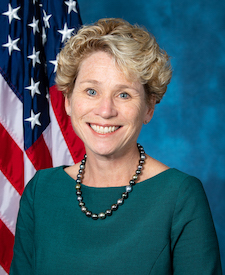
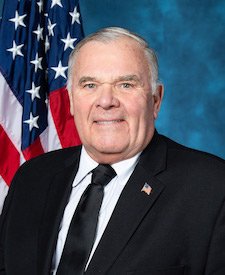
Ms. Houlahan (for herself and Mr. Baird) introduced the following …
Stakeholder Effects
cui bono?How this legislation distributes effects. Mention counts reflect frequency, not effect magnitude.
Grant applicants, Institutions of higher education, K-12 students
Positive-direction: Institutions of higher education, K-12 students, Local educational agencies, Mathematics teachers, Nonprofit education organizations, Students seeking STEM careers, Teacher education programs
Negative-direction: Grant applicants
Education Secretary staff, NSF education-program officers, National Science Foundation
Positive-direction: Education Secretary staff
Negative-direction: NSF education-program officers, National Science Foundation
Bill Structure & Actor Mappings
Who is "The Secretary" in each section?
- "nsf"
- → National Science Foundation
- "stem"
- → science, technology, engineering, and mathematics
- "nasem"
- → National Academies of Sciences, Engineering, and Medicine
We use a combination of our own taxonomy and classification in addition to large language models to assess meaning and potential beneficiaries. High confidence means strong textual evidence. Always verify with the original bill text.
Learn more about our methodology