HR7236-119

In Committee

In Good Standing Adoption Agencies Act of 2026

119th Congress Introduced Jan 23, 2026

Summary

What This Bill Does

The In Good Standing Adoption Agencies Act of 2026 adds a national list of licensed child placement agencies to Social Security Act section 474. Each State with an approved title IV-E plan must submit by January 1 of each fiscal year a list of private child placement agencies that, at the end of the preceding fiscal year, were licensed or accredited by the State, in good standing, and tax-exempt under section 501(c)(3). Child placement agency means an agency that places children in prospective adoptive homes. The HHS Secretary, through the U.S. Children's Bureau, must compile and maintain a public national list using the most recent State submissions. Beginning by the second December 31 after enactment and annually thereafter, the Secretary must report to Congress with the maintained list, identify any State-licensed child placement agency not on the list, and specify disciplinary actions States have taken against private child placement agencies. The bill also adds State compliance with the section 474(h)(1) reporting duty as a condition for adoption and legal guardianship incentive payments under section 473A.

Who Benefits and How

Prospective adoptive parents, children awaiting adoption, licensed nonprofit child placement agencies in good standing, adoption advocates, the U.S. Children's Bureau, and congressional overseers benefit from a public national list that identifies State-approved agencies and reveals missing agencies or disciplinary actions. In-good-standing nonprofit agencies may benefit from public visibility and recognition.

Who Bears the Burden and How

State child welfare agencies, private child placement agencies, the U.S. Children's Bureau, HHS reporting staff, and agencies subject to disciplinary action face annual reporting, status verification, list maintenance, public disclosure, congressional reporting, and incentive-payment compliance burdens. States that fail to submit the required list risk adoption and legal guardianship incentive consequences.

Key Provisions

  • Requires States with approved title IV-E plans to submit annual lists of private nonprofit child placement agencies in good standing.
  • Defines child placement agencies as agencies that place children in prospective adoptive homes.
  • Directs the U.S. Children's Bureau to compile and maintain a public national list from State submissions.
  • Requires annual congressional reports with the national list, missing licensed agencies, and State disciplinary actions.
  • Conditions State adoption and legal guardianship incentive payments on compliance with the reporting requirement.

Evidence Chain:

This summary is generated from the full bill text using AI analysis. Expand "Detailed Analysis" below for identified beneficiaries/burden bearers with clause-level evidence links.

At a Glance

What This Bill Does

Requires States receiving title IV-E foster-care and adoption assistance to submit by each January 1 a list of private 501(c)(3) child placement agencies that are licensed or accredited and in good standing, directs the U.S. Children's Bureau to maintain a public national list, requires annual congressional reports identifying listed agencies, licensed agencies missing from the list, and State disciplinary actions, and conditions State adoption and legal guardianship incentive payments on compliance with the reporting requirement.

Key Policy Areas

Child Welfare, Social Services, Government

Primary Purpose

Requires States receiving title IV-E foster-care and adoption assistance to submit by each January 1 a list of private 501(c)(3) child placement agencies that are licensed or accredited and in good standing, directs the U.S. Children's Bureau to maintain a public national list, requires annual congressional reports identifying listed agencies, licensed agencies missing from the list, and State disciplinary actions, and conditions State adoption and legal guardianship incentive payments on compliance with the reporting requirement.

Policy Domains

Child Welfare Social Services Government

Substantive provisions

Identified Gains
  • Prospective adoptive parents
  • Children awaiting adoption
  • Licensed nonprofit child placement agencies
  • Adoption advocates
  • U.S. Children's Bureau
  • Congressional overseers
Model: codex-gpt-5 | Version: bill_summary_v2 | Source: ih
Adoption advocates:
U.S. Children's Bureau:
Congressional overseers:
Children awaiting adoption:
Prospective adoptive parents:
Licensed nonprofit child placement agencies:
Identified Costs
  • State child welfare agencies
  • Private child placement agencies
  • HHS reporting staff
  • Agencies subject to discipline
  • States seeking incentive payments
Model: codex-gpt-5 | Version: bill_summary_v2 | Source: ih
HHS reporting staff:
State child welfare agencies:
Agencies subject to discipline:
Private child placement agencies:
States seeking incentive payments:

Legislative Progress

In Committee
Introduced Committee Passed
Jan 23, 2026

Referred to the House Committee on Ways and Means.

Jan 23, 2026

Introduced in House

Jan 23, 2026

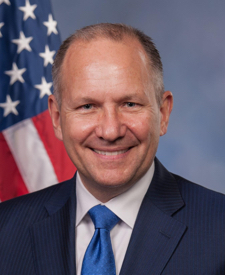
Mr. Shreve introduced the following bill; which was referred to …

Stakeholder Effects

cui bono?

How this legislation distributes effects. Mention counts reflect frequency, not effect magnitude.

Social Services
3 mentions across 1 clause
+2 positive -1 negative

Licensed nonprofit child placement agencies, Private child placement agencies, Prospective adoptive parents

Positive-direction: Licensed nonprofit child placement agencies, Prospective adoptive parents

Negative-direction: Private child placement agencies

State & Local Government
2 mentions across 1 clause
-2 negative

State child welfare agencies, States seeking incentive payments

Government
1 mention across 1 clause
-1 negative

U.S. Children's Bureau

1/2
sections analyzed
Full impact breakdown

Bill Structure & Actor Mappings

Who is "The Secretary" in each section?

Domains
Child Welfare Social Services Government

We use a combination of our own taxonomy and classification in addition to large language models to assess meaning and potential beneficiaries. High confidence means strong textual evidence. Always verify with the original bill text.

Learn more about our methodology