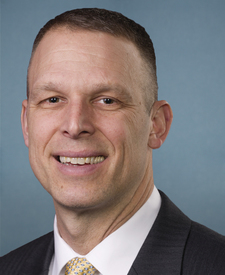
HR7213-119

In Committee

Safeguarding Benefits for Americans Act of 2026

119th Congress Introduced Jan 22, 2026

Summary

What This Bill Does

The Safeguarding Benefits for Americans Act of 2026 creates a broad eligibility restriction for federal assistance benefits furnished to an individual, household, family, or similar unit. An applicant or current recipient must file a written declaration under penalty of perjury that the person is a citizen or national of the United States. The person must also provide documentary evidence of U.S. citizenship or nationality, a photographic identity document, name and Social Security account number information, and any other identifying information required for federal verification. Program administrators must submit information to the Social Security Administration and the Department of Homeland Security so those agencies can confirm whether the number, identity data, and citizenship or nationality status match federal records. The bill therefore shifts benefit access from program-specific eligibility rules to a cross-program citizenship attestation and verification gate.

Who Benefits and How

U.S. citizens and U.S. nationals applying for federal assistance benefit from a statutory rule that reserves covered federal assistance for verified citizens or nationals. Federal and State program-integrity officials benefit from documentary, photo-ID, SSA, and DHS verification tools that can identify ineligible applicants or recipients before benefits continue. Taxpayers and lawmakers concerned about noncitizen benefit access benefit from a tighter eligibility screen.

Who Bears the Burden and How

Noncitizen applicants, recipients who cannot document citizenship or nationality quickly, households with mixed immigration status, State benefit agencies, federal assistance providers, Social Security Administration verification staff, and Department of Homeland Security verification staff face new paperwork, database matching, nonconfirmation, appeal, and benefit-interruption burdens. Program administrators must collect declarations, photo identification, citizenship evidence, Social Security data, and DHS confirmation before granting or continuing covered benefits.

Key Provisions

  • Requires verified U.S. citizenship or nationality for covered federal assistance benefits.
  • Requires written attestation under penalty of perjury from applicants and current recipients.
  • Requires documentary evidence of citizenship or nationality plus photographic identity documents.
  • Requires Social Security Administration confirmation of name, number, and citizenship or nationality status.
  • Requires Department of Homeland Security confirmation of citizenship or nationality status when identifying information is submitted.
  • Applies the verification gate across assistance furnished to individuals, households, families, and similar units.

Evidence Chain:

This summary is generated from the full bill text using AI analysis. Expand "Detailed Analysis" below for identified beneficiaries/burden bearers with clause-level evidence links.

At a Glance

What This Bill Does

Makes individuals ineligible for federal assistance benefits unless they attest under penalty of perjury that they are U.S. citizens or nationals and verify that status with documentary evidence, photo identification, Social Security Administration confirmation, and Department of Homeland Security confirmation.

Key Policy Areas

Social Services, Government, Immigration

Primary Purpose

Makes individuals ineligible for federal assistance benefits unless they attest under penalty of perjury that they are U.S. citizens or nationals and verify that status with documentary evidence, photo identification, Social Security Administration confirmation, and Department of Homeland Security confirmation.

Policy Domains

Social Services Government Immigration

Substantive provisions

Identified Gains
  • U.S. citizens receiving federal assistance
  • U.S. nationals receiving federal assistance
  • Program-integrity officials
  • Federal taxpayers
Model: codex-gpt-5 | Version: bill_summary_v2 | Source: ih
Federal taxpayers:
Program-integrity officials:
U.S. citizens receiving federal assistance:
U.S. nationals receiving federal assistance:
Identified Costs
  • Noncitizen benefit applicants
  • Mixed-status households
  • State benefit agencies
  • Federal assistance providers
  • SSA verification staff
  • DHS verification staff
Model: codex-gpt-5 | Version: bill_summary_v2 | Source: ih
DHS verification staff:
SSA verification staff:
State benefit agencies:
Mixed-status households:
Federal assistance providers:
Noncitizen benefit applicants:

Legislative Progress

In Committee
Introduced Committee Passed
Jan 22, 2026

Referred to the House Committee on Oversight and Government Reform.

Jan 22, 2026

Introduced in House

Jan 22, 2026

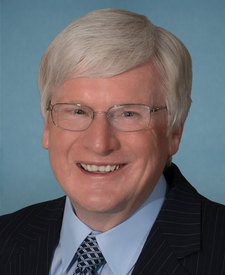
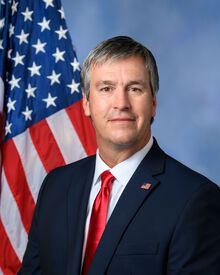
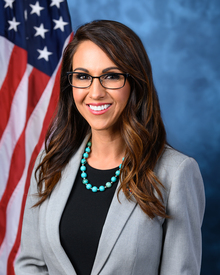
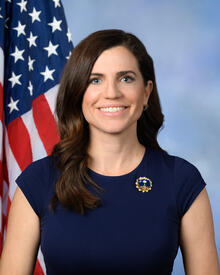
Mr. Grothman (for himself, Mr. Perry, Ms. Boebert, and Ms. …

Stakeholder Effects

cui bono?

How this legislation distributes effects. Mention counts reflect frequency, not effect magnitude.

Social Services
2 mentions across 1 clause
+1 positive -1 negative

Federal assistance providers, U.S. citizens receiving federal assistance

Positive-direction: U.S. citizens receiving federal assistance

Negative-direction: Federal assistance providers

Government
2 mentions across 1 clause
-2 negative

DHS verification staff, SSA verification staff

Immigrant Communities
1 mention across 1 clause
-1 negative

Noncitizen benefit applicants

State & Local Government
1 mention across 1 clause
-1 negative

State benefit agencies

1/2
sections analyzed
Full impact breakdown

Bill Structure & Actor Mappings

Who is "The Secretary" in each section?

Domains
Social Services Government Immigration

We use a combination of our own taxonomy and classification in addition to large language models to assess meaning and potential beneficiaries. High confidence means strong textual evidence. Always verify with the original bill text.

Learn more about our methodology