Fuel the Force Act of 2026
Summary
What This Bill Does
The Fuel the Force Act of 2026 creates a tax exclusion for experienced full-time law enforcement personnel. A qualified taxpayer is an individual who worked full-time during the taxable year as a law enforcement officer and has worked full-time as a law enforcement officer for periods totaling at least five years as of the beginning of that taxable year. Qualified income is the first $100,000 of ordinary income earned by that taxpayer during the taxable year. The law-enforcement definition covers individuals serving federal, State, or local law enforcement or corrections agencies involved in crime control, juvenile delinquency control, criminal-law enforcement, police work, corrections, probation, parole, judicial officer duties, sheriff or deputy sheriff work, and school resource officer service. The exclusion applies to taxable years beginning after enactment.
Who Benefits and How
Qualified full-time law enforcement officers, police officers, corrections officers, probation officers, parole officers, sheriffs, deputy sheriffs, judicial officers, and school resource officers benefit from excluding up to $100,000 of ordinary income from federal gross income after meeting the five-year service test. Law enforcement agencies may benefit if the tax exclusion improves retention for experienced officers.
Who Bears the Burden and How
Federal revenue collections and taxpayers broadly bear the fiscal cost of excluding up to $100,000 of ordinary income per qualified officer. IRS forms staff, tax software providers, tax preparers, payroll departments, and law enforcement employers must handle eligibility questions, service-history documentation, and reporting. Officers with incomplete service records may need to substantiate five aggregate years of full-time law enforcement work.
Key Provisions
- Creates Internal Revenue Code section 139M for certain income of law enforcement officers.
- Excludes the first $100,000 of ordinary income earned by a qualified law enforcement taxpayer.
- Requires full-time law enforcement work during the taxable year.
- Requires at least five aggregate years of prior full-time law enforcement service at the start of the taxable year.
- Defines covered officers to include police, corrections, probation, parole, judicial officers, sheriffs, deputy sheriffs, and school resource officers.
- Applies to taxable years beginning after enactment.
Evidence Chain:
This summary is generated from the full bill text using AI analysis. Expand "Detailed Analysis" below for identified beneficiaries/burden bearers with clause-level evidence links.
At a Glance
What This Bill Does
Creates a new Internal Revenue Code section 139M exclusion allowing qualified full-time law enforcement officers with at least five aggregate years of full-time service to exclude the first $100,000 of ordinary income from gross income for taxable years beginning after enactment.
Key Policy Areas
Tax, Law Enforcement, Labor
Primary Purpose
Creates a new Internal Revenue Code section 139M exclusion allowing qualified full-time law enforcement officers with at least five aggregate years of full-time service to exclude the first $100,000 of ordinary income from gross income for taxable years beginning after enactment.
Policy Domains
Substantive provisions
Identified Gains
- Qualified law enforcement officers
- Police officers
- Corrections officers
- Probation officers
- Parole officers
- Sheriffs
- School resource officers
Identified Costs
- Federal revenue collections
- IRS forms staff
- Tax software providers
- Tax preparers
- Payroll departments
- Law enforcement employers
Sponsors


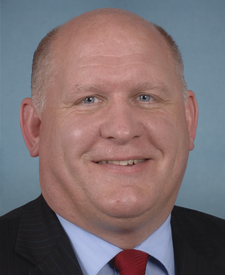
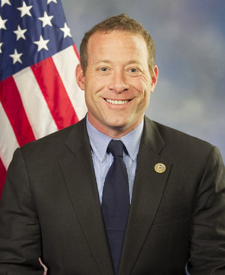

Legislative Progress
In CommitteeReferred to the House Committee on Ways and Means.
Introduced in House
Mr. Fitzpatrick (for himself and Ms. Perez) introduced the following …
Stakeholder Effects
cui bono?How this legislation distributes effects. Mention counts reflect frequency, not effect magnitude.
Corrections officers, Law enforcement employers, Parole officers
Positive-direction: Corrections officers, Parole officers, Police officers, Probation officers, Qualified law enforcement officers, School resource officers, Sheriffs
Negative-direction: Law enforcement employers
Bill Structure & Actor Mappings
Who is "The Secretary" in each section?
We use a combination of our own taxonomy and classification in addition to large language models to assess meaning and potential beneficiaries. High confidence means strong textual evidence. Always verify with the original bill text.
Learn more about our methodology