HR7206-119

In Committee

Farm and Family Relief Act

119th Congress Introduced Jan 22, 2026

Summary

What This Bill Does

The Farm and Family Relief Act combines direct producer relief, market development, timber assistance, Forest Service technology commercialization, and tariff relief. For 2025 crop-year loan commodities such as wheat, corn, grain sorghum, barley, oats, cotton, rice, and soybeans, USDA must make one-time payments within 90 days when expected gross returns per acre are below expected cost of production. Payments use 65 percent of economic loss times eligible acres, including prevented planting acres, reduced by Farmer Bridge Assistance payments, with separate $125,000 or $250,000 payment limits depending on whether at least 75 percent of average gross income comes from farming, ranching, or silviculture. Sugar beet cooperatives receive $330 million in block grants for 2025 sugar beet producer losses. Specialty crop producers receive a $5 billion market-development payment program, capped at $900,000 per producer and based on 2025 sales or new-producer 2026 sales evidence; specialty crops include traditional specialty crops, dry beans and peas, mushrooms, vegetable seed, Christmas trees, herbs and spices, honey, hops, maple sap, tea, coffee, turfgrass, grass seed, and other USDA-approved crops. Timber entities receive $500 million, split between payments or grants and loans or loan guarantees, for 2025 timber-related revenue losses or operating-cost increases. The bill also creates a Forest Service Office of Technology Transfer and Chief Commercialization Officer, creates a $15 million timber product market assistance program for exports and information exchange, terminates duties imposed by four specified executive orders, and designates provided amounts as emergency requirements.

Who Benefits and How

Commodity producers, sugar beet producers, sugar beet cooperatives, specialty crop producers, new specialty crop producers, timber growers, timber harvesters, timber haulers, timber processors, Forest Service researchers, U.S. timber product exporters, and rural farm communities benefit from direct payments, grants, loans, guarantees, market-development support, technology commercialization, and tariff termination. Producers with prevented planting acres, high farm-income reliance, or bridge-assistance offsets receive formulas tied to their actual 2025 losses or market-development needs.

Who Bears the Burden and How

USDA, the Farm Service Agency, Forest Service, Economic Research Service, World Agricultural Outlook Board, Treasury, and program administrators must calculate crop returns and costs, verify eligible acres, apply bridge-assistance offsets, enforce payment limits, run sugar beet cooperative grants, specialty crop payments, timber-loss loans, technology-transfer reports, and market assistance. Federal taxpayers and Treasury funds bear emergency spending. Applicants must document sales, losses, AGI, citizenship or entity status, timber or crop eligibility, and bridge-assistance receipts. Tariff beneficiaries lose duties from the specified executive orders.

Key Provisions

  • Creates 2025 crop-year economic assistance for eligible commodity producers when expected returns fall below production costs.
  • Provides $330 million for sugar beet cooperative block grants to compensate 2025 sugar beet losses.
  • Appropriates $5 billion for specialty crop market-development payments capped at $900,000 per producer.
  • Appropriates $500 million for qualified timber-loss payments, grants, loans, and loan guarantees.
  • Establishes a Forest Service Office of Technology Transfer and Chief Commercialization Officer.
  • Provides $15 million for U.S. agricultural timber product international market assistance.
  • Terminates duties imposed by four specified tariff executive orders.
  • Designates provided amounts as emergency requirements under budget-control law.

Evidence Chain:

This summary is generated from the full bill text using AI analysis. Expand "Detailed Analysis" below for identified beneficiaries/burden bearers with clause-level evidence links.

At a Glance

What This Bill Does

Creates a multi-part emergency farm and forest economy package: 2025 crop-year economic assistance for eligible commodity producers when expected returns fall below production costs, $330 million in sugar beet cooperative block grants, $5 billion for specialty crop market-development payments, $500 million for timber-loss payments and loans, a Forest Service Office of Technology Transfer, $15 million for U.S. timber product export-market assistance, termination of specified tariff executive orders, and emergency-designation treatment.

Key Policy Areas

Agriculture, Trade, Appropriations

Primary Purpose

Creates a multi-part emergency farm and forest economy package: 2025 crop-year economic assistance for eligible commodity producers when expected returns fall below production costs, $330 million in sugar beet cooperative block grants, $5 billion for specialty crop market-development payments, $500 million for timber-loss payments and loans, a Forest Service Office of Technology Transfer, $15 million for U.S. timber product export-market assistance, termination of specified tariff executive orders, and emergency-designation treatment.

Policy Domains

Agriculture Trade Appropriations

Substantive provisions

Identified Gains
  • Commodity producers
  • Sugar beet producers
  • Sugar beet cooperatives
  • Specialty crop producers
  • New specialty crop producers
  • Timber businesses
  • Forest Service researchers
  • U.S. timber exporters
Model: codex-gpt-5 | Version: bill_summary_v2 | Source: ih
Timber businesses: , , , , , , ,
Commodity producers: , , , , , , ,
Sugar beet producers: , , , , , , ,
U.S. timber exporters: , , , , , , ,
Sugar beet cooperatives: , , , , , , ,
Specialty crop producers: , , , , , , ,
Forest Service researchers: , , , , , , ,
New specialty crop producers: , , , , , , ,
Identified Costs
  • USDA staff
  • Farm Service Agency staff
  • Forest Service staff
  • Treasury staff
  • Program applicants
  • Federal taxpayers
  • Tariff beneficiaries
Model: codex-gpt-5 | Version: bill_summary_v2 | Source: ih
USDA staff: , , , , , , ,
Treasury staff: , , , , , , ,
Federal taxpayers: , , , , , , ,
Program applicants: , , , , , , ,
Forest Service staff: , , , , , , ,
Tariff beneficiaries: , , , , , , ,
Farm Service Agency staff: , , , , , , ,

Legislative Progress

In Committee
Introduced Committee Passed
Jan 22, 2026

Referred to the Committee on Agriculture, and in addition to …

Jan 22, 2026

Introduced in House

Jan 22, 2026

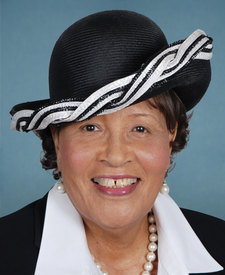
Ms. Craig (for herself, Mr. David Scott of Georgia, Mr. …

Stakeholder Effects

cui bono?

How this legislation distributes effects. Mention counts reflect frequency, not effect magnitude.

Agriculture
18 mentions across 4 clauses
+15 positive -3 negative

Commodity producers, Corn growers, Cotton growers

Positive-direction: Commodity producers, Corn growers, Cotton growers, Fruit growers, Honey producers, New specialty crop producers, Private forest landowners, Soybean growers, Specialty crop producers, Sugar beet cooperatives, Sugar beet producers, Timber growers, Timber harvesters, Vegetable growers, Wheat growers

Negative-direction: Producers documenting acres, Producers documenting sales, Timber applicants

Government
16 mentions across 9 clauses
+2 positive -14 negative

Appropriations scorekeepers, Chief Commercialization Officer, Congressional agriculture committees

Positive-direction: Congressional agriculture committees, Emergency-designated programs

Negative-direction: Appropriations scorekeepers, Chief Commercialization Officer, Customs compliance staff, Customs revenue collections, Farm Service Agency staff, Forest Service technology staff, Technology Transfer Working Group, Treasury staff, USDA grant staff, USDA market assistance staff, USDA program offices, USDA specialty crop staff, USDA timber assistance staff

Taxpayers
5 mentions across 5 clauses
-5 negative

Taxpayers

Manufacturing
5 mentions across 3 clauses
+4 positive -1 negative

Lumber producers, Paper producers, Pulp producers

Positive-direction: Lumber producers, Paper producers, Pulp producers, Timber processors

Negative-direction: Tariff-protected producers

Trade
3 mentions across 3 clauses
+3 positive

Importers subject to terminated duties, U.S. timber exporters

Research & Science
1 mention across 1 clause
+1 positive

Forest Service researchers

Technology
1 mention across 1 clause
+1 positive

Forest technology partners

Financial Services
1 mention across 1 clause
+1 positive

Venture capital companies

9/11
sections analyzed
Full impact breakdown

Bill Structure & Actor Mappings

Who is "The Secretary" in each section?

Domains
Agriculture Trade Appropriations

We use a combination of our own taxonomy and classification in addition to large language models to assess meaning and potential beneficiaries. High confidence means strong textual evidence. Always verify with the original bill text.

Learn more about our methodology