HR7198-119

In Committee

Ensuring Access to General Surgery Act of 2026

119th Congress Introduced Jan 22, 2026

Summary

What This Bill Does

The Ensuring Access to General Surgery Act responds to projected national surgeon shortages and maldistribution, including HRSA findings that rural areas have only 69 percent of the general surgeons needed. It adds a Public Health Service Act section on general surgery shortage areas. HHS, acting through HRSA, must study whether existing health professional shortage area designations accurately measure local access to general surgeons for underserved urban, suburban, and rural populations. The study must assess whether a measure based on general surgeons practicing within hospital service areas would be more accurate, and must consider a methodology using hospitals with surgery services, Medicare patient-origin ZIP Code data, identification of actively practicing general surgeons, general-surgeon-to-population ratios, and threshold ratios for optimal supply, adequate supply, shortage, and critical shortage. HHS cannot assume the current national supply is adequate or optimal and must consider wait times, health outcomes, ground transportation time to the nearest surgical center, critical access hospitals with surgical capabilities but no general surgeon, and patient experience. HHS must consult medical societies, surgical-facility organizations, general surgery experts, and patient organizations, report to Congress within one year, periodically publish Federal Register data comparing availability and need, and may later designate general surgery shortage areas through notice-and-comment rulemaking with annual review and procedures similar to health professional shortage areas.

Who Benefits and How

Underserved rural patients, underserved urban patients, underserved suburban patients, critical access hospitals, hospitals with surgery services, general surgeons, medical societies, patient organizations, and rural health advocates benefit from better data on where general surgery access is inadequate. HRSA and HHS benefit from a statutory pathway to develop general surgery shortage area designations that could guide future workforce policy. Congress benefits from a one-year report and periodic public data.

Who Bears the Burden and How

HHS and HRSA staff must conduct the study, build or test methodology, collect Medicare patient-origin and surgeon workforce data, consult stakeholders, publish Federal Register data, report to Congress, and possibly conduct notice-and-comment rulemaking with annual designation reviews. Hospitals, medical societies, surgical facilities, and patient organizations may need to provide data or consultation. Areas not designated as shortages may receive less policy attention if the methodology is later used for funding or workforce incentives.

Key Provisions

  • Requires HHS through HRSA to study whether current shortage designations accurately measure access to general surgeons.
  • Requires evaluation of hospital service area, Medicare patient-origin, surgeon identification, and surgeon-to-population ratio methodologies.
  • Requires threshold analysis for optimal supply, adequate supply, shortage, and critical shortage of general surgeons.
  • Requires consideration of wait times, health outcomes, transportation time, critical access hospitals lacking surgeons, and patient experience.
  • Requires stakeholder consultation, a congressional report within one year, and periodic Federal Register publication of access data.
  • Allows HHS to create general surgery shortage area designations through notice-and-comment rulemaking and annual review.

Evidence Chain:

This summary is generated from the full bill text using AI analysis. Expand "Detailed Analysis" below for identified beneficiaries/burden bearers with clause-level evidence links.

At a Glance

What This Bill Does

Requires HHS, through HRSA, to study whether current health professional shortage designations accurately capture access to general surgeons, evaluate hospital service area and Medicare patient-origin methodologies, develop general-surgeon-to-population thresholds for optimal, adequate, shortage, and critical shortage levels, report to Congress within one year, periodically publish access data, and optionally create general surgery shortage area designations through notice-and-comment rulemaking with annual review.

Key Policy Areas

Healthcare, Research & Science, Rural Health

Primary Purpose

Requires HHS, through HRSA, to study whether current health professional shortage designations accurately capture access to general surgeons, evaluate hospital service area and Medicare patient-origin methodologies, develop general-surgeon-to-population thresholds for optimal, adequate, shortage, and critical shortage levels, report to Congress within one year, periodically publish access data, and optionally create general surgery shortage area designations through notice-and-comment rulemaking with annual review.

Policy Domains

Healthcare Research & Science Rural Health

Substantive provisions

Identified Gains
  • Underserved rural patients
  • Underserved urban patients
  • Critical access hospitals
  • Hospitals with surgery services
  • General surgeons
  • Medical societies
  • Patient organizations
Model: codex-gpt-5 | Version: bill_summary_v2 | Source: ih
General surgeons: , ,
Medical societies: , ,
Patient organizations: , ,
Critical access hospitals: , ,
Underserved rural patients: , ,
Underserved urban patients: , ,
Hospitals with surgery services: , ,
Identified Costs
  • HHS staff
  • HRSA workforce analysts
  • Hospitals providing data
  • Medical societies
  • Surgical facilities
  • Patient organizations
Model: codex-gpt-5 | Version: bill_summary_v2 | Source: ih
HHS staff: , ,
Medical societies: , ,
Surgical facilities: , ,
Patient organizations: , ,
HRSA workforce analysts: , ,
Hospitals providing data: , ,

Legislative Progress

In Committee
Introduced Committee Passed
Jan 22, 2026

Referred to the House Committee on Energy and Commerce.

Jan 22, 2026

Introduced in House

Jan 22, 2026

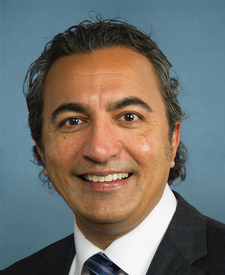
Mr. Bera (for himself, Mr. Bacon, Mr. Peters, and Mr. …

Stakeholder Effects

cui bono?

How this legislation distributes effects. Mention counts reflect frequency, not effect magnitude.

Healthcare
13 mentions across 3 clauses
+10 positive -3 negative

Critical access hospitals, General surgeons, Hospitals providing data

Positive-direction: Critical access hospitals, General surgeons, Hospitals with surgery services, Rural hospitals, Underserved rural patients, Underserved suburban patients, Underserved urban patients

Negative-direction: Hospitals providing data, Medical societies, Surgical facilities

Government
5 mentions across 3 clauses
+1 positive -4 negative

Congressional health committees, HHS staff, HRSA workforce analysts

Positive-direction: Congressional health committees

Negative-direction: HHS staff, HRSA workforce analysts

Non-Profit Institutions
1 mention across 1 clause
-1 negative

Patient organizations

3/4
sections analyzed
Full impact breakdown

Bill Structure & Actor Mappings

Who is "The Secretary" in each section?

Domains
Healthcare Research & Science Rural Health

We use a combination of our own taxonomy and classification in addition to large language models to assess meaning and potential beneficiaries. High confidence means strong textual evidence. Always verify with the original bill text.

Learn more about our methodology