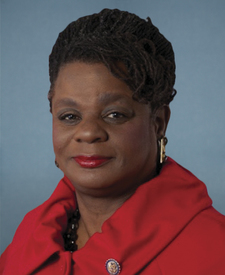
HR7197-119

In Committee

Home Energy Relief Act

119th Congress Introduced Jan 22, 2026

Summary

What This Bill Does

The Home Energy Relief Act changes federal home energy rebate programs created by the Inflation Reduction Act. It repeals provisions that barred HOMES rebate program and high-efficiency electric home rebate program funds from being combined with other federal grants or rebates, making it easier to stack assistance. It also adds a bonus rebate option under the high-efficiency electric home rebate program. From existing grant amounts, a State energy office or Indian Tribe may provide an eligible entity that already received a high-efficiency electric home rebate with a bonus rebate for an appliance or nonappliance upgrade in a qualified electrification project involving housing built before January 1, 1970. The bonus cannot exceed 20 percent of the initial rebate, but a usual subsection cap does not apply to the bonus; total rebates still cannot exceed the project cost. DOE must report to the House Energy and Commerce Committee and Senate Energy and Natural Resources Committee within two years and annually thereafter on the number of households receiving HOMES or high-efficiency electric home rebates, average household energy savings from rebated upgrades, purchases, or retrofits, and recommendations to increase access for low-income and high-energy-burden households.

Who Benefits and How

Low-income households, high-energy-burden households, owners and renters in pre-1970 housing, households electrifying appliances, State energy offices, Indian Tribes, home energy contractors, appliance sellers, and weatherization or electrification program administrators benefit from rebate stacking and a 20 percent bonus rebate for older housing electrification projects. Households may face lower out-of-pocket costs for upgrades that reduce energy use. Congress benefits from annual data on household participation and energy savings.

Who Bears the Burden and How

DOE rebate program staff, State energy offices, Indian Tribes, and rebate administrators must update program rules, determine when other federal funds can be combined, calculate bonus rebates, prevent total rebates from exceeding project cost, collect energy-savings data, and prepare annual reports. Federal rebate funds may be spent more quickly or on higher per-project support. Contractors and households must document eligibility, project costs, housing age, and qualifying electrification purchases or upgrades.

Key Provisions

  • Repeals HOMES rebate restrictions on combining rebates with other federal grants or rebates.
  • Repeals high-efficiency electric home rebate restrictions on combining rebates with other federal assistance.
  • Allows State energy offices and Indian Tribes to provide bonus rebates for qualified electrification projects in housing built before January 1, 1970.
  • Caps the bonus rebate at 20 percent of the initial high-efficiency electric home rebate.
  • Bars total rebates from exceeding qualified electrification project costs.
  • Requires DOE annual reports on rebate households, average energy savings, and access recommendations for low-income and high-energy-burden households.

Evidence Chain:

This summary is generated from the full bill text using AI analysis. Expand "Detailed Analysis" below for identified beneficiaries/burden bearers with clause-level evidence links.

At a Glance

What This Bill Does

Removes Inflation Reduction Act restrictions that prevented HOMES and high-efficiency electric home rebates from being combined with other federal grants or rebates, allows State energy offices and Indian Tribes to provide bonus high-efficiency electric home rebates of up to 20 percent for qualified electrification projects in housing built before January 1, 1970, caps total rebates at project cost, and requires DOE annual reports on household participation, average energy savings, and access for low-income and high-energy-burden households.

Key Policy Areas

Energy, Housing, Consumers

Primary Purpose

Removes Inflation Reduction Act restrictions that prevented HOMES and high-efficiency electric home rebates from being combined with other federal grants or rebates, allows State energy offices and Indian Tribes to provide bonus high-efficiency electric home rebates of up to 20 percent for qualified electrification projects in housing built before January 1, 1970, caps total rebates at project cost, and requires DOE annual reports on household participation, average energy savings, and access for low-income and high-energy-burden households.

Policy Domains

Energy Housing Consumers

Substantive provisions

Identified Gains
  • Low-income households
  • High-energy-burden households
  • Residents of pre-1970 housing
  • State energy offices
  • Indian Tribes
  • Home energy contractors
  • Appliance sellers
Model: codex-gpt-5 | Version: bill_summary_v2 | Source: ih
Indian Tribes: , ,
Appliance sellers: , ,
State energy offices: , ,
Low-income households: , ,
Home energy contractors: , ,
High-energy-burden households: , ,
Residents of pre-1970 housing: , ,
Identified Costs
  • DOE rebate program staff
  • State rebate administrators
  • Tribal rebate administrators
  • Federal rebate funds
  • Households documenting project costs
Model: codex-gpt-5 | Version: bill_summary_v2 | Source: ih
Federal rebate funds: , ,
DOE rebate program staff: , ,
State rebate administrators: , ,
Tribal rebate administrators: , ,
Households documenting project costs: , ,

Legislative Progress

In Committee
Introduced Committee Passed
Jan 22, 2026

Referred to the House Committee on Energy and Commerce.

Jan 22, 2026

Introduced in House

Jan 22, 2026

Mr. Bell (for himself and Mr. Mannion) introduced the following …

Stakeholder Effects

cui bono?

How this legislation distributes effects. Mention counts reflect frequency, not effect magnitude.

Consumers
6 mentions across 3 clauses
+6 positive

High-energy-burden households, Low-income households

Government
3 mentions across 2 clauses
+1 positive -2 negative

Congressional energy committees, DOE rebate program staff, Federal rebate funds

Positive-direction: Congressional energy committees

Negative-direction: DOE rebate program staff, Federal rebate funds

State & Local Government
3 mentions across 3 clauses
+1 positive -2 negative

State energy offices, State rebate administrators

State energy offices faces effects in multiple directions

Tribal Nations
3 mentions across 3 clauses
+1 positive -2 negative

Indian Tribes, Tribal rebate administrators

Positive-direction: Indian Tribes

Negative-direction: Tribal rebate administrators

Construction
2 mentions across 2 clauses
+2 positive

Home energy contractors

Real Estate
1 mention across 1 clause
+1 positive

Residents of pre-1970 housing

Retail
1 mention across 1 clause
+1 positive

Appliance sellers

3/4
sections analyzed
Full impact breakdown

Bill Structure & Actor Mappings

Who is "The Secretary" in each section?

Domains
Energy Housing Consumers

We use a combination of our own taxonomy and classification in addition to large language models to assess meaning and potential beneficiaries. High confidence means strong textual evidence. Always verify with the original bill text.

Learn more about our methodology