U.S.-Israel Anti-Killer Drone Act of 2026
Summary
What This Bill Does
The U.S.-Israel Anti-Killer Drone Act responds to unmanned aircraft threats from Iran and Iran-backed groups by expanding U.S.-Israel counter-drone cooperation. The findings describe attacks on U.S. forces, U.S. facilities, Israel, Saudi Arabia, and the United Arab Emirates. The bill states that the United States should deepen joint research, development, fielding, threat-information exchange, joint training, acquisition-office coordination, and use of the U.S.-Israel Operations-Technology Working Group. It amends section 1278 of the FY2020 National Defense Authorization Act to increase the covered counter-unmanned systems amount from $55 million to $100 million. It also requires annual Defense Department reports to congressional defense committees describing prior-year activities, progress against operational requirements, harmonization with U.S. programs and DOD contractor programs, transition to U.S. or Israeli acquisition managers, funding recommendations, and assessments of the Iran and proxy UAS threat and current anti-UAS capability adequacy.
Who Benefits and How
U.S. Armed Forces, Israeli military services, U.S. bases in the Middle East, Israeli civilians, and regional partners exposed to Iran-backed drone attacks benefit from expanded counter-UAS research and fielding. U.S. and Israeli defense technology offices benefit from a larger authorized cooperation amount and clearer reporting around transition to acquisition programs. Defense contractors working on counter-drone systems may benefit from harmonization with DOD programs and acquisition pathways. Congressional defense committees benefit from annual progress, funding, and threat reports.
Who Bears the Burden and How
Federal taxpayers bear the cost of increasing the authorized amount to $100 million. Defense Department offices must coordinate with Israeli counterparts, track joint activities, assess Iran and proxy threats, align with contractor programs, identify acquisition managers, make funding recommendations, and submit annual reports. Programs that cannot transition from research to acquisition may face congressional scrutiny. Iran-backed armed groups face greater counter-drone capability pressure if the cooperation succeeds.
Key Provisions
- States congressional support for deeper U.S.-Israel counter-unmanned systems cooperation.
- Increases the covered cooperation amount from $55 million to $100 million.
- Requires annual Defense Department reporting on prior-year counter-UAS activities and operational progress.
- Requires reporting on harmonization with U.S. programs, DOD contractor programs, and acquisition transition.
- Requires funding recommendations and assessments of Iran and proxy unmanned systems threats.
- Requires assessment of whether U.S. and Israeli anti-UAS capabilities are adequate for the threat.
Evidence Chain:
This summary is generated from the full bill text using AI analysis. Expand "Detailed Analysis" below for identified beneficiaries/burden bearers with clause-level evidence links.
At a Glance
What This Bill Does
Increases the U.S.-Israel counter-unmanned systems cooperation authorization from $55 million to $100 million and requires annual Defense Department reports on joint research, threat assessments, information sharing, training, acquisition transition, contractor alignment, and anti-drone capability gaps tied to Iran and Iran-backed proxy threats.
Key Policy Areas
Defense, Foreign Policy, Technology
Primary Purpose
Increases the U.S.-Israel counter-unmanned systems cooperation authorization from $55 million to $100 million and requires annual Defense Department reports on joint research, threat assessments, information sharing, training, acquisition transition, contractor alignment, and anti-drone capability gaps tied to Iran and Iran-backed proxy threats.
Policy Domains
Substantive provisions
Identified Gains
- U.S. Armed Forces
- Israeli military services
- U.S. Middle East bases
- Israeli civilians
- Defense technology offices
- Counter-drone contractors
- Congressional defense committees
Identified Costs
- Federal taxpayers
- Defense Department program offices
- Acquisition program managers
- Iran-backed armed groups
Sponsors
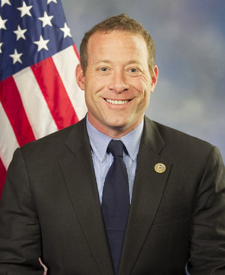

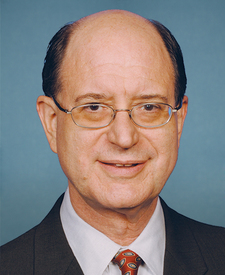

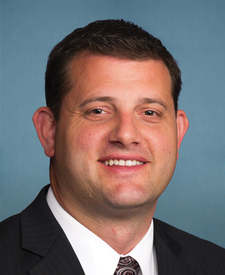
Legislative Progress
In CommitteeReferred to the Committee on Armed Services, and in addition …
Introduced in House
Mr. Gottheimer (for himself, Mr. Garbarino, Mr. Lieu, Mr. Bacon, …
Stakeholder Effects
cui bono?How this legislation distributes effects. Mention counts reflect frequency, not effect magnitude.
Counter-drone contractors, Defense Department program offices, Defense technology offices
Positive-direction: Counter-drone contractors, Defense technology offices, Israeli military services, U.S. Armed Forces
Negative-direction: Defense Department program offices
Bill Structure & Actor Mappings
Who is "The Secretary" in each section?
We use a combination of our own taxonomy and classification in addition to large language models to assess meaning and potential beneficiaries. High confidence means strong textual evidence. Always verify with the original bill text.
Learn more about our methodology