Fair Legal Access Grants Act
Summary
What This Bill Does
The Fair Legal Access Grants Act adds a new Omnibus Crime Control and Safe Streets Act grant program for extreme-risk protection order petitioners. The Attorney General, through DOJ grant authorities, may award grants to States, local governments, and Tribal governments to provide covered petitioners with legal representation and legal resources. Allowable uses include legal counsel, interpretation, translation, multilingual legal resource centers, personnel in district attorney offices or law-enforcement agencies, legal resource coordinators, subgrants to community legal aid nonprofits, and training for legal-service providers, law enforcement, prosecutors, and court personnel on ERPOs and the relationship between ERPOs and domestic-violence protection orders. The bill authorizes $50 million per year from fiscal year 2028 through fiscal year 2034.
Who Benefits and How
Family members, household members, intimate partners, law-enforcement petitioners, and other covered ERPO petitioners benefit from legal counsel, translated materials, multilingual resource centers, and trained support staff. Community legal aid nonprofits benefit from subgrant opportunities. States, local governments, and Tribal governments benefit from federal funding for ERPO legal-access infrastructure. Courts, prosecutors, and law enforcement benefit from training that clarifies ERPO practice and the interaction with domestic-violence protection orders.
Who Bears the Burden and How
DOJ grant staff must design, award, monitor, and report on a new ERPO legal-access grant stream. State, local, and Tribal grantees must manage funds, hire personnel, run resource centers, translate materials, train staff, and comply with federal grant rules. Federal taxpayers bear the authorized $50 million annual cost. Courts, prosecutors, law-enforcement agencies, and legal-service providers may face new training and coordination duties when participating in funded programs.
Key Provisions
- Creates a DOJ grant program for legal representation and resources for covered ERPO petitioners.
- Authorizes grants to State, local, and Tribal governments.
- Permits funds for counsel, interpretation, translation, multilingual resource centers, personnel, coordinators, and legal aid subgrants.
- Requires training support for legal-service providers, law enforcement, prosecutors, and court personnel.
- Clarifies training on the relationship between ERPOs and domestic-violence protection orders.
- Authorizes $50 million annually for fiscal years 2028 through 2034.
Evidence Chain:
This summary is generated from the full bill text using AI analysis. Expand "Detailed Analysis" below for identified beneficiaries/burden bearers with clause-level evidence links.
At a Glance
What This Bill Does
Creates DOJ Office of Justice Programs grants for legal representation, translation, multilingual legal resource centers, subgrants, personnel, and training to help covered petitioners seek extreme-risk protection orders, authorizing $50 million annually for fiscal years 2028 through 2034.
Key Policy Areas
Law Enforcement, Legal Services, Public Safety
Primary Purpose
Creates DOJ Office of Justice Programs grants for legal representation, translation, multilingual legal resource centers, subgrants, personnel, and training to help covered petitioners seek extreme-risk protection orders, authorizing $50 million annually for fiscal years 2028 through 2034.
Policy Domains
Substantive provisions
Identified Gains
- ERPO petitioners
- Community legal aid nonprofits
- State governments
- Local governments
- Tribal governments
- Prosecutor offices
- Court personnel
Identified Costs
- DOJ grant staff
- Federal taxpayers
- State grantees
- Local grantees
- Tribal grantees
- Law-enforcement trainers
Sponsors
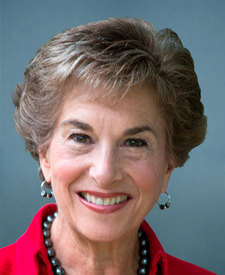
Legislative Progress
In CommitteeReferred to the House Committee on the Judiciary.
Introduced in House
Ms. Chu (for herself, Mr. Goldman of New York, Ms. …
Stakeholder Effects
cui bono?How this legislation distributes effects. Mention counts reflect frequency, not effect magnitude.
Court personnel, DOJ grant administrators, DOJ grant staff
Positive-direction: Court personnel
Negative-direction: DOJ grant administrators, DOJ grant staff
Local governments, State governments
Legal resource centers, Legal-service providers
Positive-direction: Legal resource centers
Negative-direction: Legal-service providers
Bill Structure & Actor Mappings
Who is "The Secretary" in each section?
We use a combination of our own taxonomy and classification in addition to large language models to assess meaning and potential beneficiaries. High confidence means strong textual evidence. Always verify with the original bill text.
Learn more about our methodology