Language Access to Gun Violence Prevention Strategies Act of 2026
Summary
What This Bill Does
The Language Access to Gun Violence Prevention Strategies Act creates a language-access overlay for federal gun-violence prevention work. It defines priority languages as at least the 10 most common non-English languages in the United States, specifically including Mandarin, Cantonese, Japanese, and Korean. HHS and DOJ must translate public gun-violence prevention and firearm-safety materials, including extreme-risk protection order materials, safe-storage information, and Bipartisan Safer Communities Act resources on mental health, crisis response, school-based mental health, and suicide prevention. Community-based organizations with language-community relationships review translations and receive appropriated funds for that review. The Attorney General must prioritize certain State, local, and Tribal grant applications that include targeted outreach plans for limited-English-proficient populations and must require translated public-facing documents when a covered language community reaches a 3 percent or 500-person threshold. DOJ and HHS must run culturally appropriate national public-awareness campaigns, provide subgrant information for community-based organizations, and report to Congress on funds used.
Who Benefits and How
Limited-English-proficient communities, Mandarin speakers, Cantonese speakers, Japanese speakers, Korean speakers, and other priority-language communities benefit because federal gun-safety, ERPO, safe-storage, mental-health, crisis-response, school-safety, and suicide-prevention information would be accessible in languages they can use. Community-based organizations benefit from funded translation review and possible subgrants for outreach. State crisis-intervention grantees, local violence-prevention programs, Tribal governments, and public-health partners benefit if language-access plans improve grant priority and outreach effectiveness.
Who Bears the Burden and How
DOJ, HHS, OJP, CDC, and grant administrators must identify priority languages, translate materials, manage community review, publish in-language materials, update grant guidance, assess outreach plans, track threshold-based translation duties, administer subgrants, coordinate national campaigns, and report spending to Congress. State, local, and Tribal grantees seeking priority must design outreach plans, engage community-based organizations, translate documents, measure limited-English-proficient population reach, and report language-access outcomes. Federal taxpayers bear the cost of translations, reviews, campaigns, grants, and reports.
Key Provisions
- Defines priority languages, limited-English-proficient populations, language access, community-based organizations, and gun-violence prevention strategy terms.
- Requires DOJ and HHS translation of gun-violence prevention, firearm-safety, ERPO, safe-storage, mental-health, school-safety, crisis-response, and suicide-prevention materials.
- Requires community-based organization review of translations and appropriates funds for that review.
- Prioritizes crisis-intervention and gun-violence reduction grants with targeted outreach plans for limited-English-proficient populations.
- Requires DOJ and HHS culturally appropriate national public-awareness campaigns with subgrant information for community organizations.
- Requires congressional reports on funds used for the DOJ and HHS language-access campaigns.
Evidence Chain:
This summary is generated from the full bill text using AI analysis. Expand "Detailed Analysis" below for identified beneficiaries/burden bearers with clause-level evidence links.
At a Glance
What This Bill Does
Requires DOJ, HHS, OJP, and CDC to make gun-violence prevention, firearm-safety, extreme-risk protection order, safe-storage, mental-health, school-safety, and suicide-prevention materials available in priority non-English languages, funds community review of translations, prioritizes grants with outreach plans for limited-English-proficient populations, and requires national in-language public-awareness campaigns and congressional reports.
Key Policy Areas
Healthcare, Law Enforcement, Social Services
Primary Purpose
Requires DOJ, HHS, OJP, and CDC to make gun-violence prevention, firearm-safety, extreme-risk protection order, safe-storage, mental-health, school-safety, and suicide-prevention materials available in priority non-English languages, funds community review of translations, prioritizes grants with outreach plans for limited-English-proficient populations, and requires national in-language public-awareness campaigns and congressional reports.
Policy Domains
Substantive provisions
Identified Gains
- Limited-English-proficient communities
- Mandarin speakers
- Cantonese speakers
- Japanese speakers
- Korean speakers
- Community-based organizations
- State crisis-intervention grantees
- Tribal governments
Identified Costs
- DOJ staff
- HHS staff
- OJP grant administrators
- CDC public-health staff
- State crisis-intervention grantees
- Local violence-prevention programs
- Federal taxpayers
Sponsors


Legislative Progress
In CommitteeReferred to the Committee on the Judiciary, and in addition …
Introduced in House
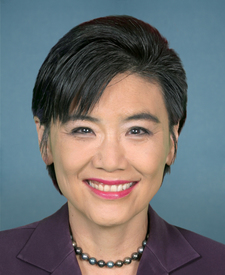
Ms. Chu (for herself, Ms. Norton, Ms. Tokuda, Mr. Lynch, …
Stakeholder Effects
cui bono?How this legislation distributes effects. Mention counts reflect frequency, not effect magnitude.
CDC injury-prevention staff, Congressional oversight committees, DOJ
Positive-direction: Congressional oversight committees, Language-access programs
Negative-direction: CDC injury-prevention staff, DOJ, DOJ budget staff, DOJ translation staff, HHS, HHS budget staff, HHS public-health staff, HHS translation staff, OJP grant administrators, OJP staff
Community-based organizations, Grant applicants, Gun-violence prevention coalitions
Positive-direction: Community-based organizations, Gun-violence prevention coalitions
Negative-direction: Grant applicants
ERPO information users, Priority-language speakers, Safe-storage information users
Bill Structure & Actor Mappings
Who is "The Secretary" in each section?
We use a combination of our own taxonomy and classification in addition to large language models to assess meaning and potential beneficiaries. High confidence means strong textual evidence. Always verify with the original bill text.
Learn more about our methodology