Seton Hall Fire Victims Remembrance Act of 2026
Summary
What This Bill Does
The Seton Hall Fire Victims Remembrance Act of 2026 directs the Secretary of Education, in consultation with the National Institute of Standards and Technology Director and other experts, to finalize standards for fire suppression systems in dormitories and other student residential facilities at covered higher-education institutions within two years. The standards must include a phase-in timeline and compliance threshold for receiving a designation and must be updated every 10 years. Within three years, Education and NIST must submit recommendations to Congress on maximizing compliance and provide technical assistance to covered institutions. Within one year after standards are finalized and every five years after that, each covered institution receiving applicable federal education funds must assess compliance, have accuracy determined by a fire-suppression expert, certify the assessment, and submit it to Education. Within six months, Education must designate each dormitory and residential facility as Federally Recognized Fire-Safe Campus or Not Federally Recognized Fire-Safe Campus and publish the assessments and designations on an accessible website. The bill adds compliance to Higher Education Act program participation agreements but says a not-fire-safe designation alone does not eliminate Title IV eligibility.
Who Benefits and How
Students living in campus dormitories, student families, campus safety advocates, and colleges that meet fire-suppression standards benefit from clearer safety rules and public designations. Prospective students and parents benefit from accessible Department of Education information about dormitory fire-safety compliance. NIST and fire-suppression experts help shape technical standards. Compliant institutions can use a federally recognized fire-safe designation to demonstrate safety investments.
Who Bears the Burden and How
Covered colleges and universities must assess dormitory compliance, hire or use fire-suppression experts, certify accuracy, submit reports every five years, respond to technical assistance, and potentially invest in sprinkler or other fire-suppression upgrades. Department of Education and NIST staff must develop standards, update them every 10 years, advise Congress, provide technical assistance, review assessments, make designations, and maintain public data. Institutions designated not fire-safe may face reputational costs even though Title IV participation is not automatically ended.
Key Provisions
- Requires Education and NIST to finalize dormitory fire-suppression standards within two years.
- Requires standards to include phase-in timelines and compliance thresholds for designations.
- Requires Education and NIST to update the standards every 10 years and report compliance recommendations to Congress.
- Requires covered colleges to submit expert-verified compliance assessments one year after standards and every five years thereafter.
- Requires public fire-safe or not-fire-safe campus designations for dormitories and student residential facilities.
- Adds compliance to Higher Education Act participation agreements while preserving Title IV eligibility despite a not-fire-safe designation alone.
Evidence Chain:
This summary is generated from the full bill text using AI analysis. Expand "Detailed Analysis" below for identified beneficiaries/burden bearers with clause-level evidence links.
At a Glance
What This Bill Does
Requires the Department of Education, with NIST consultation, to create campus dormitory fire-suppression standards within two years, update them every 10 years, provide technical assistance, require covered colleges to submit expert-verified compliance assessments every five years, publicly designate campuses as fire-safe or not fire-safe, and add compliance to Higher Education Act participation agreements without removing Title IV eligibility solely for a not-fire-safe designation.
Key Policy Areas
Education, Public Safety, Government
Primary Purpose
Requires the Department of Education, with NIST consultation, to create campus dormitory fire-suppression standards within two years, update them every 10 years, provide technical assistance, require covered colleges to submit expert-verified compliance assessments every five years, publicly designate campuses as fire-safe or not fire-safe, and add compliance to Higher Education Act participation agreements without removing Title IV eligibility solely for a not-fire-safe designation.
Policy Domains
Substantive provisions
Identified Gains
- Dormitory residents
- Prospective students
- Parents of students
- Campus safety advocates
- Compliant colleges
- Fire-suppression experts
Identified Costs
- Covered colleges
- University housing offices
- Department of Education staff
- NIST fire-safety staff
- Campus facilities departments
Sponsors

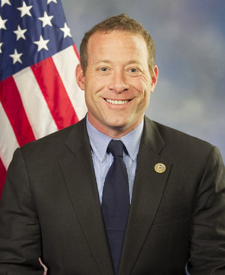
Legislative Progress
In CommitteeMr. Kean (for himself and Mr. Gottheimer) introduced the following …
Referred to the House Committee on Education and Workforce.
Introduced in House
Stakeholder Effects
cui bono?How this legislation distributes effects. Mention counts reflect frequency, not effect magnitude.
Compliant colleges, Covered colleges, Dormitory residents
Positive-direction: Compliant colleges, Dormitory residents, Prospective students
Negative-direction: Covered colleges
Department of Education staff, NIST fire-safety staff
Bill Structure & Actor Mappings
Who is "The Secretary" in each section?
We use a combination of our own taxonomy and classification in addition to large language models to assess meaning and potential beneficiaries. High confidence means strong textual evidence. Always verify with the original bill text.
Learn more about our methodology