WATCH Act
Summary
What This Bill Does
The WATCH Act amends Public Health Service Act section 495 to add inspection and certification requirements for foreign laboratories that receive federal funding for animal research under NIH or national research institute grants, contracts, or cooperative agreements. As a condition of eligibility, laboratories outside the United States must undergo quarterly inspections to evaluate compliance with animal-research requirements. The Secretary, in consultation with foreign regulators and international organizations, must establish a process for inspecting foreign laboratories with Animal Welfare Assurances. Inspections must evaluate animal care committees, review and evaluation of animal care and treatment, and recordkeeping and reporting procedures. After each inspection, the inspecting authority must issue a certification of compliance for laboratories that comply, and the Office of Laboratory Animal Welfare must keep those certificates publicly accessible with Animal Welfare Assurance information. Noncompliant laboratories get a reasonable opportunity for corrective action. If a foreign facility remains noncompliant, the Secretary must suspend or revoke the relevant grant, contract, or cooperative agreement under NIH Director conditions. The Secretary must designate the inspecting authority, coordinate with foreign regulators, and enter foreign-government agreements as needed. The amendment takes effect 180 days after enactment.
Who Benefits and How
Animal welfare advocates, NIH oversight officials, the Office of Laboratory Animal Welfare, and U.S. research sponsors benefit from stronger visibility into foreign laboratory compliance. Compliant foreign laboratories benefit from public certifications that show continued adherence to Animal Welfare Assurance obligations. U.S. taxpayers and research institutions benefit if federal funds are less likely to support animal research at foreign facilities with weak oversight.
Who Bears the Burden and How
Foreign laboratories receiving NIH funds must undergo quarterly inspections, maintain animal care committees, document care and treatment review, keep records, correct deficiencies, and risk suspension or revocation of funding. NIH, HHS, Office of Laboratory Animal Welfare staff, designated inspecting authorities, and foreign regulatory partners must build an inspection and certification process, publish certificates, coordinate across borders, and enforce corrective action. Research projects using foreign laboratories may face delays or funding risk if inspections identify noncompliance.
Key Provisions
- Requires quarterly inspections for foreign laboratories receiving NIH or national research institute funds for animal research.
- Requires inspections to evaluate animal care committees, care and treatment review, recordkeeping, and reporting.
- Requires compliance certifications after each successful inspection and public access through the Office of Laboratory Animal Welfare.
- Requires corrective-action opportunities for deficient laboratories.
- Requires suspension or revocation of grants, contracts, or cooperative agreements when foreign facilities fail to correct noncompliance.
- Directs HHS and NIH to designate inspectors and coordinate with foreign regulators and governments.
Evidence Chain:
This summary is generated from the full bill text using AI analysis. Expand "Detailed Analysis" below for identified beneficiaries/burden bearers with clause-level evidence links.
At a Glance
What This Bill Does
Requires foreign laboratories receiving NIH or national research institute funding for animal research to undergo quarterly inspections tied to Animal Welfare Assurance compliance, receive public certifications if compliant, take corrective action if deficient, and face suspension or revocation of grants, contracts, or cooperative agreements if noncompliance is not corrected.
Key Policy Areas
Healthcare, Research & Science, Government
Primary Purpose
Requires foreign laboratories receiving NIH or national research institute funding for animal research to undergo quarterly inspections tied to Animal Welfare Assurance compliance, receive public certifications if compliant, take corrective action if deficient, and face suspension or revocation of grants, contracts, or cooperative agreements if noncompliance is not corrected.
Policy Domains
Substantive provisions
Identified Gains
- Animal welfare advocates
- NIH oversight officials
- Office of Laboratory Animal Welfare staff
- Compliant foreign laboratories
- U.S. research institutions
Identified Costs
- Foreign laboratories
- NIH grant administrators
- HHS inspection staff
- Foreign regulatory partners
- Research projects using foreign laboratories
Sponsors
Legislative Progress
In CommitteeReferred to the House Committee on Energy and Commerce.
Introduced in House
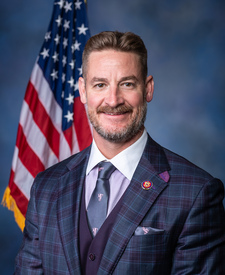
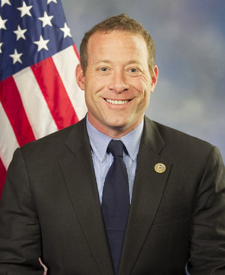
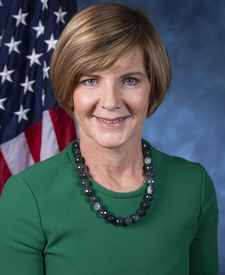
Mr. Steube (for himself and Ms. Lee of Nevada) introduced …
Stakeholder Effects
cui bono?How this legislation distributes effects. Mention counts reflect frequency, not effect magnitude.
HHS inspection staff, NIH grant administrators, Office of Laboratory Animal Welfare staff
Positive-direction: Office of Laboratory Animal Welfare staff
Negative-direction: HHS inspection staff, NIH grant administrators
Compliant foreign laboratories, Foreign laboratories, Research projects using foreign laboratories
Positive-direction: Compliant foreign laboratories
Negative-direction: Foreign laboratories, Research projects using foreign laboratories
Bill Structure & Actor Mappings
Who is "The Secretary" in each section?
We use a combination of our own taxonomy and classification in addition to large language models to assess meaning and potential beneficiaries. High confidence means strong textual evidence. Always verify with the original bill text.
Learn more about our methodology