Stop Fraud in Federal Programs Act of 2026
Summary
What This Bill Does
The Stop Fraud in Federal Programs Act of 2026 strengthens criminal and audit rules for federal program integrity. Section 2 amends 18 U.S.C. 666, which covers theft, bribery, and fraud involving organizations or governments receiving federal funds. It replaces the existing maximum penalty of a fine, up to 10 years in prison, or both, with a fine defined as a covered amount, up to 20 years in prison, or both. Covered amount means the greater of $250,000 or twice the value of the property or things of value involved under the section's covered offenses. Section 3 amends the Richard B. Russell National School Lunch Act's Summer Food Service Program audit provision. Each service institution must annually have its accounts and records audited by a third-party auditor, and the auditor must submit results directly to the Secretary. The bill bars the service institution or sponsor organization from serving as the third-party auditor.
Who Benefits and How
Federal program beneficiaries, taxpayers, USDA Food Nutrition Service integrity staff, inspectors general, and federal prosecutors benefit from stronger deterrence, larger fines, longer prison exposure, and independent audit information. Third-party auditors benefit from new annual audit demand for Summer Food Service Program service institutions. Children served by summer meals may benefit if independent audits reduce diversion, theft, or weak recordkeeping.
Who Bears the Burden and How
People convicted under 18 U.S.C. 666 face higher penalties, including up to 20 years in prison and a fine of at least $250,000 or twice the value involved. Summer Food Service Program service institutions and sponsor organizations must pay for or arrange annual independent audits, maintain auditable records, and accept direct reporting to USDA. USDA staff must receive and use third-party audit results. Federal courts, defense counsel, and prosecutors must apply the new penalty formula.
Key Provisions
- Raises the maximum prison term for 18 U.S.C. 666 theft or bribery involving federally funded programs from 10 years to 20 years.
- Defines covered fines as the greater of $250,000 or twice the value involved in the covered offense.
- Requires annual third-party audits of Summer Food Service Program service institution accounts and records.
- Requires audit results to be submitted directly to the Secretary.
- Bars service institutions and sponsor organizations from serving as their own third-party auditors.
Evidence Chain:
This summary is generated from the full bill text using AI analysis. Expand "Detailed Analysis" below for identified beneficiaries/burden bearers with clause-level evidence links.
At a Glance
What This Bill Does
Doubles the maximum prison term for theft or bribery involving federally funded programs from 10 years to 20 years, sets fines at the greater of $250,000 or twice the value involved, and requires annual independent audits of Summer Food Service Program service institutions with results sent directly to USDA.
Key Policy Areas
Law Enforcement, Government, Food & Beverage
Primary Purpose
Doubles the maximum prison term for theft or bribery involving federally funded programs from 10 years to 20 years, sets fines at the greater of $250,000 or twice the value involved, and requires annual independent audits of Summer Food Service Program service institutions with results sent directly to USDA.
Policy Domains
Substantive provisions
Identified Gains
- Federal program beneficiaries
- Federal taxpayers
- USDA integrity staff
- Inspectors general
- Federal prosecutors
- Third-party auditors
- Summer meal participants
Identified Costs
- Federal program fraud offenders
- Summer Food Service Program institutions
- Sponsor organizations
- USDA audit staff
- Federal courts
- Defense counsel
Sponsors
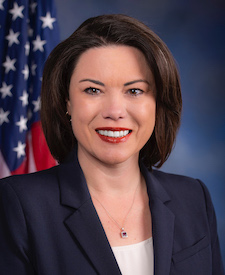

Legislative Progress
In CommitteeMs. Craig introduced the following bill; which was referred to …
Referred to the Committee on the Judiciary, and in addition …
Introduced in House
Stakeholder Effects
cui bono?How this legislation distributes effects. Mention counts reflect frequency, not effect magnitude.
Federal courts, Inspectors general, USDA audit staff
Positive-direction: Inspectors general, USDA integrity staff
Negative-direction: Federal courts, USDA audit staff
Summer Food Service Program institutions, Summer meal participants
Positive-direction: Summer meal participants
Negative-direction: Summer Food Service Program institutions
Federal program fraud offenders, Federal prosecutors
Positive-direction: Federal prosecutors
Negative-direction: Federal program fraud offenders
Bill Structure & Actor Mappings
Who is "The Secretary" in each section?
We use a combination of our own taxonomy and classification in addition to large language models to assess meaning and potential beneficiaries. High confidence means strong textual evidence. Always verify with the original bill text.
Learn more about our methodology