Yes in God's Backyard Act
Summary
What This Bill Does
The Yes in God's Backyard Act adds a new subtitle G to the Cranston-Gonzalez National Affordable Housing Act. It defines affordable rental housing as rent not above 30 percent of income for households at or below 100 percent of area median income, defines homeless and at-risk populations by McKinney-Vento standards, and defines covered faith-based organizations, institutions of higher education, and the HUD Partnership Center. Section 291 requires HUD to provide technical assistance so faith-based organizations, colleges, and local governments can remove barriers to affordable rental housing on land owned by religious organizations or higher-education institutions. The assistance must cover development of housing for households below 60 percent of area median income, homeless families, veterans, people with disabilities, intergenerational families, special-needs populations, and housing in well-resourced opportunity areas. HUD must consult with the Partnership Center and other federal housing agencies and publish resources. Section 292 creates competitive challenge grants for States, local governments, metropolitan planning organizations, and multi-jurisdiction entities that have policies to remove housing barriers. Applicants must publish proposed plans, solicit comments, respond in final plans, report data to HUD, and may use funds to remove barriers, provide outreach and technical assistance, or make grants and loans to projects.
Who Benefits and How
Faith-based organizations and colleges benefit because HUD technical assistance can help them use underused land for affordable rental housing without navigating zoning, financing, and partner selection alone. Low-income renters, extremely low-income families, homeless families, veterans, people with disabilities, intergenerational families, and residents seeking homes in well-resourced opportunity areas benefit if more affordable units are produced or preserved. Local governments, States, metropolitan planning organizations, and multi-jurisdiction entities benefit from challenge grants that can fund barrier removal, outreach, and project loans or grants. Housing developers and nonprofit housing partners benefit from clearer federal support for faith-campus and college-campus projects.
Who Bears the Burden and How
Federal taxpayers bear the authorized funding costs. HUD Community Planning and Development staff, the HUD Partnership Center, and other federal housing agencies must create resources, consult, run competitions, review plans, monitor grantee performance, and publish materials. States, local governments, metropolitan planning organizations, and multi-jurisdiction entities must adopt or demonstrate barrier-removal policies, run public comment processes, submit final plans, track outcomes, and comply with grant rules. Faith-based organizations and colleges that pursue projects must manage land-use, leasing, financing, resident services, and community engagement issues.
Key Provisions
- Defines affordable rental housing, covered households, faith-based organizations, institutions of higher education, homeless populations, and the HUD Partnership Center.
- Creates a HUD technical-assistance program for affordable housing on faith-based and higher-education property.
- Authorizes $25 million for fiscal year 2026 and $10 million annually for fiscal years 2027 through 2031 for technical assistance.
- Creates competitive challenge grants for governments and regional entities that remove barriers to affordable rental housing on eligible property.
- Requires challenge-grant applicants to publish proposed plans, solicit public comments, and address comments in final plans.
- Authorizes $50 million annually for fiscal years 2026 through 2031 for challenge grants, with up to 10 percent for HUD administration.
Evidence Chain:
This summary is generated from the full bill text using AI analysis. Expand "Detailed Analysis" below for identified beneficiaries/burden bearers with clause-level evidence links.
At a Glance
What This Bill Does
Creates HUD technical-assistance and challenge-grant programs to help faith-based organizations, colleges, and local governments turn excess property into affordable rental housing, with $25 million in fiscal year 2026 and $10 million annually through 2031 for technical assistance plus $50 million annually through 2031 for challenge grants.
Key Policy Areas
Housing, Non-Profit Institutions, Education
Primary Purpose
Creates HUD technical-assistance and challenge-grant programs to help faith-based organizations, colleges, and local governments turn excess property into affordable rental housing, with $25 million in fiscal year 2026 and $10 million annually through 2031 for technical assistance plus $50 million annually through 2031 for challenge grants.
Policy Domains
Substantive provisions
Identified Gains
- Faith-based housing sponsors
- Colleges owning developable land
- Low-income renters
- Homeless families
- Veterans needing housing
- Disabled renters
- Local governments
- Nonprofit housing developers
Identified Costs
- Federal taxpayers
- HUD grant staff
- HUD Partnership Center staff
- State housing agencies
- Metropolitan planning organizations
- Faith-based project sponsors
- College real estate offices
Sponsors

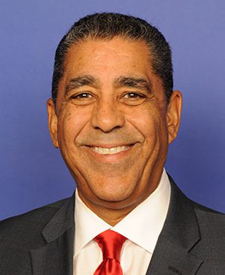
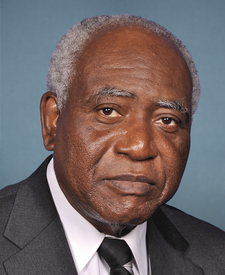


Legislative Progress
In CommitteeReferred to the House Committee on Financial Services.
Introduced in House
Ms. Barragán (for herself, Ms. Brown, Mrs. McIver, Mr. Torres …
Stakeholder Effects
cui bono?How this legislation distributes effects. Mention counts reflect frequency, not effect magnitude.
Local governments, Local planning staff, Metropolitan planning organizations
Positive-direction: Local governments, Metropolitan planning organizations, State housing agencies
Negative-direction: Local planning staff
Faith-based housing sponsors, Nonprofit housing developers
HUD Partnership Center staff, HUD grant staff, HUD technical assistance staff
Bill Structure & Actor Mappings
Who is "The Secretary" in each section?
We use a combination of our own taxonomy and classification in addition to large language models to assess meaning and potential beneficiaries. High confidence means strong textual evidence. Always verify with the original bill text.
Learn more about our methodology