Artificial Intelligence Public Awareness and Education Campaign Act
Summary
What This Bill Does
The Artificial Intelligence Public Awareness and Education Campaign Act directs the Secretary of Commerce to create an AI public awareness, education, and consumer literacy campaign within 180 days. The campaign must explain how AI appears in daily life and improve AI consumer literacy, defined as understanding capabilities and limits of AI products and using information about AI-enabled products and services to make responsible decisions. Commerce, NIST, NTIA, SBA, and other relevant federal agencies must set key performance indicators, gather baseline data, measure reach, engagement, adoption of best practices, and user satisfaction, and facilitate access to information about legal rights involving AI. The campaign must promote digital-media provenance and detection practices for deepfakes and chatbot-generated content, target populations vulnerable to AI-enabled fraud including senior citizens, provide consumer materials on AI tasks, productivity tools, automated decisions, financial trading, healthcare recommendations, communications, creative work, business operations, data protection, and AI workforce opportunities. Commerce must consult academic, industry, nonprofit, public, Tribal, territorial, State, and local stakeholders plus CPSC, Education, NIST, NSF, NTIA, and SBA officials. Materials must be multilingual, mobile-friendly, distributed by television, radio, internet platforms, SBA resource partners, and possibly outside campaign organizations. Commerce must report annually to Congress until the five-year sunset, and the bill authorizes no additional funds.
Who Benefits and How
Consumers benefit from plain-language material on AI capabilities, limitations, legal rights, data protection, deepfake detection, and scams. Senior citizens and other fraud-vulnerable groups benefit from targeted outreach against AI-enabled scams. Small business owners benefit from SBA-coordinated materials distributed through small business development centers, SCORE, veteran business opportunity centers, and Apex Accelerators. Workers and students benefit from information on AI workforce opportunities. Commerce, NIST, NTIA, SBA, CPSC, Education, and NSF gain a coordinated structure for public AI literacy messaging.
Who Bears the Burden and How
Commerce Department campaign staff, NIST AI staff, NTIA outreach staff, SBA resource partners, and other federal agencies must build, translate, update, disseminate, measure, and report campaign materials without new appropriations. Private AI companies, AI developers, deployers, nonprofit campaign distributors, academic experts, and State, local, Tribal, and territorial governments may be asked to consult or partner. Federal agencies must track KPIs and annual reports, and some consumers may receive warnings that reduce adoption of risky or poorly explained AI products.
Key Provisions
- Requires Commerce to establish an AI public awareness and consumer-literacy campaign within 180 days.
- Requires KPIs for reach, engagement, best-practice adoption, and audience satisfaction.
- Directs campaign materials on AI prevalence, legal rights, provenance detection, deepfakes, chatbots, scams, data protection, and workforce opportunities.
- Requires targeted outreach for populations vulnerable to AI-enabled fraud, including senior citizens.
- Requires multilingual, mobile-friendly, television, radio, internet, SBA partner, and possible nonprofit/private dissemination.
- Requires annual reports to Congress until the campaign terminates after five years and authorizes no additional funds.
Evidence Chain:
This summary is generated from the full bill text using AI analysis. Expand "Detailed Analysis" below for identified beneficiaries/burden bearers with clause-level evidence links.
At a Glance
What This Bill Does
Requires the Secretary of Commerce, with NIST, NTIA, SBA, and other agencies, to launch a five-year public AI awareness and consumer-literacy campaign covering AI prevalence, rights, provenance and deepfake detection, scam prevention for vulnerable populations, consumer-product limits, small-business uses, multilingual materials, public-service dissemination, annual KPI reporting, and no new appropriations.
Key Policy Areas
Technology, Consumers, Government
Primary Purpose
Requires the Secretary of Commerce, with NIST, NTIA, SBA, and other agencies, to launch a five-year public AI awareness and consumer-literacy campaign covering AI prevalence, rights, provenance and deepfake detection, scam prevention for vulnerable populations, consumer-product limits, small-business uses, multilingual materials, public-service dissemination, annual KPI reporting, and no new appropriations.
Policy Domains
Substantive provisions
Identified Gains
- AI consumers
- Senior citizens
- Small business owners
- Workers seeking AI jobs
- Students learning AI
- SBA resource partners
- Commerce Department campaign staff
Identified Costs
- Commerce Department campaign staff
- NIST AI staff
- NTIA outreach staff
- SBA resource partners
- AI developers
- Federal agencies using existing funds
Sponsors
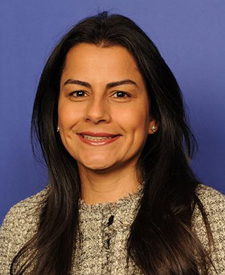
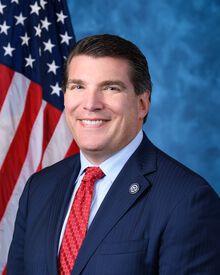
Legislative Progress
In CommitteeReferred to the House Committee on Energy and Commerce.
Introduced in House
Ms. Barragán (for herself and Mr. Obernolte) introduced the following …
Stakeholder Effects
cui bono?How this legislation distributes effects. Mention counts reflect frequency, not effect magnitude.
SBA resource partners, Small business owners
Positive-direction: Small business owners
Negative-direction: SBA resource partners
Bill Structure & Actor Mappings
Who is "The Secretary" in each section?
We use a combination of our own taxonomy and classification in addition to large language models to assess meaning and potential beneficiaries. High confidence means strong textual evidence. Always verify with the original bill text.
Learn more about our methodology