TRIA Program Reauthorization Act of 2026
Summary
What This Bill Does
The TRIA Program Reauthorization Act of 2026 extends the Terrorism Risk Insurance Act program by striking the 2027 termination date and inserting 2034. That keeps the federal terrorism-insurance backstop available for seven additional years.
The bill also changes how the Treasury Secretary certifies an act of terrorism. In the introduced text, an event would not qualify if losses do not exceed $25 million. In the reported version, the threshold remains $5 million for acts before 2029 and becomes $10 million for acts in 2029 or later. The bill also adds a timing rule: if Treasury begins certification review and publishes a Federal Register notice, but does not certify the act within 90 days after that notice, the act is not treated as certified.
Treasury must publish a Federal Register notice within 30 days after beginning the process of determining whether to certify an act as terrorism. Treasury may also notify the public when an act is not being evaluated for certification. Technical amendments update recoupment and timing dates to 2029, 2030, 2031, and 2036 and rename the program consistently as the Terrorism Risk Insurance Program.
Who Benefits and How
Terrorism risk insurers benefit because the federal backstop continues through 2034 and certification timelines become clearer. Commercial policyholders benefit from continued availability of terrorism insurance coverage. Federal taxpayers benefit if higher thresholds or clearer noncertification rules limit federal exposure to smaller events. Treasury certification staff benefit from explicit notice and timing procedures. Insurance markets benefit from program certainty and updated recoupment dates.
Who Bears the Burden and How
Commercial policyholders affected by smaller terrorism events may bear more uninsured or privately insured loss if an event does not meet the threshold or is not certified within the 90-day notice period. Terrorism risk insurers may bear more private exposure for sub-threshold or noncertified events. Treasury certification staff must publish notices, manage the 90-day clock, and communicate certification decisions. Market participants must track the revised dates and thresholds. Federal taxpayers continue backing the program through 2034 for certified acts.
Key Provisions
- Extends the Terrorism Risk Insurance Program termination date from 2027 to 2034.
- Modifies certification thresholds, including a reported-version increase to $10 million for acts in 2029 or later.
- Requires Treasury to publish a Federal Register notice within 30 days after beginning certification review.
- Provides that failure to certify within 90 days after notice prevents certification for that act.
- Provides Treasury discretion to notify the public that an act is not being evaluated.
- Updates recoupment and program dates through 2036.
- Modifies program terminology to Terrorism Risk Insurance Program.
Evidence Chain:
This summary is generated from the full bill text using AI analysis. Expand "Detailed Analysis" below for identified beneficiaries/burden bearers with clause-level evidence links.
At a Glance
What This Bill Does
Reauthorizes the Terrorism Risk Insurance Program through 2034, changes terrorism-act certification thresholds and timing, requires Treasury Federal Register notices within 30 days after beginning certification review, treats noncertification after a 90-day notice period as a reason an event is not covered, and updates program dates and terminology through 2036.
Key Policy Areas
Insurance, Terrorism Risk, Treasury, Commercial Real Estate
Primary Purpose
Reauthorizes the Terrorism Risk Insurance Program through 2034, changes terrorism-act certification thresholds and timing, requires Treasury Federal Register notices within 30 days after beginning certification review, treats noncertification after a 90-day notice period as a reason an event is not covered, and updates program dates and terminology through 2036.
Policy Domains
House resolution provisions
Identified Gains
- Commercial property insurers
- Commercial real estate policyholders
- Federal taxpayers
- Department of the Treasury certification staff
- Insurance market participants
Identified Costs
- Commercial policyholders affected by smaller terrorism events
- Property insurers exposed to noncertified terrorism losses
- Department of the Treasury certification staff
- Insurance market participants tracking TRIA dates
- Federal taxpayers backing TRIA claims
Sponsors



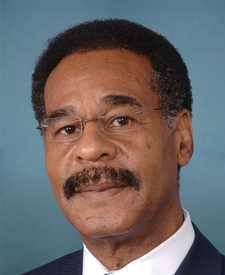

Legislative Progress
ReportedPlaced on the Union Calendar, Calendar No. 482.
Reported (Amended) by the Committee on Financial Services. H. Rept. …
Additional sponsors: Mr. Cleaver, Ms. Velázquez, and Ms. Pressley
Placed on the Union Calendar, Calendar No. 482.
Ordered to be Reported (Amended) by the Yeas and Nays: …
Committee Consideration and Mark-up Session Held
Introduced in House
Referred to the House Committee on Financial Services.
Mr. Flood (for himself and Mr. Garbarino) introduced the following …
Stakeholder Effects
cui bono?How this legislation distributes effects. Mention counts reflect frequency, not effect magnitude.
Commercial policyholders, Commercial policyholders affected by smaller terrorism events, Insurance market participants
Positive-direction: Commercial policyholders, Insurance market participants, Terrorism risk insurers
Negative-direction: Commercial policyholders affected by smaller terrorism events
Bill Structure & Actor Mappings
Who is "The Secretary" in each section?
- "treasury"
- → Secretary of the Treasury
We use a combination of our own taxonomy and classification in addition to large language models to assess meaning and potential beneficiaries. High confidence means strong textual evidence. Always verify with the original bill text.
Learn more about our methodology