Restoring the Secondary Trading Market Act
Summary
What This Bill Does
The Restoring the Secondary Trading Market Act amends Securities Act section 18, the federal preemption provision for covered securities. It adds a new category of state-law preemption for off-exchange secondary trading in securities of an issuer that makes current information publicly available.
The covered current information can include periodic and current reports under Regulation A rule 257(b) or the documents and information specified in Exchange Act rule 15c2-11(b). If those public-information conditions are met, states may not directly or indirectly prohibit, limit, or impose conditions on off-exchange secondary trading in those securities.
The practical effect is to make it easier for qualifying securities to trade in secondary markets outside national exchanges, while limiting state securities regulators' ability to impose separate conditions on those trades.
Who Benefits and How
Issuers with current public information benefit because their securities can become easier to trade outside exchanges. Broker-dealers facilitating off-exchange trades benefit from fewer state-law restrictions. Secondary-market trading platforms benefit from clearer federal preemption for qualifying securities. Investors seeking liquidity in qualifying securities benefit if secondary trading becomes easier. Capital-formation advocates benefit if better resale liquidity makes exempt or smaller-company offerings more attractive.
Who Bears the Burden and How
State securities regulators lose authority to prohibit, limit, or condition covered off-exchange secondary trades. Investor-protection advocates may bear a policy burden if state-level review is reduced. Investors in less-followed securities may face more trading risk if federal public-information thresholds are not enough to substitute for state conditions. SEC staff may need to define off-exchange secondary trading and monitor interaction with rule 257 and rule 15c2-11 information requirements.
Key Provisions
- Adds federal preemption for off-exchange secondary trading of qualifying securities.
- Requires the issuer to make current information publicly available.
- Uses Regulation A periodic and current reports as one qualifying information route.
- Uses Exchange Act rule 15c2-11 documents and information as another qualifying route.
- Prohibits states from directly or indirectly limiting or conditioning covered off-exchange secondary trades.
- Reduces state blue-sky authority over qualifying secondary-market transactions.
Evidence Chain:
This summary is generated from the full bill text using AI analysis. Expand "Detailed Analysis" below for identified beneficiaries/burden bearers with clause-level evidence links.
At a Glance
What This Bill Does
Preempts state restrictions on off-exchange secondary trading of securities of issuers that make current public information available, reducing state blue-sky constraints for qualifying secondary trades while shifting oversight away from state securities regulators.
Key Policy Areas
Securities Regulation, Capital Markets, State Preemption, Secondary Trading
Primary Purpose
Preempts state restrictions on off-exchange secondary trading of securities of issuers that make current public information available, reducing state blue-sky constraints for qualifying secondary trades while shifting oversight away from state securities regulators.
Policy Domains
House resolution provisions
Identified Gains
- Issuers with current public information
- Broker-dealers facilitating off-exchange trades
- Secondary-market trading platforms
- Investors seeking liquidity
- Capital-formation advocates
Identified Costs
- State securities regulators
- Investor-protection advocates
- Investors in less-followed securities
- SEC staff
Sponsors
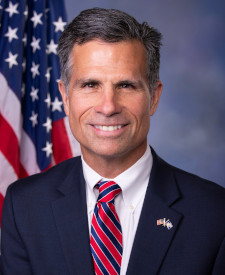
Legislative Progress
ReportedPlaced on the Union Calendar, Calendar No. 493.
Reported (Amended) by the Committee on Financial Services. H. Rept. …
Reported with an amendment, committed to the Committee of the …
Ordered to be Reported by the Yeas and Nays: 26 …
Committee Consideration and Mark-up Session Held
Mr. Meuser introduced the following bill; which was referred to …
Referred to the House Committee on Financial Services.
Introduced in House
Stakeholder Effects
cui bono?How this legislation distributes effects. Mention counts reflect frequency, not effect magnitude.
Broker-dealers facilitating off-exchange trades
Bill Structure & Actor Mappings
Who is "The Secretary" in each section?
- "sec"
- → Securities and Exchange Commission
We use a combination of our own taxonomy and classification in addition to large language models to assess meaning and potential beneficiaries. High confidence means strong textual evidence. Always verify with the original bill text.
Learn more about our methodology