Homeland Threat Response Act
Summary
What This Bill Does
The Homeland Threat Response Act amends section 875(d)(1) of the Homeland Security Act of 2002. That provision authorizes Department of Homeland Security assistance relating to certain violent acts, shootings, and mass killings. The bill adds U.S. Customs and Border Protection alongside U.S. Immigration and Customs Enforcement and expands the covered activity language to include response, threat mitigation, resolution, and investigation. The practical effect is to let CBP personnel and capabilities be deployed or used in DHS assistance for qualifying homeland-threat incidents, not only post-incident investigative work.
Who Benefits and How
State and local law enforcement agencies, emergency managers, communities facing violent threats, DHS operations leaders, and CBP tactical or investigative units benefit from broader authority to use CBP capabilities during threat response and mitigation. Congress benefits from a clearer statutory role for CBP in homeland threat incidents beyond border functions.
Who Bears the Burden and How
CBP field offices, DHS operations staff, and interagency coordinators must manage deployments, threat-mitigation support, incident response, and investigative assistance while preserving other CBP missions. Civil liberties monitors and local communities may scrutinize expanded CBP involvement in domestic threat response, especially when federal personnel support non-border incidents.
Key Provisions
- Adds U.S. Customs and Border Protection to DHS assistance authority for violent acts, shootings, and mass killings.
- Expands the authority to cover response, threat mitigation, and resolution in addition to investigation.
- Amends Homeland Security Act section 875(d)(1) without creating a separate grant program or funding authorization.
Evidence Chain:
This summary is generated from the full bill text using AI analysis. Expand "Detailed Analysis" below for identified beneficiaries/burden bearers with clause-level evidence links.
At a Glance
What This Bill Does
Adds U.S. Customs and Border Protection to the Homeland Security Act authority for federal assistance with response, threat mitigation, resolution, and investigation of violent acts, shootings, and mass killings.
Key Policy Areas
Law Enforcement, Government
Primary Purpose
Adds U.S. Customs and Border Protection to the Homeland Security Act authority for federal assistance with response, threat mitigation, resolution, and investigation of violent acts, shootings, and mass killings.
Policy Domains
Substantive provisions
Identified Gains
- State law enforcement agencies
- Local law enforcement agencies
- Emergency managers
- DHS operations leaders
- CBP tactical units
- Communities facing violent threats
Identified Costs
- CBP field offices
- DHS interagency coordinators
- Civil liberties monitors
- Local communities hosting federal deployments
Sponsors
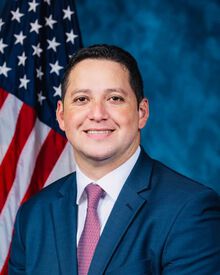
Legislative Progress
In CommitteeReferred to the House Committee on the Judiciary.
Introduced in House
Mr. Tony Gonzales of Texas introduced the following bill; which …
Bill Structure & Actor Mappings
Who is "The Secretary" in each section?
We use a combination of our own taxonomy and classification in addition to large language models to assess meaning and potential beneficiaries. High confidence means strong textual evidence. Always verify with the original bill text.
Learn more about our methodology