Defending American Property Abroad Act of 2026
Summary
What This Bill Does
The Defending American Property Abroad Act amends the port-entry condition in title 46. It lets the President designate a port, harbor, or marine terminal in a Western Hemisphere country that has a free trade agreement with the United States when a foreign government agency or official nationalizes, expropriates, or takes an equivalent action against a U.S. person's port property or land access to that facility. Once designated, vessels that have transited the facility can be denied entry to U.S. ports under the existing vessel-entry condition. The designation does not apply while a free-trade-agreement arbitration is pending.
The bill also creates off-ramps. The President must remove a designation when the conditions no longer exist, the property is restored, the U.S. person receives adequate and effective compensation in convertible foreign exchange or mutually acceptable full-value compensation, or the dispute is otherwise resolved to the President's satisfaction. Emergency vessels and vessels authorized by the affected U.S. owner to transit the facility are excepted.
Who Benefits and How
U.S. port owners abroad, U.S. landowners controlling access to foreign terminals, maritime investors, and companies holding port concessions in Western Hemisphere free-trade-agreement countries benefit because foreign governments face a U.S. port-entry consequence if they expropriate covered property without resolving compensation. The President, Coast Guard, CBP port-entry officials, and U.S. trade negotiators gain a leverage tool tied to property restoration, compensation, arbitration, or settlement.
Who Bears the Burden and How
Foreign governments that expropriate U.S.-owned port property or access land bear diplomatic and commercial pressure. Marine terminal operators using designated facilities, vessel operators that transit those facilities without owner authorization, and cargo customers relying on those routes face the risk that vessels may be denied entry to U.S. ports. Coast Guard and CBP officials must administer exceptions for emergencies and owner-authorized transits.
Key Provisions
- Authorizes Presidential designation of covered foreign port facilities after expropriation of U.S.-owned port property or land access.
- Applies the U.S. port-entry condition to vessels that transit designated facilities in Western Hemisphere free-trade-agreement countries.
- Bars designation while a free-trade-agreement arbitration involving the dispute is pending.
- Requires removal of a designation after property restoration, adequate compensation, or another satisfactory resolution.
- Exempts vessels experiencing emergencies and vessels authorized by the affected U.S. owner.
Evidence Chain:
This summary is generated from the full bill text using AI analysis. Expand "Detailed Analysis" below for identified beneficiaries/burden bearers with clause-level evidence links.
At a Glance
What This Bill Does
Adds a port-entry sanction for vessels that use Western Hemisphere free-trade-agreement-country port facilities made accessible only through U.S.-owned land after that land or facility has been expropriated, while creating removal, compensation, arbitration, and emergency-vessel exceptions.
Key Policy Areas
Maritime, Trade, Property Rights, Foreign Affairs
Primary Purpose
Adds a port-entry sanction for vessels that use Western Hemisphere free-trade-agreement-country port facilities made accessible only through U.S.-owned land after that land or facility has been expropriated, while creating removal, compensation, arbitration, and emergency-vessel exceptions.
Policy Domains
Substantive provisions
Identified Gains
- U.S. port landowners
- U.S. terminal-access landowners
- Port concession developers
- Maritime investors
- Maritime terminal developers
- Coast Guard port-entry officers
- CBP port-entry officers
- U.S. trade negotiators
Identified Costs
- Foreign government agencies expropriating U.S. port property
- Marine terminal contractors using designated facilities
- Vessel employees transiting designated facilities
- Port employees at designated facilities
- Cargo customers using designated routes
- Coast Guard port-entry officials
- CBP port-entry officials
Sponsors
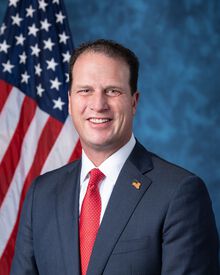
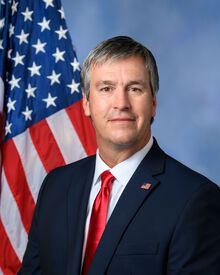



Legislative Progress
Passed HouseReceived in the Senate.
Motion to reconsider laid on the table Agreed to without …
On passage Passed by the Yeas and Nays: 247 - …
Passed/agreed to in House: On passage Passed by the Yeas …
The previous question was ordered pursuant to the rule.
DEBATE - The House proceeded with one hour of debate …
Rule provides for consideration of H.R. 8029, H. Res. 1128, …
Considered under the provisions of rule H. Res. 1131. (consideration: …
Rule H. Res. 1131 passed House.
Rules Committee Resolution H. Res. 1131 Reported to House. Rule …
Stakeholder Effects
cui bono?How this legislation distributes effects. Mention counts reflect frequency, not effect magnitude.
Emergency vessels, Marine terminal operators using designated facilities, U.S. port owners abroad
Positive-direction: Emergency vessels, U.S. port owners abroad
Negative-direction: Marine terminal operators using designated facilities, Vessel operators transiting designated facilities
CBP port-entry officials, Coast Guard port-entry officials, Foreign governments expropriating U.S. port property
Bill Structure & Actor Mappings
Who is "The Secretary" in each section?
- "cbp"
- → U.S. Customs and Border Protection
- "fta"
- → free trade agreement
- "president"
- → President of the United States
We use a combination of our own taxonomy and classification in addition to large language models to assess meaning and potential beneficiaries. High confidence means strong textual evidence. Always verify with the original bill text.
Learn more about our methodology