Defending American Property Abroad Act of 2026
Summary
What This Bill Does
H.R. 7084, the Defending American Property Abroad Act of 2026, would expand 46 U.S.C. 70022. The added category covers foreign vessels required to file a notice of arrival that transited a port, harbor or marine terminal meeting the bill's conditions: it is in a Western Hemisphere country with a U.S. free-trade agreement, it is accessible only through land directly or indirectly owned, held or controlled by a United States person, and it was designated by the President at the relevant transit time without removal of that designation. The existing prohibition would bar covered vessels from entering or operating in U.S. navigable waters or transferring cargo at U.S.-jurisdiction ports or places, subject to exceptions. It is broader than denying a particular port call, but not a ban on every vessel from the country or every ship calling at any foreign port.
The President may designate a facility following specified nationalization, expropriation or equivalent government action concerning the facility or its exclusive-access land. For the equivalent-action route in proposed paragraph (2)(B), the text includes a proviso concerning currently pending arbitration under the relevant free-trade agreement. That proviso is placed in (B), not expressly repeated in the direct nationalization/expropriation route (A). The bill does not require a completed arbitral award or automatically designate a named facility. The official record checked September 22, 2026 lists receipt in the Senate on April 2, 2026 as the latest action; the bill remains unenacted.
Who Benefits and How
U.S. property holders meeting the facility and access-land conditions could gain leverage to recover ownership, end seizure measures or obtain compensation. That is a protection through commercial pressure, not a U.S. government payment, guaranteed recovery or new private damages action. No company, country, port or dollar award is named.
Covered vessel operators gain express exceptions for an emergency affecting a vessel or someone aboard, or authorization by the referenced access-land owner to transit the covered facilities. The new exception cross-reference reaches proposed subsection (b)(1), which also contains the retained existing vessel categories; it is not written solely as an exception for new (C). Existing discretionary safety-based provisional entry/cargo transfer and protections for innocent and transit passage remain. Owner authorization is not a general waiver of all other maritime laws.
The President must remove a designation after determining that any one of four alternatives is met: the designation predicates no longer apply; ownership has been restored and ownership-or-possession seizure measures terminated; adequate and effective full-value compensation has been supplied in convertible currency or a mutually acceptable equivalent; or the dispute is otherwise resolved to the President's satisfaction. These are alternatives, not cumulative requirements, and the required Presidential determination matters.
Who Bears the Burden and How
Foreign vessel operators using designated facilities could lose U.S. access or incur rerouting and verification costs. Operators of designated foreign ports and terminals could lose traffic and revenue as carriers avoid the restriction. Cargo customers could experience consequential delays or costs, but the text does not fix their size or impose a new tariff. These effects depend on a designation, relevant transit and absence of an applicable exception. The President must make and reassess designation decisions, and the Coast Guard would administer expanded arrival screening and vessel notification under the existing statute. There is no new appropriation or guaranteed implementation budget.
The current statute already restricts specified North Korea-related vessels and registrations. Those categories remain, with reorganized cross-references; their existing 180-day registration trigger and 300-gross-ton information provision must not be copied onto the new facility-transit category. Existing State Department determination notice/publication provisions are retained. The new emergency/owner-authorized language does not separately spell out every procedural interaction with those provisions or the existing vessel-notification exceptions, so immediate self-certified clearance should not be assumed.
The reported version changes one removal condition from returning property and ending ownership seizure measures to restoring ownership and ending measures seizing ownership or possession. This clarifies and strengthens that particular route without eliminating the other three removal grounds. A separate introduced instruction to insert the word the before Federal Register was dropped; current law already contains it following Public Law 119-60. That editorial change is not an additional commercial sanction.
Key Provisions
- Adds a designated-facility transit category to existing foreign-vessel entry, operation and cargo-transfer restrictions, preserving the notice-of-arrival scope.
- Provides discretionary Presidential designation for the stated foreign-government property actions and a pending-arbitration proviso in the equivalent-action subparagraph.
- Adds emergency and access-land-owner authorization exceptions while retaining existing provisional safety entry and passage protections.
- Requires removal of a designation upon a Presidential finding of any listed alternative, including restoration, full-value compensation or satisfactory resolution.
Evidence Chain:
This summary is generated from the full bill text using AI analysis. Expand "Detailed Analysis" below for identified beneficiaries/burden bearers with clause-level evidence links.
At a Glance
What This Bill Does
Use conditional U.S. vessel-access restrictions to protect U.S. property interests at designated maritime facilities in Western Hemisphere free-trade partners, with exceptions and alternative grounds for removing designations.
Key Policy Areas
Maritime Commerce, Foreign Investment Protection, Trade Restrictions
Primary Purpose
Use conditional U.S. vessel-access restrictions to protect U.S. property interests at designated maritime facilities in Western Hemisphere free-trade partners, with exceptions and alternative grounds for removing designations.
Policy Domains
Defending American Property Abroad Act of 2026
Identified Gains
- United States property holders at covered maritime facilities
- Covered vessel operators relying on emergency exceptions
- Maritime workers aboard vessels experiencing emergencies
- Covered vessel operators authorized by the access-land owner
Identified Costs
- Foreign vessel operators subject to the added transit restriction
- Operators of designated foreign ports and terminals
- United States Coast Guard
- Office of the President
Sponsors
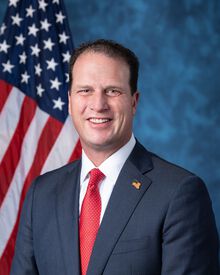
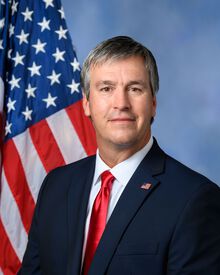



Legislative Progress
Passed HouseReceived in the Senate.
Motion to reconsider laid on the table Agreed to without …
On passage Passed by the Yeas and Nays: 247 - …
Passed/agreed to in House: On passage Passed by the Yeas …
The previous question was ordered pursuant to the rule.
DEBATE - The House proceeded with one hour of debate …
Rule provides for consideration of H.R. 8029, H. Res. 1128, …
Considered under the provisions of rule H. Res. 1131. (consideration: …
Rule H. Res. 1131 passed House.
Rules Committee Resolution H. Res. 1131 Reported to House. Rule …
Stakeholder Effects
cui bono?How this legislation distributes effects. Mention counts reflect frequency, not effect magnitude.
Covered vessel operators authorized by the access-land owner, Covered vessel operators relying on emergency exceptions, Foreign vessel operators affected by continuing facility designations
Positive-direction: Covered vessel operators authorized by the access-land owner, Covered vessel operators relying on emergency exceptions, United States property holders affected by continuing possession-seizure measures, United States property holders at covered maritime facilities
Negative-direction: Foreign vessel operators affected by continuing facility designations, Foreign vessel operators subject to designated-facility transit restrictions
Operators of designated foreign maritime terminals
Bill Structure & Actor Mappings
Who is "The Secretary" in each section?
- "owner"
- → The United States person holding the referenced exclusive-access land interest
- "president"
- → President of the United States, with discretionary designation and conditional mandatory removal duties
- "coast_guard"
- → Secretary of the department in which the Coast Guard operates, exercising retained arrival and notification functions
Note: RH/EH canonical texts match. IH baseline178689 contains the main policy. RH218242 changes the ownership/possession restoration condition; paired identifier removal is not repeal.
Key Definitions
Terms defined in this bill
Transit through a designated facility in a Western Hemisphere U.S. free-trade partner, accessible only through the specified U.S.-held land, within the retained foreign-vessel/notice-of-arrival framework.
We use a combination of our own taxonomy and classification in addition to large language models to assess meaning and potential beneficiaries. High confidence means strong textual evidence. Always verify with the original bill text.
Learn more about our methodology