Bike the Border Act
Summary
What This Bill Does
The Bike the Border Act focuses on non-motorized travel over the Gordie Howe International Bridge between Detroit and Windsor. Within one year, the Commissioner of U.S. Customs and Border Protection must take actions necessary to effectively and vigorously facilitate and expedite bicycle and pedestrian border crossings over the bridge. Within 18 months, the Government Accountability Office must report to the House Homeland Security Committee and Senate Homeland Security and Governmental Affairs Committee on CBP's handling of non-motorized traffic. The GAO report must determine whether CBP has effectively facilitated crossings and recommend steps to further facilitate and incentivize non-motorized traffic.
Who Benefits and How
Bicyclists, pedestrians, Detroit residents, Windsor visitors, tourism businesses, local employers, and cross-border commuters benefit from a statutory push for smoother non-motorized bridge crossings. CBP bridge operations staff benefit from congressional direction to plan staffing, lanes, procedures, and signage for bicycle and pedestrian travelers. Congressional homeland security committees benefit from GAO oversight on whether the agency actually follows through.
Who Bears the Burden and How
CBP field operations staff must develop procedures, staffing plans, inspection processes, signage, and lane management for non-motorized traffic. GAO auditors must review CBP performance and produce recommendations within 18 months. Bridge operators and local transportation planners may need to coordinate facility changes, traffic flows, safety measures, and public information for cyclists and pedestrians.
Key Provisions
- Requires CBP to facilitate and expedite bicycle and pedestrian crossings over the Gordie Howe International Bridge within one year.
- Requires GAO to report within 18 months on CBP handling of non-motorized traffic at the bridge.
- Requires GAO to determine whether CBP effectively facilitated non-motorized crossings.
- Requires GAO recommendations for further facilitation and incentives for non-motorized traffic.
Evidence Chain:
This summary is generated from the full bill text using AI analysis. Expand "Detailed Analysis" below for identified beneficiaries/burden bearers with clause-level evidence links.
At a Glance
What This Bill Does
Requires CBP to facilitate bicycle and pedestrian crossings over the Gordie Howe International Bridge and requires GAO to report to Congress on CBP handling of non-motorized traffic and further options to encourage it.
Key Policy Areas
Transportation, Government, Tourism
Primary Purpose
Requires CBP to facilitate bicycle and pedestrian crossings over the Gordie Howe International Bridge and requires GAO to report to Congress on CBP handling of non-motorized traffic and further options to encourage it.
Policy Domains
Substantive provisions
Identified Gains
- Bicyclists using Gordie Howe Bridge
- Pedestrians using Gordie Howe Bridge
- Detroit residents
- Windsor visitors
- Tourism businesses
- Cross-border commuters
Identified Costs
- CBP bridge operations staff
- GAO auditors
- Bridge operators
- Local transportation planners
- Congressional homeland security committees
Sponsors
Legislative Progress
In CommitteeReferred to the Subcommittee on Border Security and Enforcement.
Referred to the Committee on Homeland Security, and in addition …
Introduced in House
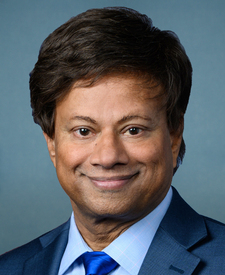
Mr. Thanedar introduced the following bill; which was referred to …
Stakeholder Effects
cui bono?How this legislation distributes effects. Mention counts reflect frequency, not effect magnitude.
CBP bridge operations staff, Congressional homeland security committees, GAO auditors
Positive-direction: Congressional homeland security committees
Negative-direction: CBP bridge operations staff, GAO auditors
Bicyclists using Gordie Howe Bridge, Pedestrians using Gordie Howe Bridge
Bill Structure & Actor Mappings
Who is "The Secretary" in each section?
We use a combination of our own taxonomy and classification in addition to large language models to assess meaning and potential beneficiaries. High confidence means strong textual evidence. Always verify with the original bill text.
Learn more about our methodology