Healthcare Reinvestment Act
Summary
What This Bill Does
The Healthcare Reinvestment Act redirects funds from specified Public Law 119-21 provisions into health insurance premium tax credit support. Section 2 repeals sections 100052, 100053, 100054, and 100055 of Public Law 119-21 and instructs that provisions classified to title 6 or title 8 of the United States Code be applied as if those sections had not been enacted. It rescinds the amounts appropriated under those sections and transfers the rescinded amounts, without fiscal-year limitation, to the Treasury Secretary to extend the application of subsections (b)(3)(A)(iii) and (c)(1)(E) of Internal Revenue Code section 36B, the Affordable Care Act premium tax credit. Section 3 requires Treasury to publish an annual written report on use of the funds, including the number of individuals who retained eligibility for section 36B tax credits, and requires the Treasury Inspector General for Tax Administration to conduct annual audits.
Who Benefits and How
Individuals retaining Affordable Care Act premium tax credit eligibility, marketplace health plan enrollees, families receiving section 36B subsidies, health insurers in ACA marketplaces, and health coverage advocates benefit if the transferred funds extend premium-tax-credit treatment. Treasury and Congress benefit from annual reports identifying how funds were used and how many people retained eligibility. TIGTA auditors benefit from a defined annual audit mandate.
Who Bears the Burden and How
Programs funded by the repealed Public Law 119-21 sections lose appropriated funds. Treasury staff must receive and administer the transfer, apply the money to section 36B extensions, publish annual reports, and track retained eligibility. TIGTA auditors must conduct annual audits. Federal budget staff must account for rescissions, transfers without fiscal-year limitation, and effects on premium tax credit outlays.
Key Provisions
- Repeals sections 100052, 100053, 100054, and 100055 of Public Law 119-21.
- Rescinds amounts appropriated under those Public Law 119-21 sections.
- Transfers rescinded funds to Treasury without fiscal-year limitation.
- Extends application of specified Internal Revenue Code section 36B premium tax credit provisions.
- Requires annual public Treasury reports on fund use and retained premium-tax-credit eligibility.
- Requires annual TIGTA audits of the transferred funds.
Evidence Chain:
This summary is generated from the full bill text using AI analysis. Expand "Detailed Analysis" below for identified beneficiaries/burden bearers with clause-level evidence links.
At a Glance
What This Bill Does
Repeals and rescinds funds from specified Public Law 119-21 provisions classified to title 6 or 8, transfers the rescinded amounts to Treasury without fiscal-year limitation to extend Affordable Care Act premium tax credit treatment under Internal Revenue Code section 36B, and requires annual public Treasury reports and TIGTA audits on the use of the funds.
Key Policy Areas
Healthcare, Tax, Government Oversight
Primary Purpose
Repeals and rescinds funds from specified Public Law 119-21 provisions classified to title 6 or 8, transfers the rescinded amounts to Treasury without fiscal-year limitation to extend Affordable Care Act premium tax credit treatment under Internal Revenue Code section 36B, and requires annual public Treasury reports and TIGTA audits on the use of the funds.
Policy Domains
Substantive provisions
Identified Gains
- ACA marketplace enrollees
- Families receiving premium tax credits
- Health insurers in ACA marketplaces
- Health coverage advocacy organizations
- Treasury reporting staff
- Congressional health committees
Identified Costs
- Programs funded by repealed Public Law 119-21 sections
- Treasury premium tax credit staff
- TIGTA auditors
- Federal budget staff
- IRS section 36B administrators
Sponsors



Legislative Progress
In CommitteeReferred to the Subcommittee on Border Security and Enforcement.
Referred to the Committee on Ways and Means, and in …
Introduced in House
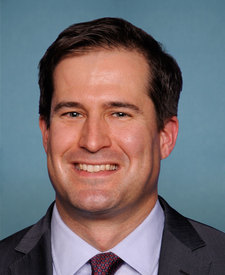
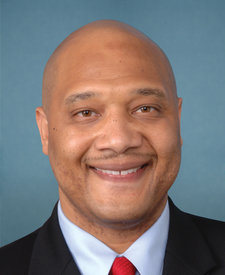
Mr. Moulton (for himself, Mr. Carson, Mr. Soto, and Ms. …
Stakeholder Effects
cui bono?How this legislation distributes effects. Mention counts reflect frequency, not effect magnitude.
Congressional health committees, Federal budget staff, Programs funded by repealed Public Law 119-21 sections
Positive-direction: Congressional health committees
Negative-direction: Federal budget staff, Programs funded by repealed Public Law 119-21 sections, TIGTA auditors, Treasury premium tax credit staff, Treasury reporting staff
Bill Structure & Actor Mappings
Who is "The Secretary" in each section?
We use a combination of our own taxonomy and classification in addition to large language models to assess meaning and potential beneficiaries. High confidence means strong textual evidence. Always verify with the original bill text.
Learn more about our methodology