SHIELD Act
Summary
What This Bill Does
The SHIELD Act amends the Public Utility Regulatory Policies Act of 1978 to create new standards for large load facilities. Large load facilities are treated as a separate class of electric consumers. Each electric utility serving that class must fully recover from that class all costs associated with generation, transmission, and distribution upgrades needed to meet large-load demand, including if a large load facility shuts down or uses less electricity than projected. Electric utilities must prioritize service requests from large load owners or operators that agree to use features reducing grid demand during peak periods, including energy efficiency, conservation, onsite storage, demand response, or load flexibility, and that agree to meet all of the facility's electricity demand with zero-emission power generated onsite or procured within the same balancing authority through a power purchase agreement.
Who Benefits and How
Residential ratepayers, small businesses, existing utility customers, State utility commissions, grid reliability planners, and utilities benefit because the bill aims to keep large new loads from shifting grid-upgrade costs onto other customer classes. Large load facilities that use energy efficiency, storage, demand response, load flexibility, and same-balancing-authority zero-emission power benefit from priority in the interconnection or service queue. Zero-emission power developers and battery storage providers may benefit from demand created by large load compliance strategies.
Who Bears the Burden and How
Large load facilities, data centers, industrial electrification projects, cryptocurrency mining operations, large manufacturing loads, and utilities serving those customers bear the burden of cost allocation, service-class treatment, documentation, and operational commitments. Utilities must calculate upgrade costs, recover them from the large load class, prioritize qualifying requests, and manage stranded-cost risk if projected loads do not materialize. State utility regulators must consider or implement the new PURPA standards.
Key Provisions
- Creates a PURPA large load facility class for electric consumers.
- Requires utilities to recover generation, transmission, and distribution upgrade costs from the large load class.
- Requires cost recovery even when a large load facility ceases operations or uses less electricity than projected.
- Requires utilities to prioritize large load service requests that reduce peak demand.
- Requires priority requests to use energy efficiency, conservation, onsite storage, demand response, or load flexibility.
- Requires priority requests to meet all facility demand with onsite or same-balancing-authority zero-emission electricity.
Evidence Chain:
This summary is generated from the full bill text using AI analysis. Expand "Detailed Analysis" below for identified beneficiaries/burden bearers with clause-level evidence links.
At a Glance
What This Bill Does
Requires State utility regulators and nonregulated electric utilities under PURPA to treat large load facilities as a separate electric-consumer class, require utilities to recover grid-upgrade costs from that class, and prioritize service requests from large loads that reduce peak demand and meet their demand with same-balancing-authority zero-emission electricity.
Key Policy Areas
Energy, Utilities, Technology
Primary Purpose
Requires State utility regulators and nonregulated electric utilities under PURPA to treat large load facilities as a separate electric-consumer class, require utilities to recover grid-upgrade costs from that class, and prioritize service requests from large loads that reduce peak demand and meet their demand with same-balancing-authority zero-emission electricity.
Policy Domains
Substantive provisions
Identified Gains
- Residential ratepayers
- Small businesses
- Existing utility customers
- State utility commissions
- Grid reliability planners
- Zero-emission power developers
- Battery storage providers
Identified Costs
- Large load facilities
- Data center operators
- Industrial electricity users
- Cryptocurrency mining companies
- Electric utilities
- State utility regulators
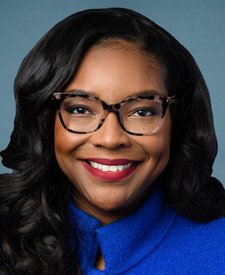
Sponsors
Legislative Progress
In CommitteeReferred to the House Committee on Energy and Commerce.
Introduced in House
Mr. Levin (for himself, Ms. Castor of Florida, Mr. Quigley, …
Stakeholder Effects
cui bono?How this legislation distributes effects. Mention counts reflect frequency, not effect magnitude.
Bill Structure & Actor Mappings
Who is "The Secretary" in each section?
We use a combination of our own taxonomy and classification in addition to large language models to assess meaning and potential beneficiaries. High confidence means strong textual evidence. Always verify with the original bill text.
Learn more about our methodology