Build HUBS Act
Summary
What This Bill Does
The Build HUBS Act is a transit-oriented development finance bill. Its findings connect the housing affordability crisis to the potential of TIFIA and RRIF credit programs to finance mixed-use or housing projects near transit. Section 3 extends TIFIA authorization through fiscal years 2027 through 2031, adds definitions for attainable housing projects serving households at or below 120 percent of area median income with most units affordable at or below 80 percent of area median income, and allows transit-oriented development projects within a half-mile walk of fixed guideway transit, bus rapid transit, passenger rail, or multimodal facilities. It adds investment-creditworthiness alternatives such as joint liability agreements, alternative ratings for federal credit instruments of $150 million or less, and certification by approved originator-servicers. New section 612 establishes a delegated origination and underwriting program for TIFIA transit-oriented development loans, based on HUD's Multifamily Accelerated Processing system, removes investment-grade rating requirements for covered delegated projects, requires regulations within 180 days, and requires a DOT-HUD interagency agreement. Section 4 creates similar transportation-oriented development rules in RRIF for projects near rail or transit facilities, includes attainable housing at half the Treasury rate, allows alternative fiscal-soundness demonstrations, and requires reinvestment value in relevant passenger rail stations or services. The bill also includes savings language preserving State and local zoning and land-use laws.
Who Benefits and How
Transit-oriented developers, attainable housing developers, mixed-use project sponsors, transit agencies, passenger rail operators, communities near stations, HUD-approved multifamily lenders, and qualified originator-servicers benefit from longer authorizations, easier creditworthiness paths, delegated underwriting, half-rate RRIF loans for attainable housing, and clearer eligibility for projects near transit and rail facilities. Households below 120 percent of area median income benefit if more attainable housing is built near transit, jobs, and services.
Who Bears the Burden and How
Department of Transportation credit-program staff, HUD multifamily lending staff, qualified originator-servicers, project sponsors, State and local government partners, federal credit-risk managers, and taxpayers bear implementation or risk burdens. DOT must write regulations within 180 days, oversee delegated lenders, coordinate with HUD, evaluate alternative creditworthiness, and manage TIFIA and RRIF risk for projects without investment-grade ratings. State and local zoning authorities keep their zoning power but may need to coordinate around projects seeking federal credit assistance.
Key Provisions
- Extends TIFIA program authorization through fiscal years 2027 through 2031.
- Defines attainable housing projects by 120 percent and 80 percent area-median-income thresholds.
- Expands TIFIA eligibility for transit-oriented development projects within a half-mile walk of covered transit facilities.
- Creates alternative creditworthiness demonstrations for transit-oriented development projects.
- Establishes a delegated TIFIA origination and underwriting program based on HUD multifamily lender processes.
- Modifies RRIF to support transportation-oriented development near rail and transit facilities.
- Provides half-Treasury-rate RRIF treatment for attainable housing projects.
- Preserves State and local zoning and land-use laws.
Evidence Chain:
This summary is generated from the full bill text using AI analysis. Expand "Detailed Analysis" below for identified beneficiaries/burden bearers with clause-level evidence links.
At a Glance
What This Bill Does
Extends and rewrites federal TIFIA and RRIF credit programs to make transit-oriented and transportation-oriented development easier to finance, including attainable-housing definitions, alternative creditworthiness demonstrations, delegated origination and underwriting, HUD lender-process coordination, half-Treasury-rate RRIF loans for attainable housing, expanded loan-to-cost treatment, NEPA exclusions for certain transit-area acquisitions and conversions, and a savings clause for State and local zoning or land-use law.
Key Policy Areas
Housing, Transportation, Infrastructure, Financial Services
Primary Purpose
Extends and rewrites federal TIFIA and RRIF credit programs to make transit-oriented and transportation-oriented development easier to finance, including attainable-housing definitions, alternative creditworthiness demonstrations, delegated origination and underwriting, HUD lender-process coordination, half-Treasury-rate RRIF loans for attainable housing, expanded loan-to-cost treatment, NEPA exclusions for certain transit-area acquisitions and conversions, and a savings clause for State and local zoning or land-use law.
Policy Domains
Substantive provisions
Identified Gains
- Transit-oriented developers
- Attainable housing developers
- Mixed-use project sponsors
- Transit agencies
- Passenger rail operators
- HUD-approved multifamily lenders
- Households below 120 percent of area median income
Identified Costs
- Department of Transportation credit staff
- HUD multifamily lending staff
- Qualified originator-servicers
- Federal credit-risk managers
- Federal taxpayers
- State zoning authorities
- Local land-use agencies
Sponsors



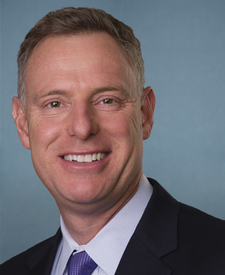
Legislative Progress
In CommitteeReferred to the Subcommittee on Highways and Transit.
Referred to the Subcommittee on Railroads, Pipelines, and Hazardous Materials.
Ms. Friedman (for herself and Mr. Lawler) introduced the following …
Referred to the House Committee on Transportation and Infrastructure.
Introduced in House
Stakeholder Effects
cui bono?How this legislation distributes effects. Mention counts reflect frequency, not effect magnitude.
Attainable housing developers, Housing developers, Transit-oriented developers
Federal credit-risk managers, HUD-approved multifamily lenders, Qualified originator-servicers
Federal credit-risk managers faces effects in multiple directions
Department of Transportation credit staff, HUD multifamily lending staff
Department of Transportation credit staff faces effects in multiple directions
Taxpayers
Taxpayers faces effects in multiple directions
Local land-use agencies, State zoning authorities
Bill Structure & Actor Mappings
Who is "The Secretary" in each section?
We use a combination of our own taxonomy and classification in addition to large language models to assess meaning and potential beneficiaries. High confidence means strong textual evidence. Always verify with the original bill text.
Learn more about our methodology