Qualified Immunity Abolition Act of 2026
Summary
What This Bill Does
The Qualified Immunity Abolition Act of 2026 revises section 1979 of the Revised Statutes, codified at 42 U.S.C. 1983. Section 1983 is the main federal civil cause of action for deprivation of constitutional and federal statutory rights under color of law. The bill adds a subsection stating that in any action pending on, or filed after, enactment against a Federal, State, or local law enforcement officer, it is not a defense that the officer acted in good faith, believed reasonably or otherwise that the conduct was lawful, violated rights that were not clearly established, or faced a state of law that did not make unlawfulness reasonably knowable. The effect is to remove qualified-immunity-style defenses from civil-rights suits against law enforcement officers and extend the explicit rule to federal officers as well as State and local officers.
Who Benefits and How
People whose constitutional rights are violated by law enforcement officers benefit because they have a clearer path to damages without needing to identify prior precedent that clearly established the right. Civil rights attorneys, police accountability organizations, and communities affected by excessive force, unlawful searches, or other misconduct benefit from stronger litigation leverage. Federal courts benefit from a statutory rule that reduces reliance on judge-made qualified immunity doctrine.
Who Bears the Burden and How
Federal law enforcement officers, State police officers, local police officers, sheriffs' deputies, correctional officers acting as law enforcement, and government employers face higher litigation exposure, discovery costs, settlement pressure, and potential indemnification costs. State and local governments must budget for more civil-rights litigation. Police training units and agency counsel must update guidance because good faith and uncertainty about clearly established law would no longer defeat claims.
Key Provisions
- Amends 42 U.S.C. 1983 to address law enforcement officer defenses in civil-rights actions.
- Bars good faith as a defense in covered pending and future cases.
- Bars reasonable or unreasonable belief in legality as a defense.
- Bars lack of clearly established law as a defense.
- Applies the rule to Federal, State, and local law enforcement officers.
Evidence Chain:
This summary is generated from the full bill text using AI analysis. Expand "Detailed Analysis" below for identified beneficiaries/burden bearers with clause-level evidence links.
At a Glance
What This Bill Does
Amends 42 U.S.C. 1983 to make clear that good faith, reasonable belief in legality, lack of clearly established law, or uncertainty about the state of the law cannot be used as a defense by Federal, State, or local law enforcement officers in pending or future civil-rights actions.
Key Policy Areas
Civil Rights, Law Enforcement, Courts
Primary Purpose
Amends 42 U.S.C. 1983 to make clear that good faith, reasonable belief in legality, lack of clearly established law, or uncertainty about the state of the law cannot be used as a defense by Federal, State, or local law enforcement officers in pending or future civil-rights actions.
Policy Domains
Substantive provisions
Identified Gains
- Civil rights plaintiffs
- Police accountability organizations
- Civil rights attorneys
- Communities affected by police misconduct
- Federal courts
Identified Costs
- Federal law enforcement officers
- State police officers
- Local police officers
- Sheriffs deputies
- State governments
- Local governments
- Police training units
Sponsors
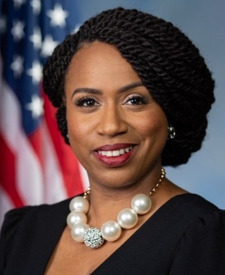
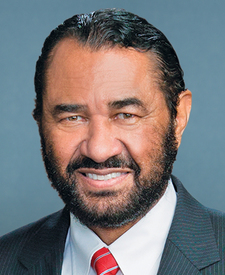



Legislative Progress
In CommitteeMs. Pressley (for herself, Ms. Omar, and Ms. Simon) introduced …
Referred to the House Committee on the Judiciary.
Introduced in House
Sponsor introductory remarks on measure. (CR H649)
Stakeholder Effects
cui bono?How this legislation distributes effects. Mention counts reflect frequency, not effect magnitude.
Federal law enforcement officers, Local police officers, State police officers
Local governments, State governments
Bill Structure & Actor Mappings
Who is "The Secretary" in each section?
We use a combination of our own taxonomy and classification in addition to large language models to assess meaning and potential beneficiaries. High confidence means strong textual evidence. Always verify with the original bill text.
Learn more about our methodology