Heroes Home Energy Savings Act
Summary
What This Bill Does
The Heroes Home Energy Savings Act extends and funds Department of Energy Weatherization Assistance Program work. It amends section 414D of the Energy Conservation and Production Act to continue enhancement and innovation activities for fiscal years 2026 through 2030. For each of those years, up to 6 percent of the amount available under section 422(3)(A) can be used for enhancement and innovation, excluding Department of Energy headquarters training or technical assistance. The bill also sets aside $2.1 million each year under section 422(3)(B) for weatherization work serving active duty and reserve military households. Section 422 is amended to authorize $350 million for each of fiscal years 2026 through 2030, plus the $2.1 million annual military-household allocation.
Who Benefits and How
Active duty military households and reserve military households benefit from a dedicated weatherization funding stream that can reduce heating, cooling, and energy-efficiency costs. Low-income households benefit from continued Weatherization Assistance Program funding through 2030. Community action agencies, weatherization crews, energy auditors, insulation contractors, HVAC contractors, and energy efficiency product suppliers benefit from a predictable five-year authorization and an enhancement-and-innovation set-aside. The Department of Energy benefits from clearer statutory authority for program innovation after the prior 2025 date.
Who Bears the Burden and How
Federal taxpayers bear the authorized cost of $350 million per year plus the $2.1 million annual military-household allocation. Department of Energy weatherization staff must administer the reauthorization, exclude headquarters training and technical assistance from the set-aside base, and oversee the dedicated military-household funding. State weatherization offices and local weatherization agencies must track eligible households, manage grants, document work, and comply with DOE rules.
Key Provisions
- Extends Weatherization Assistance Program enhancement and innovation authority through fiscal year 2030.
- Authorizes $350 million annually for the weatherization program for fiscal years 2026 through 2030.
- Reserves $2.1 million annually for weatherization work serving active duty and reserve military households.
- Limits enhancement and innovation use to not more than 6 percent of the covered annual weatherization amount.
- Excludes DOE headquarters training and technical assistance funds from the set-aside calculation.
Evidence Chain:
This summary is generated from the full bill text using AI analysis. Expand "Detailed Analysis" below for identified beneficiaries/burden bearers with clause-level evidence links.
At a Glance
What This Bill Does
Reauthorizes the Weatherization Assistance Program enhancement and innovation set-aside through fiscal years 2026 through 2030, authorizes $350 million annually for the weatherization program, and reserves $2.1 million per year for active duty and reserve military households.
Key Policy Areas
Energy, Housing, Defense
Primary Purpose
Reauthorizes the Weatherization Assistance Program enhancement and innovation set-aside through fiscal years 2026 through 2030, authorizes $350 million annually for the weatherization program, and reserves $2.1 million per year for active duty and reserve military households.
Policy Domains
Substantive provisions
Identified Gains
- Active duty military households
- Reserve military households
- Low-income households
- Community action agencies
- Weatherization contractors
- Energy efficiency suppliers
Identified Costs
- Federal taxpayers
- Department of Energy weatherization staff
- State weatherization offices
- Local weatherization agencies
Sponsors
Legislative Progress
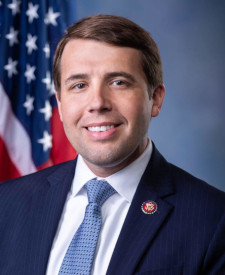
In CommitteeMr. Pappas introduced the following bill; which was referred to …
Referred to the House Committee on Energy and Commerce.
Introduced in House
Stakeholder Effects
cui bono?How this legislation distributes effects. Mention counts reflect frequency, not effect magnitude.
Active duty military households, Reserve military households
Bill Structure & Actor Mappings
Who is "The Secretary" in each section?
We use a combination of our own taxonomy and classification in addition to large language models to assess meaning and potential beneficiaries. High confidence means strong textual evidence. Always verify with the original bill text.
Learn more about our methodology