Protecting Taxpayers from Risky Investments in Venezuela Act
Summary
What This Bill Does
The Protecting Taxpayers from Risky Investments in Venezuela Act defines appropriate congressional committees as Senate Foreign Relations, Appropriations, and Budget, plus House Foreign Affairs, Appropriations, and Budget. It then prohibits funds appropriated or otherwise available to any U.S. department or agency, or any account owned, controlled, or accessible by the United States or a person acting on its behalf, from supporting Venezuela's oil infrastructure or petroleum sector. Covered support includes financing, subsidies, insurance, guarantees, contracts, development, maintenance, expansion, construction, installation, manufacture, modernization, repair, permanent improvement, real-property purchases or reimbursements, insurance costs, loan guarantees, tax incentives, royalty relief, payments to individuals or corporations, and advocacy or promotion by U.S. officials at international financial institutions, multilateral organizations, or diplomatic forums. The prohibition does not apply to expenditures explicitly authorized by a later Act of Congress. The State Secretary must report within 180 days and annually thereafter describing related expenditures or activities and certifying compliance.
Who Benefits and How
Taxpayers and lawmakers opposed to U.S. financial exposure in Venezuela's oil sector benefit because the bill blocks a wide range of direct and indirect support without later congressional authorization. Congressional foreign affairs, appropriations, and budget committees benefit from annual reporting and compliance certification. U.S. officials may benefit from clear statutory limits when considering requests at international financial institutions or diplomatic forums.
Who Bears the Burden and How
State Department staff, Treasury officials, development finance personnel, export-credit officials, budget officers, and U.S. representatives at international financial institutions must screen activities for Venezuela oil-sector support. Venezuelan oil companies, petroleum infrastructure developers, contractors, insurers, lenders, multinational corporations, and individuals seeking U.S.-backed support lose access to federal financing, guarantees, insurance, advocacy, or payments unless Congress later authorizes it. State Department reporting staff must track activities and produce annual compliance reports.
Key Provisions
- Defines the congressional committees receiving Venezuela oil-sector reports.
- Prohibits federal funds and U.S.-controlled accounts from supporting Venezuela oil infrastructure or the petroleum sector.
- Blocks financing, subsidies, insurance, guarantees, contracts, tax incentives, royalty relief, payments, and advocacy for covered oil activities.
- Allows covered expenditures only if Congress later explicitly authorizes them.
- Requires the State Secretary to report within 180 days and annually on related expenditures, activities, and compliance.
Evidence Chain:
This summary is generated from the full bill text using AI analysis. Expand "Detailed Analysis" below for identified beneficiaries/burden bearers with clause-level evidence links.
At a Glance
What This Bill Does
Bars federal funds or U.S.-controlled accounts from financing, subsidizing, insuring, guaranteeing, contracting for, advocating for, or otherwise supporting Venezuelan oil infrastructure or the petroleum sector unless Congress later explicitly authorizes the activity, and requires annual State Department compliance reports.
Key Policy Areas
Foreign Affairs, Oil & Gas, Government
Primary Purpose
Bars federal funds or U.S.-controlled accounts from financing, subsidizing, insuring, guaranteeing, contracting for, advocating for, or otherwise supporting Venezuelan oil infrastructure or the petroleum sector unless Congress later explicitly authorizes the activity, and requires annual State Department compliance reports.
Policy Domains
Substantive provisions
Identified Gains
- Federal taxpayers
- Congressional foreign affairs committees
- Congressional appropriations committees
- Congressional budget committees
- U.S. officials evaluating Venezuela policy
Identified Costs
- State Department reporting staff
- Treasury officials
- Development finance personnel
- Export-credit officials
- Venezuelan oil companies
- Petroleum infrastructure contractors
- International financial institution representatives
Sponsors
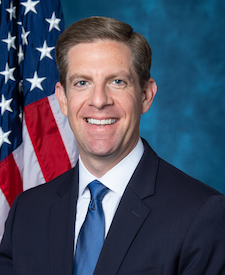
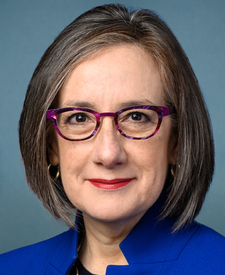


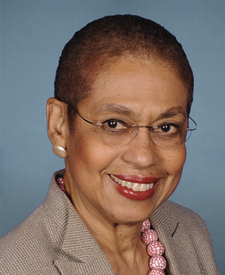
Legislative Progress
In CommitteeMr. Levin (for himself, Ms. Escobar, Mr. Doggett, Mr. Casten, …
Referred to the House Committee on Foreign Affairs.
Introduced in House
Stakeholder Effects
cui bono?How this legislation distributes effects. Mention counts reflect frequency, not effect magnitude.
Congressional appropriations committees, Congressional budget committees, Congressional foreign affairs committees
Positive-direction: Congressional appropriations committees, Congressional budget committees, Congressional foreign affairs committees
Negative-direction: State Department officials, State Department reporting staff, Treasury officials
Petroleum infrastructure contractors, Venezuelan oil companies, Venezuelan petroleum sector
Bill Structure & Actor Mappings
Who is "The Secretary" in each section?
We use a combination of our own taxonomy and classification in addition to large language models to assess meaning and potential beneficiaries. High confidence means strong textual evidence. Always verify with the original bill text.
Learn more about our methodology