Data Driven Diplomacy Act
Summary
What This Bill Does
The Data Driven Diplomacy Act links State Department public diplomacy to survey research. The Assistant Secretary for Global Public Affairs must request the Office of Opinion Research in the Bureau of Intelligence and Research to conduct public opinion surveys. Those surveys must inform the Bureau of Global Public Affairs about cultural context, target audiences, and shifting attitudes toward the United States and U.S. interests in regions where U.S.-funded media outlets currently operate or could operate in the future. The bill does not itself create a new media program; it requires a research input for decisions about U.S.-funded media and public affairs strategy.
Who Benefits and How
State Department public diplomacy officials benefit from better survey data before shaping messages or supporting U.S.-funded media. U.S.-funded media outlets benefit if programming and audience strategy reflect cultural context and changing attitudes. Congress, diplomats, and regional public affairs officers benefit from a more evidence-based understanding of target audiences and U.S. interests abroad. The Office of Opinion Research benefits from a clear role in informing Global Public Affairs decisions.
Who Bears the Burden and How
The Assistant Secretary for Global Public Affairs must request and use opinion research. Office of Opinion Research staff must design, field, analyze, and deliver surveys for relevant regions. U.S.-funded media managers may need to adjust programming based on survey findings. Federal taxpayers fund the research work, and State Department officials must protect survey quality, local safety, and analytic independence.
Key Provisions
- Requires Global Public Affairs to request public opinion surveys from the Office of Opinion Research.
- Requires surveys to address cultural context, target audiences, and shifting attitudes toward the United States and U.S. interests.
- Applies to regions where U.S.-funded media outlets operate or could operate in the future.
- Requires survey findings to inform State Department public affairs and media strategy.
Evidence Chain:
This summary is generated from the full bill text using AI analysis. Expand "Detailed Analysis" below for identified beneficiaries/burden bearers with clause-level evidence links.
At a Glance
What This Bill Does
Requires the State Department Assistant Secretary for Global Public Affairs to ask the Office of Opinion Research in the Bureau of Intelligence and Research to conduct public opinion surveys on cultural context, target audiences, and attitudes toward the United States in regions where U.S.-funded media outlets operate or may operate.
Key Policy Areas
Foreign Affairs, Media, Research & Science
Primary Purpose
Requires the State Department Assistant Secretary for Global Public Affairs to ask the Office of Opinion Research in the Bureau of Intelligence and Research to conduct public opinion surveys on cultural context, target audiences, and attitudes toward the United States in regions where U.S.-funded media outlets operate or may operate.
Policy Domains
Substantive provisions
Identified Gains
- State Department public diplomacy officials
- U.S.-funded media outlets
- Regional public affairs officers
- Congressional foreign affairs staff
- Office of Opinion Research analysts
Identified Costs
- Assistant Secretary for Global Public Affairs
- Office of Opinion Research staff
- Bureau of Intelligence and Research staff
- U.S.-funded media managers
- Federal taxpayers
Sponsors

Legislative Progress
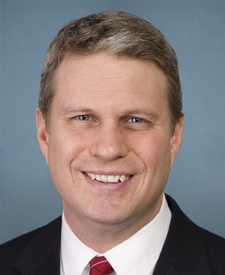
In CommitteeMr. Huizenga introduced the following bill; which was referred to …
Referred to the House Committee on Foreign Affairs.
Introduced in House
Stakeholder Effects
cui bono?How this legislation distributes effects. Mention counts reflect frequency, not effect magnitude.
Bureau of Intelligence and Research staff, Office of Opinion Research staff, State Department public diplomacy officials
Positive-direction: State Department public diplomacy officials
Negative-direction: Bureau of Intelligence and Research staff, Office of Opinion Research staff
Bill Structure & Actor Mappings
Who is "The Secretary" in each section?
We use a combination of our own taxonomy and classification in addition to large language models to assess meaning and potential beneficiaries. High confidence means strong textual evidence. Always verify with the original bill text.
Learn more about our methodology