Evidence-Based Grantmaking Act
Summary
What This Bill Does
The Evidence-Based Grantmaking Act adds a new title 5 section 316 for covered grants at major agencies including Agriculture, Commerce, Education, Energy, HHS, Homeland Security, HUD, Interior, Justice, Labor, Transportation, Treasury, Veterans Affairs, EPA, and SBA. For each covered grant that funds services to the public or a specific community, agencies must define the grant purpose and intended outcomes in notices or requests, prioritize applicants that use evidence-based practices and show the funds will achieve the grant purpose, prioritize community-responsive applicants located in or representative of the served community, require recipients to use evidence-based practices, and have evaluation officers conduct periodic evidence-based evaluations during the grant term. Evaluations must assess whether funds achieve intended outcomes, be conducted under a process, be made public, and inform future funding notices. Evaluation officers must follow federal program evaluation standards using impact, outcome, process, implementation, and formative evaluation where appropriate. Agency heads must report annually to Congress and may provide technical assistance. The bill also requires each agency to publish proposed definitions and frameworks, take public comment, phase in framework implementation after five years, report to OMB on implementation plans and covered grant lists, and have OMB report annually to Congress on use of the frameworks.
Who Benefits and How
Communities served by federal grants benefit if grant money flows toward programs with evidence of effectiveness and applicants rooted in the community. Community organizations, nonprofits, local governments, universities, and service providers with evidence-based models benefit from priority in federal competitions. Congress, OMB, agency evaluation officers, and taxpayers benefit from clearer outcomes, public evaluation results, annual reporting, and feedback loops for future grants. People receiving federally funded services benefit if programs are required to use evidence-based practices rather than untested approaches.
Who Bears the Burden and How
Covered agencies must rewrite notices of funding opportunity, define intended outcomes, create evidence frameworks, conduct evaluations, publish results, report to Congress, provide technical assistance, and coordinate with OMB. Grant applicants must document evidence-based practices, community responsiveness, and outcome alignment. Recipients must implement evidence-based practices and participate in evaluations. Smaller organizations may face application and data burdens if they lack evaluation capacity, even though agencies may offer technical assistance.
Key Provisions
- Requires covered agencies to define grant purposes and intended outcomes in funding notices.
- Requires priority for applicants using evidence-based practices and serving community needs.
- Requires covered grant recipients to use evidence-based practices in public or community services.
- Requires agency evaluation officers to conduct periodic evidence-based evaluations during grant terms.
- Requires evaluation results to be public and used in future grant design.
- Requires annual agency reports to Congress and OMB reports on framework use.
- Requires public definitions, agency frameworks, and phased implementation for evidence-based grantmaking.
Evidence Chain:
This summary is generated from the full bill text using AI analysis. Expand "Detailed Analysis" below for identified beneficiaries/burden bearers with clause-level evidence links.
At a Glance
What This Bill Does
Requires major federal grantmaking agencies to prioritize evidence-based and community-responsive applicants, require grant recipients to use evidence-based practices, conduct periodic evidence-based evaluations through agency evaluation officers, publish results, report annually to Congress, provide technical assistance, and phase in agency definitions and frameworks through OMB reports.
Key Policy Areas
Government, Research & Science, Social Services
Primary Purpose
Requires major federal grantmaking agencies to prioritize evidence-based and community-responsive applicants, require grant recipients to use evidence-based practices, conduct periodic evidence-based evaluations through agency evaluation officers, publish results, report annually to Congress, provide technical assistance, and phase in agency definitions and frameworks through OMB reports.
Policy Domains
Substantive provisions
Identified Gains
- Communities served by federal grants
- Community organizations
- Nonprofit service providers
- Local governments
- Universities
- Agency evaluation officers
- Congressional oversight committees
- Federal taxpayers
Identified Costs
- Covered agency grant staff
- Grant applicants
- Grant recipients
- Small nonprofit organizations
- OMB staff
- Program evaluators
Sponsors


Legislative Progress
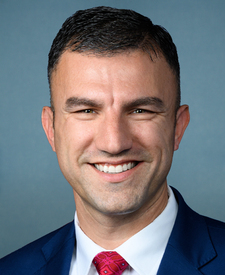
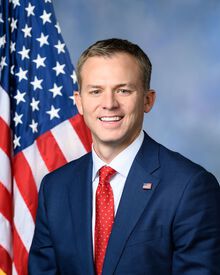
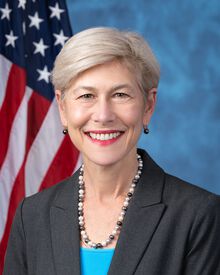
In CommitteeMr. Yakym (for himself, Mr. Bacon, Ms. Pettersen, Mr. Timmons, …
Referred to the House Committee on Oversight and Government Reform.
Introduced in House
Stakeholder Effects
cui bono?How this legislation distributes effects. Mention counts reflect frequency, not effect magnitude.
Agency evaluation officers, Congressional oversight committees, Covered agency grant staff
Positive-direction: Congressional oversight committees
Negative-direction: Agency evaluation officers, Covered agency grant staff, OMB staff
Community organizations, Grant applicants, Grant recipients
Positive-direction: Community organizations
Negative-direction: Grant applicants, Grant recipients
Communities served by federal grants, People receiving federally funded services
Bill Structure & Actor Mappings
Who is "The Secretary" in each section?
We use a combination of our own taxonomy and classification in addition to large language models to assess meaning and potential beneficiaries. High confidence means strong textual evidence. Always verify with the original bill text.
Learn more about our methodology