To make improvements to the child tax credit, to provide tax incentives to promote economic growth, to provide special rules for the taxation of certain residents of Taiwan with income from sources within the United States, to provide tax relief with respect to certain Federal disasters, to make improvements to the low-income housing tax credit, and for other purposes.
Sponsors
Legislative Progress
ReportedReported from the Committee on Ways and Means with an …
Committee on Rules discharged; committed to the Committee of the …
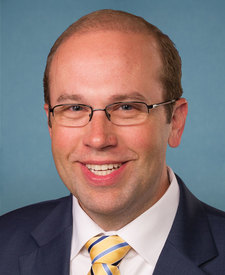
Mr. Smith of Missouri introduced the following bill; which was …
Summary
What This Bill Does
Improves the child tax credit by calculating refundable portion per child rather than aggregate. Increases refundable amount and provides economic growth tax incentives.
Who Benefits and How
Low and middle-income families with children receive larger refundable credits. Multi-child families benefit from per-child calculation. Working families gain improved tax relief.
Who Bears the Burden and How
Federal revenue decreases due to expanded credits. Higher-income families without children receive no benefit. Tax complexity increases slightly.
Key Provisions
- Calculates refundable credit per qualifying child up to $1,400
- Applies retroactively to tax years after December 2022
- Includes additional tax relief measures for workers
Evidence Chain:
This summary is derived from the structured analysis below. See "Detailed Analysis" for per-title beneficiaries/burden bearers with clause-level evidence links.
Primary Purpose
Expands child tax credit and provides tax relief for American families and workers
Policy Domains
Legislative Strategy
"Expand child tax credit for low-income families"
Bill Structure & Actor Mappings
Who is "The Secretary" in each section?
We use a combination of our own taxonomy and classification in addition to large language models to assess meaning and potential beneficiaries. High confidence means strong textual evidence. Always verify with the original bill text.
Learn more about our methodology