Mystic Alerts Act
Summary
What This Bill Does
The Mystic Alerts Act extends Wireless Emergency Alert rules to satellite-capable commercial mobile service. In the introduced version, each commercial mobile service provider that voluntarily elects to transmit emergency alerts under the Warning, Alert, and Response Network Act must file an election with the Federal Communications Commission saying whether it also intends to transmit those alerts by satellite to subscribers or users.
If a provider elects to transmit satellite alerts, it must notify the FCC and agree to follow FCC technical standards, protocols, procedures, interoperability requirements, and other requirements. If it elects not to transmit satellite alerts, it must notify new and existing subscribers in the same way current Wireless Emergency Alert opt-out notices are handled. Providers that do send satellite alerts must respect subscriber opt-outs and prevent opted-out devices from receiving satellite alerts.
The FCC must publish a proposed rule within six months and issue a final rule after consultation with the Secretary of Homeland Security and FEMA. The House-reported version makes the election due 60 days after the final rule's effective date for covered service providers that offer satellite voice and data service, bars separate or additional charges for satellite alert transmission or capability, sets a final-rule deadline of 18 months, delays effectiveness until at least 36 months after Federal Register publication or 12 months after DHS and FEMA implement needed alert-originator standards, and creates liability protection for compliant providers.
Who Benefits and How
Mobile subscribers with satellite-capable service benefit because emergency alerts may reach them when terrestrial networks are unavailable. Emergency managers benefit if satellite alerting expands the reach of warnings during disasters, remote incidents, or network outages. Covered mobile service providers benefit from a clear election process, FCC technical standards, and liability protection in the House-reported version. Satellite communications providers benefit from a defined role in Wireless Emergency Alert delivery. The FCC benefits from a statutory schedule for rulemaking and implementation. DHS and FEMA benefit from a defined consultation role for alert-originator standards.
Who Bears the Burden and How
Covered mobile service providers must file elections, notify subscribers, implement FCC technical standards, respect opt-outs, and, in the House-reported version, avoid separate satellite-alert charges. FCC rulemaking staff must publish a proposed rule, issue a final rule, define satellite-alert requirements, and coordinate with DHS and FEMA. DHS emergency-alert officials and FEMA alerting administrators must implement any needed standards, protocols, or procedures for alert originators. Device makers and satellite-network partners may need to support alert receipt, display, interoperability, and 9-1-1 protection requirements.
Key Provisions
- Requires mobile providers that already elect Wireless Emergency Alerts to file FCC elections on satellite alerting.
- Requires opt-in providers to follow FCC satellite-alert technical standards, protocols, procedures, and interoperability requirements.
- Requires opt-out providers to notify new and existing subscribers.
- Protects subscriber alert opt-outs when alerts are transmitted by satellite.
- Directs the FCC to issue satellite-alert rulemaking with DHS and FEMA consultation.
- Bars separate satellite-alert charges in the House-reported version.
- Provides liability protection for compliant covered service providers in the House-reported version.
Evidence Chain:
This summary is generated from the full bill text using AI analysis. Expand "Detailed Analysis" below for identified beneficiaries/burden bearers with clause-level evidence links.
At a Glance
What This Bill Does
Requires mobile providers that elect to send Wireless Emergency Alerts to file FCC elections on satellite alerting, follow FCC satellite-alert technical rules if they opt in, notify subscribers if they opt out, preserve user opt-outs, and, in the House-reported version, bars separate satellite-alert charges and provides liability protection for compliant providers.
Key Policy Areas
Emergency Alerts, Telecommunications, Public Safety, Federal Communications
Primary Purpose
Requires mobile providers that elect to send Wireless Emergency Alerts to file FCC elections on satellite alerting, follow FCC satellite-alert technical rules if they opt in, notify subscribers if they opt out, preserve user opt-outs, and, in the House-reported version, bars separate satellite-alert charges and provides liability protection for compliant providers.
Policy Domains
House resolution provisions
Identified Gains
- Mobile subscribers with satellite-capable service
- Emergency managers
- Covered mobile service providers
- Satellite communications providers
- Federal Communications Commission
- DHS emergency-alert officials
- FEMA alerting administrators
Identified Costs
- Covered mobile service providers
- FCC rulemaking staff
- DHS emergency-alert officials
- FEMA alerting administrators
- Device makers
- Satellite-network partners
Sponsors
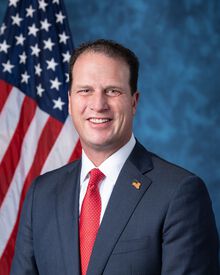



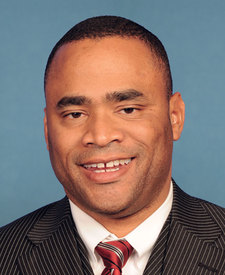
Legislative Progress
ReportedReceived in the Senate and Read twice and referred to …
Received; read twice and referred to the Committee on Commerce, …
Motion to reconsider laid on the table Agreed to without …
On motion to suspend the rules and pass the bill, …
Passed/agreed to in House: On motion to suspend the rules …
DEBATE - The House proceeded with forty minutes of debate …
Considered under suspension of the rules. (consideration: CR H2970-2971)
Mr. Allen moved to suspend the rules and pass the …
Placed on the Union Calendar, Calendar No. 534.
Reported (Amended) by the Committee on Energy and Commerce. H. …
Stakeholder Effects
cui bono?How this legislation distributes effects. Mention counts reflect frequency, not effect magnitude.
DHS emergency-alert officials, Emergency managers, FEMA alerting administrators
Positive-direction: Emergency managers
Negative-direction: DHS emergency-alert officials, FEMA alerting administrators
Commercial mobile service providers, Covered mobile service providers, Mobile subscribers in remote areas
Positive-direction: Mobile subscribers in remote areas, Mobile subscribers with satellite-capable service
Negative-direction: Commercial mobile service providers, Covered mobile service providers
Bill Structure & Actor Mappings
Who is "The Secretary" in each section?
- "dhs"
- → Secretary of Homeland Security
- "fcc"
- → Federal Communications Commission
- "fema"
- → Federal Emergency Management Agency
We use a combination of our own taxonomy and classification in addition to large language models to assess meaning and potential beneficiaries. High confidence means strong textual evidence. Always verify with the original bill text.
Learn more about our methodology