Renewed Hope Act
Summary
What This Bill Does
The Renewed Hope Act builds a dedicated Homeland Security Investigations workforce for identifying and rescuing victims of child sexual exploitation and abuse. DHS must hire, train, and assign at least 40 forensic analysts and 30 child exploitation investigators to the HSI Victim Identification Laboratory, plus 130 additional forensic analysts and investigators to HSI Special Agent in Charge offices. Those positions generally cannot be reassigned outside the Child Exploitation Investigations Unit or HSI field offices unless the employee elects reassignment. DHS may also use expert and consultant authority at daily rates up to the GS-15 equivalent.
The bill requires DHS to deconflict child sexual exploitation investigations across affected DHS agencies and authorizes coordination procedures with the NCMEC Child Victim Identification Program. DHS must establish a Victim Identification Training Program in the Cyber Crimes Center for HSI personnel, federal law enforcement, state law enforcement, local law enforcement, tribal law enforcement, foreign law enforcement, civil service child-protection organizations, and NCMEC personnel. Training must cover current victim-identification tools, the Victim Identification Laboratory's capabilities, and image, audio, and video enhancement techniques.
The head of HSI receives direct-hire authority for the new positions unless at least 97 percent of them are filled, and HSI must report annually to House and Senate oversight committees for five years. Sections 2 through 4 must be carried out within three years. The bill also requires covered law enforcement and DHS personnel to secure identifying records for child sexual exploitation victims and limits use or disclosure to investigations, prosecutions, trauma-informed medical connections, DOJ Office for Victims of Crime resources, mandatory reporting, and law-enforcement sharing.
Who Benefits and How
Child sexual exploitation victims benefit because the bill expands forensic, investigative, and training capacity devoted to victim identification and rescue. The HSI Victim Identification Laboratory benefits from 70 dedicated analysts and investigators and protection against reassignment. HSI field offices benefit from 130 additional specialized staff. NCMEC child victim identification staff benefit from formal deconfliction procedures and access to DHS training. Federal, state, local, tribal, and foreign law enforcement trainees benefit from Cyber Crimes Center instruction on current tools and lab capabilities. Victims connected to services benefit from privacy rules and authorized referrals to trauma-informed medical professionals and the DOJ Office for Victims of Crime.
Who Bears the Burden and How
DHS personnel offices must hire, train, assign, and protect at least 200 specialized positions. HSI management must administer direct hiring, track the 97 percent fill-rate limit, and report annually to congressional oversight committees. DHS Cyber Crimes Center staff must build and deliver the Victim Identification Training Program. Affected DHS agencies must follow joint deconfliction procedures instead of running overlapping investigations independently. Covered law enforcement and DHS personnel must secure victim-identifying information and limit disclosure or use to the purposes listed in the bill.
Key Provisions
- Requires DHS to hire at least 40 forensic analysts for the HSI Victim Identification Laboratory.
- Requires DHS to hire at least 30 child exploitation investigators for the HSI Victim Identification Laboratory.
- Requires 130 additional forensic analyst and investigator positions for HSI Special Agent in Charge offices.
- Protects the new HSI positions from reassignment outside child-exploitation units except by employee election.
- Directs DHS and NCMEC coordination to deconflict child sexual exploitation investigations.
- Establishes a Cyber Crimes Center Victim Identification Training Program for HSI and law-enforcement partners.
- Authorizes HSI direct hiring for the new positions until at least 97 percent are filled.
- Requires five annual reports to congressional oversight committees on direct-hire use.
- Requires secure handling and limited disclosure of victim-identifying records.
Evidence Chain:
This summary is generated from the full bill text using AI analysis. Expand "Detailed Analysis" below for identified beneficiaries/burden bearers with clause-level evidence links.
At a Glance
What This Bill Does
Expands Homeland Security Investigations child-exploitation victim-identification capacity by requiring new forensic analyst and investigator positions, protecting those positions from reassignment, creating DHS-NCMEC deconfliction procedures, establishing Cyber Crimes Center training, authorizing direct hiring, requiring annual reports, setting a three-year implementation deadline, and imposing victim-record privacy rules.
Key Policy Areas
Law Enforcement, Child Protection, Homeland Security, Privacy
Primary Purpose
Expands Homeland Security Investigations child-exploitation victim-identification capacity by requiring new forensic analyst and investigator positions, protecting those positions from reassignment, creating DHS-NCMEC deconfliction procedures, establishing Cyber Crimes Center training, authorizing direct hiring, requiring annual reports, setting a three-year implementation deadline, and imposing victim-record privacy rules.
Policy Domains
House resolution provisions
Identified Gains
- Child sexual exploitation victims
- HSI Victim Identification Laboratory
- HSI field offices
- NCMEC child victim identification staff
- Law enforcement trainees
- DOJ Office for Victims of Crime
Identified Costs
- DHS personnel offices
- HSI management
- DHS Cyber Crimes Center staff
- Affected DHS agencies
- Law enforcement officers handling victim records
Sponsors



Legislative Progress
ReportedOrdered to be Reported (Amended) by Voice Vote.
Committee Consideration and Mark-up Session Held
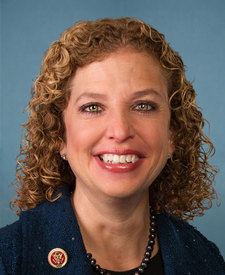
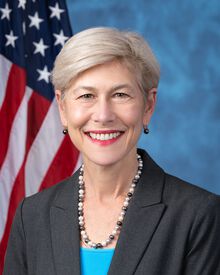
Ms. Lee of Florida (for herself and Ms. Wasserman Schultz) …
Referred to the House Committee on the Judiciary.
Introduced in House
Stakeholder Effects
cui bono?How this legislation distributes effects. Mention counts reflect frequency, not effect magnitude.
HSI Victim Identification Laboratory, HSI child exploitation investigators, HSI field offices
Positive-direction: HSI Victim Identification Laboratory, HSI child exploitation investigators, HSI field offices, HSI personnel trainees
Negative-direction: HSI management
Child exploitation investigator applicants, DHS personnel offices, Forensic analyst applicants
Positive-direction: Child exploitation investigator applicants, Forensic analyst applicants
Negative-direction: DHS personnel offices
Affected DHS agencies, DHS Cyber Crimes Center staff, DHS implementation officials
Law enforcement officers handling victim records, Local law enforcement trainees, State law enforcement trainees
Positive-direction: Local law enforcement trainees, State law enforcement trainees, Tribal law enforcement trainees
Negative-direction: Law enforcement officers handling victim records
Child sexual exploitation victims
Civil service child-protection organizations, NCMEC child victim identification staff
Bill Structure & Actor Mappings
Who is "The Secretary" in each section?
- "hsi"
- → Homeland Security Investigations
- "ncmec"
- → NCMEC Child Victim Identification Program
- "secretary"
- → Secretary of Homeland Security
- "cyber_crimes_center"
- → DHS Cyber Crimes Center
We use a combination of our own taxonomy and classification in addition to large language models to assess meaning and potential beneficiaries. High confidence means strong textual evidence. Always verify with the original bill text.
Learn more about our methodology