Full AI Stack Export Promotion Act
Summary
What This Bill Does
The Full AI Stack Export Promotion Act sets a U.S. policy goal of maintaining U.S. dominance in global artificial intelligence deployment and driving allies and partners to build AI on U.S.-developed models, U.S. cloud operators, U.S.-owned or operated data centers, and U.S.-designed AI semiconductors. It also aims to reduce export barriers for U.S. AI firms, counter Chinese influence in AI governance bodies, prevent illicit foreign-adversary access to U.S. AI deployed abroad, and maintain a majority of global AI computing capacity and memory bandwidth in the United States.
Commerce must create a program to identify and receive proposals from industry consortia that meet U.S.-approved security requirements and standards for exporting the U.S. full AI stack to allies and partners. State, in consultation with Commerce, must increase efforts to eliminate foreign barriers through industry listening sessions, an industry hotline, diplomatic escalation, and a diplomatic strategy for market access, communicating U.S. AI benefits, and promoting U.S.-aligned international AI governance.
State, DNI, and Commerce must study the economic, diplomatic, technological, and security impact of global U.S. AI stack deployment and identify priority regions and countries. Commerce, State, Defense, and Energy must work with foreign purchasers to institute security measures preventing illicit or unauthorized adversary access, including standardized security requirements, agreements with countries, remote-access protections, supply-chain checks, and reports. Commerce and State must create confidence practices, product offerings, or standards for major national purchasers. Commerce, DNI, and State must publish a biannual AI export success tracker for five years measuring national AI compute, memory bandwidth, U.S.-designed AI chips, U.S.-operated data centers, U.S.-owned models, U.S. cloud revenue, and data-processing capacity.
Who Benefits and How
U.S. AI semiconductor designers benefit because the bill measures and promotes global use of U.S.-designed AI integrated circuits. U.S. cloud operators benefit because the policy favors AI deployment through U.S.-owned or operated cloud infrastructure and tracks global cloud revenue and capacity. U.S. data center firms benefit from export promotion and reporting on U.S.-owned or operated AI data centers. U.S. AI model developers benefit because the bill promotes global model usage by U.S.-owned or operated firms. Industry consortia benefit from a Commerce program for export proposals. Allied foreign purchasers benefit from U.S. diplomatic support, confidence standards, and security measures for buying the U.S. full AI stack.
Who Bears the Burden and How
Commerce export-promotion staff must establish the consortia program, security measures, purchaser-confidence practices, and export success tracker. State Department diplomats must hold industry listening sessions, run a hotline, eliminate foreign barriers, write the diplomatic strategy, and advocate U.S.-aligned AI governance. Foreign purchasers of the U.S. full AI stack must implement security measures to prevent adversary access, including remote-access and supply-chain controls. DNI, Defense, and Energy officials must support studies, security reporting, and classified annexes. Foreign adversary AI firms may lose market share if allies and partners adopt U.S. models, cloud, data centers, and chips.
Key Provisions
- Establishes U.S. policy to maintain dominance in global AI deployment and adoption of the U.S. full AI stack.
- Creates a Commerce program for industry consortia proposing exports to allies and partners.
- Requires State to remove foreign barriers through listening sessions, a hotline, diplomatic channels, and a diplomatic strategy.
- Requires a State-DNI-Commerce study on global AI deployment and priority countries.
- Requires Commerce-led security measures to prevent foreign-adversary access to the U.S. full AI stack abroad.
- Requires purchaser-confidence practices, product offerings, or standards for major national purchasers.
- Requires a biannual public AI export success tracker for five years, with a possible classified annex.
- Defines the full AI stack, AI integrated circuits, national computing capacity, national memory bandwidth, and foreign adversaries.
Evidence Chain:
This summary is generated from the full bill text using AI analysis. Expand "Detailed Analysis" below for identified beneficiaries/burden bearers with clause-level evidence links.
At a Glance
What This Bill Does
Promotes exports of the U.S. full AI stack by directing Commerce to identify industry consortia, State to remove foreign barriers and write a diplomatic strategy, State-DNI-Commerce to study global AI deployment, Commerce-State-Defense-Energy to secure foreign deployments against adversary access, Commerce-State to create purchaser-confidence practices, and Commerce-DNI-State to publish biannual AI export success estimates for five years.
Key Policy Areas
Artificial Intelligence, Export Promotion, Semiconductors, Cloud Computing, Foreign Affairs
Primary Purpose
Promotes exports of the U.S. full AI stack by directing Commerce to identify industry consortia, State to remove foreign barriers and write a diplomatic strategy, State-DNI-Commerce to study global AI deployment, Commerce-State-Defense-Energy to secure foreign deployments against adversary access, Commerce-State to create purchaser-confidence practices, and Commerce-DNI-State to publish biannual AI export success estimates for five years.
Policy Domains
House resolution provisions
Identified Gains
- U.S. semiconductor manufacturers
- U.S. cloud computing companies
- U.S. data center operators
- U.S. artificial intelligence model companies
- Commerce-approved industry consortia
- Allied government AI purchasers
Identified Costs
- Department of Commerce AI export-promotion staff
- Department of State diplomats
- Foreign purchasers of the U.S. full AI stack
- Director of National Intelligence technology analysts
- Department of Defense technology-security officials
- Department of Energy AI security staff
- Foreign adversary AI companies
Sponsors

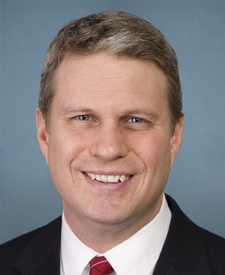
Randy Fine
R-FL | Primary Sponsor
Legislative Progress
ReportedOrdered to be Reported in the Nature of a Substitute …
Committee Consideration and Mark-up Session Held
Referred to the House Committee on Foreign Affairs.
Introduced in House
Mr. Fine introduced the following bill; which was referred to …
Stakeholder Effects
cui bono?How this legislation distributes effects. Mention counts reflect frequency, not effect magnitude.
Industry consortia exporting AI stack products, U.S. AI companies seeking foreign markets, U.S. AI exporters
Commerce AI export staff, Commerce AI security staff
Foreign purchasers of the U.S. full AI stack
Bill Structure & Actor Mappings
Who is "The Secretary" in each section?
- "dni"
- → Director of National Intelligence
- "state"
- → Secretary of State
- "commerce"
- → Secretary of Commerce
We use a combination of our own taxonomy and classification in addition to large language models to assess meaning and potential beneficiaries. High confidence means strong textual evidence. Always verify with the original bill text.
Learn more about our methodology