PROTECT Act of 2026
Summary
What This Bill Does
The PROTECT Act of 2026 brings PFAS air emissions into the Clean Air Act hazardous-air-pollutant framework. Within 180 days after enactment, the EPA Administrator must issue a final rule adding, as a class, all perfluoroalkyl and polyfluoroalkyl substances with at least one fully fluorinated carbon atom to the hazardous air pollutants list under section 112(b). Within 365 days after that final rule, EPA must revise the section 112(c)(1) list of source categories and subcategories to include major sources and area sources of the newly listed PFAS. The bill therefore moves PFAS from a chemical-exposure concern into the Clean Air Act system used for source-category regulation and hazardous-pollutant control.
Who Benefits and How
Communities near facilities emitting PFAS benefit because listing PFAS as hazardous air pollutants creates a path toward federal emissions standards and source-category oversight. State air-quality agencies, public health researchers, environmental organizations, and residents concerned about toxic exposure benefit from clearer federal authority to identify and regulate PFAS-emitting source categories. Manufacturers of pollution-control technology may benefit if future standards require emissions controls.
Who Bears the Burden and How
EPA air toxics staff must issue the PFAS listing rule within 180 days and revise major-source and area-source categories within 365 days after the rule. Industrial facilities that emit PFAS, including manufacturers, processors, users, waste handlers, and other source categories identified by EPA, may face future monitoring, control technology, permitting, and compliance costs. State air regulators must prepare for implementation and industry outreach once source categories are listed.
Key Provisions
- Requires EPA to add all PFAS with at least one fully fluorinated carbon atom to the Clean Air Act hazardous air pollutants list.
- Requires the PFAS hazardous-air-pollutant final rule within 180 days after enactment.
- Requires EPA to revise major-source and area-source category lists within 365 days after the final rule.
- Provides a Clean Air Act section 112 pathway for future PFAS air-emissions standards.
Evidence Chain:
This summary is generated from the full bill text using AI analysis. Expand "Detailed Analysis" below for identified beneficiaries/burden bearers with clause-level evidence links.
At a Glance
What This Bill Does
Requires EPA to list all PFAS with at least one fully fluorinated carbon atom as hazardous air pollutants within 180 days and to add major-source and area-source categories and subcategories for those PFAS within 365 days after the listing rule.
Key Policy Areas
Environment, Healthcare, Manufacturing
Primary Purpose
Requires EPA to list all PFAS with at least one fully fluorinated carbon atom as hazardous air pollutants within 180 days and to add major-source and area-source categories and subcategories for those PFAS within 365 days after the listing rule.
Policy Domains
Substantive provisions
Identified Gains
- Communities near PFAS-emitting facilities
- State air-quality agencies
- Public health researchers
- Environmental organizations
- Pollution-control technology manufacturers
Identified Costs
- EPA air toxics staff
- PFAS-emitting manufacturers
- Industrial source operators
- State air regulators
- Federal taxpayers
Sponsors



Legislative Progress
In CommitteeReferred to the House Committee on Energy and Commerce.
Introduced in House
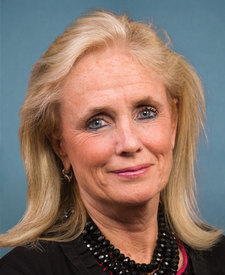
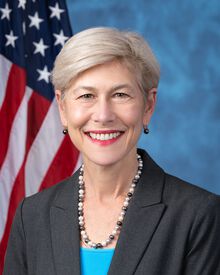
Ms. Stevens (for herself, Mrs. Dingell, Mr. Fitzpatrick, Ms. Tlaib, …
Bill Structure & Actor Mappings
Who is "The Secretary" in each section?
We use a combination of our own taxonomy and classification in addition to large language models to assess meaning and potential beneficiaries. High confidence means strong textual evidence. Always verify with the original bill text.
Learn more about our methodology