Public Health Nursing Act
Summary
What This Bill Does
The Public Health Nursing Act adds a public health nursing workforce section to title VII of the Public Health Service Act. The HHS Secretary must carry out activities to establish, expand, and sustain a public health nursing workforce, including grants to State, local, and territorial public health departments. Grant funds may pay wages, benefits, recruiting, hiring, training, medical supplies, personal protective equipment, administrative costs, and subgrants to local health departments. The nurses must be licensed registered nurses employed by public health departments, especially in medically underserved areas, and may work in public health facilities, mobile clinics, acute care hospitals, or home visitation. HHS must prioritize applicants serving high chronic-disease, infant-mortality, maternal-morbidity, low-income, medically underserved, health-professional-shortage, maternity-care-shortage, rural, or traditionally underserved populations. Applicants also receive priority for language and cultural competence plans and for collective bargaining agreements or noninterference policies. Recipients must maintain non-federal spending, and the bill authorizes $5 billion per year for fiscal years 2026 through 2035.
Who Benefits and How
State, local, and territorial public health departments benefit from a large federal funding stream for nursing workforce capacity. Licensed registered nurses benefit from jobs, wages, benefits, training, and public health career pathways. Medically underserved communities, rural residents, low-income populations, pregnant and postpartum patients, infants, and people with chronic disease benefit if departments can staff home visits, mobile clinics, preventive care, nutrition education, infectious disease work, chronic disease management, and maternal and infant health programs. Labor organizations benefit because priority criteria reward collective bargaining agreements or noninterference policies.
Who Bears the Burden and How
HHS grant staff must design the program, score priority criteria, monitor maintenance-of-effort compliance, oversee subgrants, and manage up to $5 billion per year. Public health departments must document eligible spending, maintain non-federal expenditures, recruit and train nurses, purchase supplies, run culturally appropriate services, and comply with labor-related priority claims. Federal taxpayers bear the cost of the authorized appropriations. Departments without collective bargaining agreements or noninterference policies may face weaker priority in grant competition.
Key Provisions
- Authorizes HHS grants to establish, expand, and sustain a public health nursing workforce.
- Provides eligible uses for nurse wages, benefits, recruitment, hiring, training, medical supplies, PPE, administration, and local subgrants.
- Requires priority for medically underserved, rural, low-income, chronic-disease, infant-mortality, maternal-morbidity, and provider-shortage populations.
- Requires maintenance of non-federal spending by grant recipients.
- Authorizes $5 billion per year for fiscal years 2026 through 2035.
Evidence Chain:
This summary is generated from the full bill text using AI analysis. Expand "Detailed Analysis" below for identified beneficiaries/burden bearers with clause-level evidence links.
At a Glance
What This Bill Does
Authorizes HHS public health nursing workforce grants of $5 billion per year for fiscal years 2026 through 2035 to help State, local, and territorial public health departments recruit, hire, train, equip, and sustain registered nurses serving underserved communities.
Key Policy Areas
Healthcare, Social Services, State & Local Government
Primary Purpose
Authorizes HHS public health nursing workforce grants of $5 billion per year for fiscal years 2026 through 2035 to help State, local, and territorial public health departments recruit, hire, train, equip, and sustain registered nurses serving underserved communities.
Policy Domains
Substantive provisions
Identified Gains
- State public health departments
- Local public health departments
- Territorial public health departments
- Licensed registered nurses
- Medically underserved communities
- Rural residents
- Pregnant patients
- Infants
- Labor organizations
Identified Costs
- HHS grant staff
- Public health department administrators
- Federal taxpayers
- Grant compliance teams
Sponsors
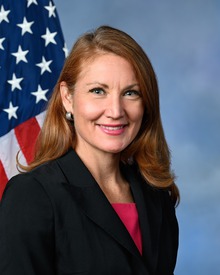


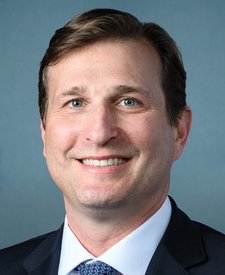
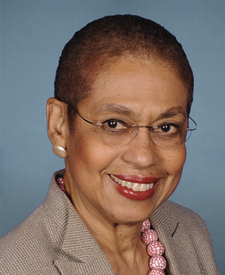
Legislative Progress
In CommitteeMs. Stansbury (for herself and Ms. Moore of Wisconsin) introduced …
Referred to the House Committee on Energy and Commerce.
Introduced in House
Stakeholder Effects
cui bono?How this legislation distributes effects. Mention counts reflect frequency, not effect magnitude.
Local public health departments, Public health department administrators, State public health departments
Positive-direction: Local public health departments, State public health departments
Negative-direction: Public health department administrators
Licensed registered nurses, Pregnant patients in underserved areas
Bill Structure & Actor Mappings
Who is "The Secretary" in each section?
We use a combination of our own taxonomy and classification in addition to large language models to assess meaning and potential beneficiaries. High confidence means strong textual evidence. Always verify with the original bill text.
Learn more about our methodology