Trade Transparency Unit Strategy Act
Summary
What This Bill Does
The Trade Transparency Unit Strategy Act focuses on trade-based money laundering. It states that Trade Transparency Units are bilateral and multilateral tools for identifying, disrupting, and dismantling international money-laundering networks. Within 180 days, the Secretary of Homeland Security must coordinate with the Secretaries of State, Commerce, and Treasury and submit a strategy to congressional committees. The strategy must expand information sharing between Customs and Border Protection, Homeland Security Investigations, Commerce components, FinCEN, and foreign customs counterparts through Trade Transparency Units, and improve intra-agency, inter-agency, and multilateral information sharing about those units. The strategy is submitted unclassified but may include a classified annex. GAO must assess the strategy within 180 days after submission.
Who Benefits and How
Customs and border-enforcement agencies benefit from a formal plan to expand data sharing on suspicious trade flows. FinCEN, Homeland Security Investigations, Commerce enforcement offices, and foreign customs partners benefit if Trade Transparency Units produce better leads on invoice manipulation, shell-company trade, and cross-border laundering networks. Congress benefits from a defined strategy and GAO review for oversight of trade-based money laundering policy.
Who Bears the Burden and How
DHS, State, Commerce, Treasury, CBP, HSI, and FinCEN staff must coordinate strategy drafting, information-sharing procedures, foreign counterpart engagement, and classified annex handling. GAO analysts must review the strategy and report back to committees. Importers, exporters, freight forwarders, and financial institutions involved in suspicious trade patterns may face more scrutiny if the expanded units improve detection and enforcement.
Key Provisions
- Requires DHS to submit a Trade Transparency Unit expansion strategy within 180 days.
- Requires coordination with State, Commerce, and Treasury.
- Requires expanded information sharing among CBP, HSI, Commerce, FinCEN, and foreign customs agencies.
- Requires the strategy to be unclassified with an optional classified annex.
- Requires GAO to assess the strategy within 180 days after submission.
Evidence Chain:
This summary is generated from the full bill text using AI analysis. Expand "Detailed Analysis" below for identified beneficiaries/burden bearers with clause-level evidence links.
At a Glance
What This Bill Does
Requires DHS, in coordination with State, Commerce, and Treasury, to submit a strategy for expanding Trade Transparency Units and requires GAO to assess that strategy for Congress.
Key Policy Areas
Trade, Law Enforcement, Financial Services, Foreign Affairs
Primary Purpose
Requires DHS, in coordination with State, Commerce, and Treasury, to submit a strategy for expanding Trade Transparency Units and requires GAO to assess that strategy for Congress.
Policy Domains
Substantive provisions
Identified Gains
- Customs and Border Protection
- Homeland Security Investigations
- FinCEN analysts
- Foreign customs agencies
- Congressional oversight committees
Identified Costs
- DHS strategy staff
- State Department staff
- Commerce enforcement offices
- Treasury financial-crime staff
- GAO analysts
- Importers under investigation
- Financial institutions
Legislative Progress
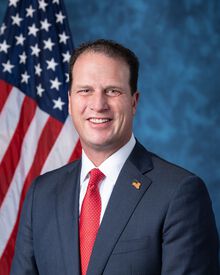
In CommitteeMr. Pfluger introduced the following bill; which was referred to …
Referred to the House Committee on Ways and Means.
Introduced in House
Stakeholder Effects
cui bono?How this legislation distributes effects. Mention counts reflect frequency, not effect magnitude.
DHS, State, Commerce, and Treasury officials coordinating the Trade Transparency Unit strategy, U.S. and foreign customs and financial-crime investigators using Trade Transparency Units
Positive-direction: U.S. and foreign customs and financial-crime investigators using Trade Transparency Units
Negative-direction: DHS, State, Commerce, and Treasury officials coordinating the Trade Transparency Unit strategy
Bill Structure & Actor Mappings
Who is "The Secretary" in each section?
We use a combination of our own taxonomy and classification in addition to large language models to assess meaning and potential beneficiaries. High confidence means strong textual evidence. Always verify with the original bill text.
Learn more about our methodology