SHINE Act of 2026
Summary
What This Bill Does
The SHINE Act of 2026 creates a DOE program to support voluntary streamlined permitting for residential distributed energy systems. Qualifying systems include equipment installed in, on, or near residential buildings for onsite or local energy use: solar photovoltaic or similar solar technologies, wind systems, batteries with at least 2 kilowatt-hours of capacity, plug-in EV chargers of at least 2 kilowatts, and hydrogen fuel cell vehicle refueling equipment. Within 180 days, DOE must develop, expand, and support adoption of a voluntary streamlined permitting and inspection process for State, county, local, and Tribal permitting authorities. DOE must expand an exemplary online permitting platform, set adoption targets, provide technical assistance and training, support building-code adoption, develop voluntary inspection protocols including remote inspection and sample-based inspection for high-quality installers, integrate tools with government software providers, certify participating authorities, award prizes, and provide financial assistance. The bill authorizes $20 million per year for fiscal years 2027 through 2030.
Who Benefits and How
Homeowners benefit if residential solar, battery, EV charging, wind, or hydrogen fueling projects can receive faster permits and inspections. Distributed energy installers benefit from standardized online permitting, remote inspection, and predictable local review. State, local, county, and Tribal permitting authorities benefit from DOE technical assistance, training, certification, prizes, and software support. Government software providers benefit if permitting platforms integrate with local systems.
Who Bears the Burden and How
DOE staff must develop the voluntary program, expand an online platform, set targets, provide technical assistance, certify jurisdictions, award prizes, and manage $20 million annual funding. Local permitting offices must decide whether to adopt the voluntary process, train staff, update building codes, integrate software, and adjust inspection workflows. Installers may need to meet quality standards for sample-based inspections and comply with standardized permitting data requirements.
Key Provisions
- Requires DOE to support voluntary streamlined permitting for residential distributed energy systems within 180 days.
- Covers residential solar, wind, batteries, EV chargers, and hydrogen fuel cell vehicle refueling equipment.
- Directs DOE to expand an online permitting platform, adoption targets, training, technical assistance, and inspection protocols.
- Authorizes certification and prizes for permitting authorities that adopt streamlined processes.
- Authorizes $20 million per year for fiscal years 2027 through 2030.
Evidence Chain:
This summary is generated from the full bill text using AI analysis. Expand "Detailed Analysis" below for identified beneficiaries/burden bearers with clause-level evidence links.
At a Glance
What This Bill Does
Directs DOE to expand voluntary streamlined online permitting and inspection processes for residential distributed energy systems, including solar, wind, batteries, EV chargers, and hydrogen fueling equipment, with technical assistance, certification, prizes, and $20 million annually for fiscal years 2027 through 2030.
Key Policy Areas
Energy, Technology, State & Local Government
Primary Purpose
Directs DOE to expand voluntary streamlined online permitting and inspection processes for residential distributed energy systems, including solar, wind, batteries, EV chargers, and hydrogen fueling equipment, with technical assistance, certification, prizes, and $20 million annually for fiscal years 2027 through 2030.
Policy Domains
Substantive provisions
Identified Gains
- Homeowners installing distributed energy
- Solar installers
- Battery installers
- EV charger installers
- State permitting authorities
- Local permitting offices
- Tribal permitting officials
- Government software providers
Identified Costs
- DOE distributed energy staff
- Local building departments
- Inspection offices
- Distributed energy installers
- Federal taxpayers
Sponsors

Legislative Progress
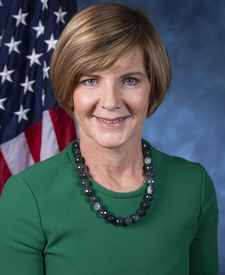
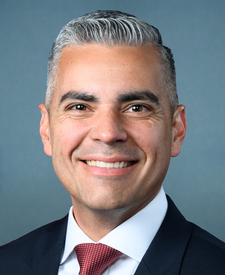
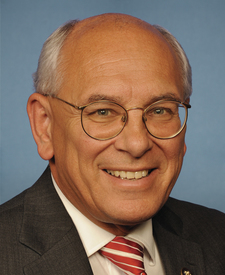
In CommitteeMs. Lee of Nevada (for herself, Mr. Ciscomani, Mr. Tonko, …
Referred to the House Committee on Energy and Commerce.
Introduced in House
Stakeholder Effects
cui bono?How this legislation distributes effects. Mention counts reflect frequency, not effect magnitude.
Bill Structure & Actor Mappings
Who is "The Secretary" in each section?
We use a combination of our own taxonomy and classification in addition to large language models to assess meaning and potential beneficiaries. High confidence means strong textual evidence. Always verify with the original bill text.
Learn more about our methodology