PLAY Act of 2026
Summary
What This Bill Does
The PLAY Act of 2026 lowers youth physical activity costs through tax and grant changes. It adds youth physical activity expenses to the child and dependent care tax credit and raises the expense caps to $4,000 for one qualifying individual and $7,000 for two or more. It raises dependent care flexible spending arrangement salary-reduction limits to $10,000 per dependent, or $12,000 for unmarried employees. It also treats youth physical activities as medical expenses under section 213, covering registration costs, fees, facility memberships, instruction, videos, books, and qualifying equipment for dependents age 4 through 17, with a $1,000 annual cap or $2,000 for joint filers or heads of household. The bill excludes tournament entries, private lessons, training, camps, travel, lodging, and equipment above specified limits. Finally, HHS must create a competitive recreational youth sports grant program for local governments, nonprofits, Tribal organizations, and veterans organizations to reduce family fees, expand participation capacity, and promote healthy habits, physical activity, and socialization, with grants of $5,000 to $50,000 for two years and $200 million authorized for fiscal years 2026 through 2030.
Who Benefits and How
Families with children ages 4 through 17 benefit from tax relief for eligible sports, fitness, facility, instruction, and equipment expenses. Single parents benefit from the higher $12,000 dependent care FSA limit. Local governments, nonprofit youth sports organizations, Tribal organizations, and veterans organizations benefit from HHS grants to reduce participation fees and expand recreational capacity. Children benefit if lower costs increase access to healthy physical activity and socialization.
Who Bears the Burden and How
IRS and Treasury staff must update tax forms, guidance, and enforcement rules for new credit, FSA, and medical-expense categories. Employers and cafeteria plan administrators must update dependent care FSA limits and payroll systems. Families must track eligible and excluded expenses, age limits, caps, and documentation. HHS grant staff must run a new competition, enforce restrictions against facility construction or elite travel sports, monitor two-year grants, and report to Congress.
Key Provisions
- Expands the child and dependent care credit to include qualifying youth physical activity expenses.
- Raises dependent care FSA limits to $10,000 per dependent and $12,000 for unmarried employees.
- Adds youth physical activities to medical expenses with age, facility, equipment, and dollar limits.
- Creates HHS recreational youth sports grants for local governments, nonprofits, Tribal organizations, and veterans organizations.
- Authorizes $200 million for fiscal years 2026 through 2030 for recreational youth sports grants.
Evidence Chain:
This summary is generated from the full bill text using AI analysis. Expand "Detailed Analysis" below for identified beneficiaries/burden bearers with clause-level evidence links.
At a Glance
What This Bill Does
Expands tax support and grants for youth sports and fitness by counting qualifying youth physical activity expenses under the child and dependent care credit, raising dependent care FSA limits, treating youth physical activities as medical expenses within limits, and authorizing $200 million for HHS recreational youth sports grants from fiscal years 2026 through 2030.
Key Policy Areas
Tax, Healthcare, Social Services
Primary Purpose
Expands tax support and grants for youth sports and fitness by counting qualifying youth physical activity expenses under the child and dependent care credit, raising dependent care FSA limits, treating youth physical activities as medical expenses within limits, and authorizing $200 million for HHS recreational youth sports grants from fiscal years 2026 through 2030.
Policy Domains
Substantive provisions
Identified Gains
- Families with youth sports expenses
- Single parents
- Children ages four through seventeen
- Local governments
- Nonprofit youth sports organizations
- Tribal organizations
- Veterans organizations
Identified Costs
- IRS forms staff
- Treasury tax guidance staff
- Employers with cafeteria plans
- Dependent care FSA administrators
- HHS grant staff
- Families claiming expenses
Sponsors
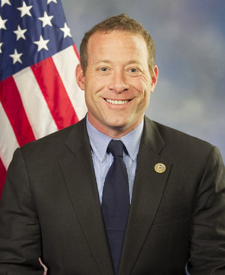

Legislative Progress
In CommitteeMr. Gottheimer (for himself and Mr. Lawler) introduced the following …
Referred to the Committee on Ways and Means, and in …
Introduced in House
Stakeholder Effects
cui bono?How this legislation distributes effects. Mention counts reflect frequency, not effect magnitude.
Families claiming deductions, Parents claiming dependent care credit, Single parents using dependent care FSAs
Positive-direction: Parents claiming dependent care credit, Single parents using dependent care FSAs
Negative-direction: Families claiming deductions, Taxpayers
Families paying sports fees, Families with children ages four through seventeen, Families with youth sports expenses
HHS grant staff, IRS forms staff, IRS guidance staff
Employees with dependent care FSAs, Employers with cafeteria plans
Positive-direction: Employees with dependent care FSAs
Negative-direction: Employers with cafeteria plans
Local government youth sports programs
Bill Structure & Actor Mappings
Who is "The Secretary" in each section?
We use a combination of our own taxonomy and classification in addition to large language models to assess meaning and potential beneficiaries. High confidence means strong textual evidence. Always verify with the original bill text.
Learn more about our methodology